Senate advances bill to clarify public preschool funding for identified 3‑year‑olds after rancorous debate
March 19, 2026 | 2026 Legislature ME, Maine
This article was created by AI summarizing key points discussed. AI makes mistakes, so for full details and context, please refer to the video of the full meeting. Please report any errors so we can fix them. Report an error »
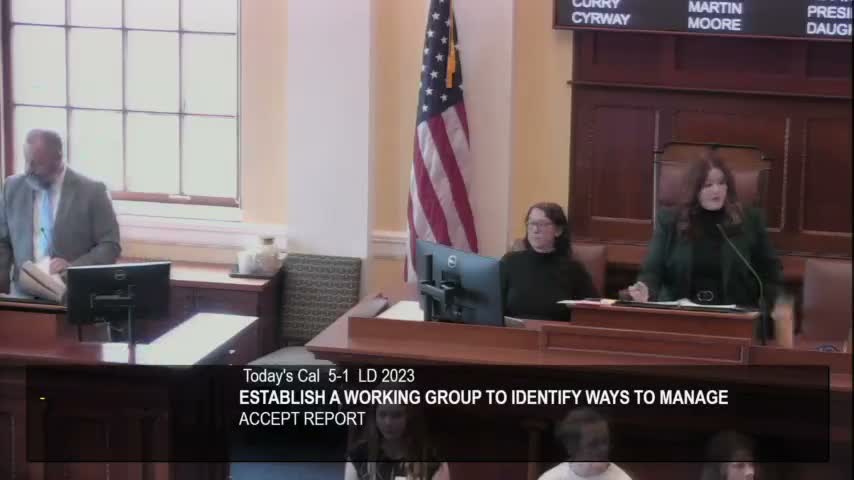
The Maine Senate accepted a committee majority report on a department bill that would expand the definition of public preschool to include programs that serve some 3‑year‑old children, with state funding limited to 3‑year‑olds identified for special education. The motion to accept the 'ought to pass as amended' report passed 18–14 after an extended floor debate.
Senator Libby, a member of the education committee, urged colleagues to withhold support until the Legislature has a clear fiscal estimate and a concrete implementation plan. "There is a fiscal note that has no dollar value at all," Libby said, arguing school districts and child‑care providers face new compliance costs, staffing changes and facility alterations that have not been quantified. Libby also raised concerns about the transition of responsibilities from Child Development Services (CDS) to school districts and potential impacts on CDS staffing.
Senator Hagen echoed those implementation worries, warning the bill "is a nice idea, but it's extremely flawed." Hagen criticized the lack of clarity on how three‑year‑olds are identified and stressed the stigma and long‑term labeling that can result from early identification.
Senator Rafferty, who moved acceptance of the report, said the bill merely clarifies current practice and limits state funding to children who have been identified for special education: "You're not funded unless you have a disability," Rafferty said, noting local school administrative units retain discretion to enroll non‑identified 3‑year‑olds without state funding. He argued the changes are part of a broader, multi‑year transition intended to improve early intervention.
Other supporters, including Senator Rennie, said early identification and services can be beneficial and that many districts already provide developmentally appropriate programs for young children. Rennie cautioned that parents would not be forced to enroll children and said the bill formalizes supports for children who need them.
The debate also included repeated requests that the Department of Education and CDS leadership appear before the committee to explain how the transition will work and where program dollars will come from. The Senate proceeded to a roll‑call vote on accepting the committee report; the secretary announced 18 in favor and 14 opposed, and the majority report prevailed.
Next steps: the bill was advanced as amended and will be engrossed and processed through the Legislature; supporters and opponents asked for further oversight and clearer fiscal documentation from the executive branch before full implementation.
Ending: The Senate moved on to other calendar items after the vote; the body later passed additional measures and adjourned until March 24, 2026.
Senator Libby, a member of the education committee, urged colleagues to withhold support until the Legislature has a clear fiscal estimate and a concrete implementation plan. "There is a fiscal note that has no dollar value at all," Libby said, arguing school districts and child‑care providers face new compliance costs, staffing changes and facility alterations that have not been quantified. Libby also raised concerns about the transition of responsibilities from Child Development Services (CDS) to school districts and potential impacts on CDS staffing.
Senator Hagen echoed those implementation worries, warning the bill "is a nice idea, but it's extremely flawed." Hagen criticized the lack of clarity on how three‑year‑olds are identified and stressed the stigma and long‑term labeling that can result from early identification.
Senator Rafferty, who moved acceptance of the report, said the bill merely clarifies current practice and limits state funding to children who have been identified for special education: "You're not funded unless you have a disability," Rafferty said, noting local school administrative units retain discretion to enroll non‑identified 3‑year‑olds without state funding. He argued the changes are part of a broader, multi‑year transition intended to improve early intervention.
Other supporters, including Senator Rennie, said early identification and services can be beneficial and that many districts already provide developmentally appropriate programs for young children. Rennie cautioned that parents would not be forced to enroll children and said the bill formalizes supports for children who need them.
The debate also included repeated requests that the Department of Education and CDS leadership appear before the committee to explain how the transition will work and where program dollars will come from. The Senate proceeded to a roll‑call vote on accepting the committee report; the secretary announced 18 in favor and 14 opposed, and the majority report prevailed.
Next steps: the bill was advanced as amended and will be engrossed and processed through the Legislature; supporters and opponents asked for further oversight and clearer fiscal documentation from the executive branch before full implementation.
Ending: The Senate moved on to other calendar items after the vote; the body later passed additional measures and adjourned until March 24, 2026.
Don't Miss a Word: See the Full Meeting!
Go beyond summaries. Unlock every video, transcript, and key insight with a Founder Membership.
✓
Get instant access to full meeting videos
✓
Search and clip any phrase from complete transcripts
✓
Receive AI-powered summaries & custom alerts
✓
Enjoy lifetime, unrestricted access to government data
30-day money-back guarantee
