Committee lays over bill to expand counseling aid to K–6 nonpublic students amid fiscal questions
March 18, 2026 | 2026 Legislature MN, Minnesota
This article was created by AI summarizing key points discussed. AI makes mistakes, so for full details and context, please refer to the video of the full meeting. Please report any errors so we can fix them. Report an error »
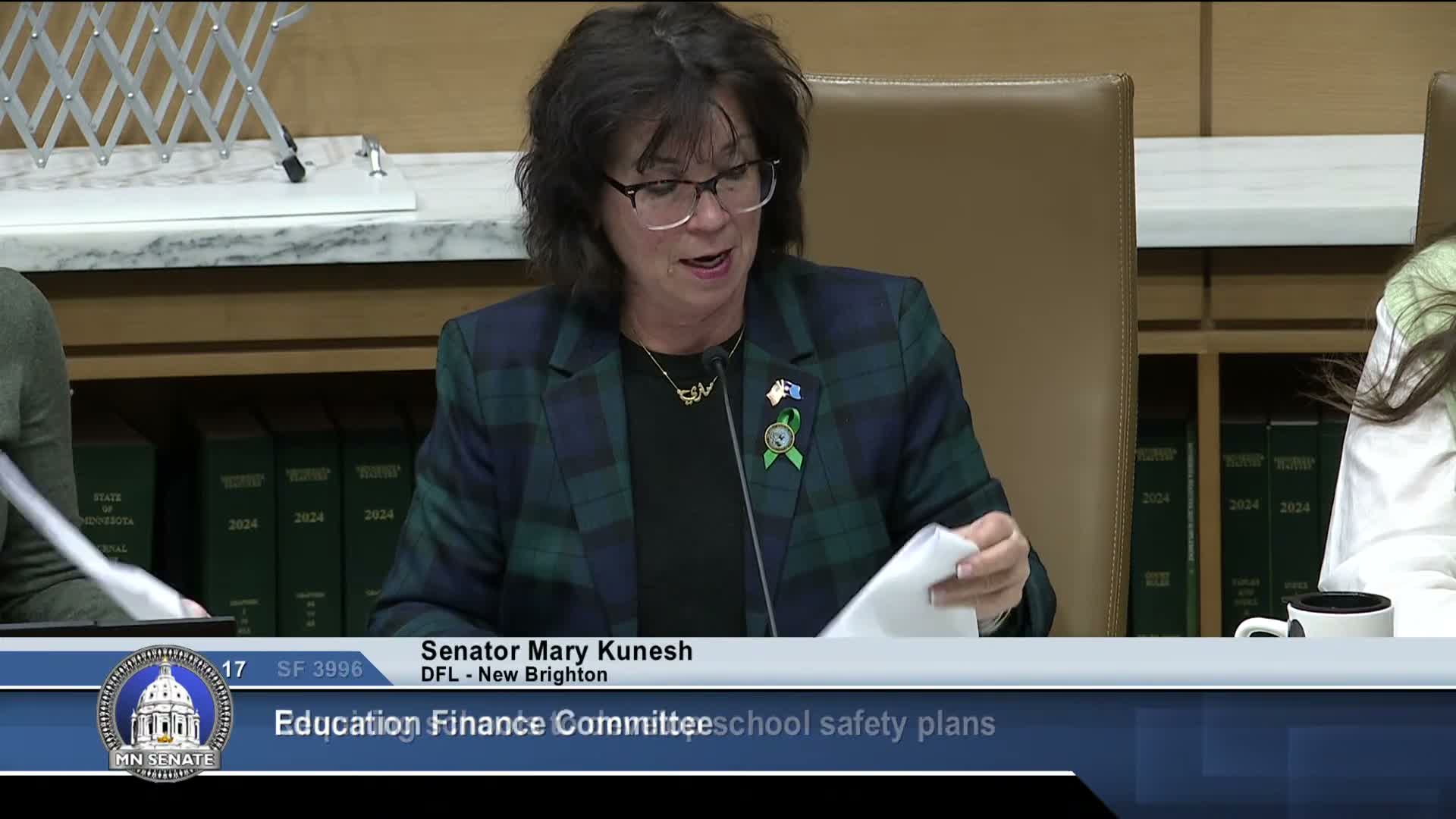
Senate File 903, sponsored by Senator Rehrig, would expand existing state‑supported counseling services for nonpublic students (currently available to grades 7–12) down to kindergarten through sixth grade. The sponsor and a large group of testifiers—school leaders, principals and counselors representing independent and nonpublic schools—argued early intervention prevents escalation of mental‑health problems and improves school safety and learning.
Anne Weiss, executive director of the Minnesota Association of Independent Schools, and school principals described rising needs among young learners; Maggie Dawson said 6–8 students at her elementary school regularly receive counseling, and Jay Schutte and Dr. Jules Nolan cited school‑level examples of anxiety and trauma, with Nolan citing research that early intervention yields significant benefits.
Witnesses explained that counseling aid flows through public school districts, which typically hire or administer counselors who then provide services in participating nonpublic schools; proponents said the expansion would help districts maintain counseling capacity. Tim Benz, representing a statewide nonpublic schools association, said the expansion would reach more than 44,000 nonpublic elementary students and described existing guardrails for program integrity.
Education Minnesota’s Caitlin Snyder testified on fiscal effects, noting the statutory program historically provided roughly $376 per nonpublic secondary pupil in recent materials and that public districts have faced significant budget cuts in recent biennia; she characterized the program as an entitlement for nonpublic schools funded from public school expenditures and urged fiscal caution. Committee staff and the sponsor referenced an earlier fiscal note that estimated roughly $2 million in additional cost in fiscal year 2026 and about $2.5 million per year thereafter for the elementary expansion, with an estimated per‑student public‑expenditure cost of roughly $70–$75 for new elementary services.
After questions and discussion about program mechanics, rural access and workforce impacts, the committee laid SF903 over for possible inclusion in a future omnibus bill.
Anne Weiss, executive director of the Minnesota Association of Independent Schools, and school principals described rising needs among young learners; Maggie Dawson said 6–8 students at her elementary school regularly receive counseling, and Jay Schutte and Dr. Jules Nolan cited school‑level examples of anxiety and trauma, with Nolan citing research that early intervention yields significant benefits.
Witnesses explained that counseling aid flows through public school districts, which typically hire or administer counselors who then provide services in participating nonpublic schools; proponents said the expansion would help districts maintain counseling capacity. Tim Benz, representing a statewide nonpublic schools association, said the expansion would reach more than 44,000 nonpublic elementary students and described existing guardrails for program integrity.
Education Minnesota’s Caitlin Snyder testified on fiscal effects, noting the statutory program historically provided roughly $376 per nonpublic secondary pupil in recent materials and that public districts have faced significant budget cuts in recent biennia; she characterized the program as an entitlement for nonpublic schools funded from public school expenditures and urged fiscal caution. Committee staff and the sponsor referenced an earlier fiscal note that estimated roughly $2 million in additional cost in fiscal year 2026 and about $2.5 million per year thereafter for the elementary expansion, with an estimated per‑student public‑expenditure cost of roughly $70–$75 for new elementary services.
After questions and discussion about program mechanics, rural access and workforce impacts, the committee laid SF903 over for possible inclusion in a future omnibus bill.
View the Full Meeting & All Its Details
This article offers just a summary. Unlock complete video, transcripts, and insights as a Founder Member.
✓
Watch full, unedited meeting videos
✓
Search every word spoken in unlimited transcripts
✓
AI summaries & real-time alerts (all government levels)
✓
Permanent access to expanding government content
30-day money-back guarantee
