Sen. Westland seeks civil remedy for deceptive fundraising tied to ‘scam PACs’
March 18, 2026 | 2026 Legislature MN, Minnesota
This article was created by AI summarizing key points discussed. AI makes mistakes, so for full details and context, please refer to the video of the full meeting. Please report any errors so we can fix them. Report an error »
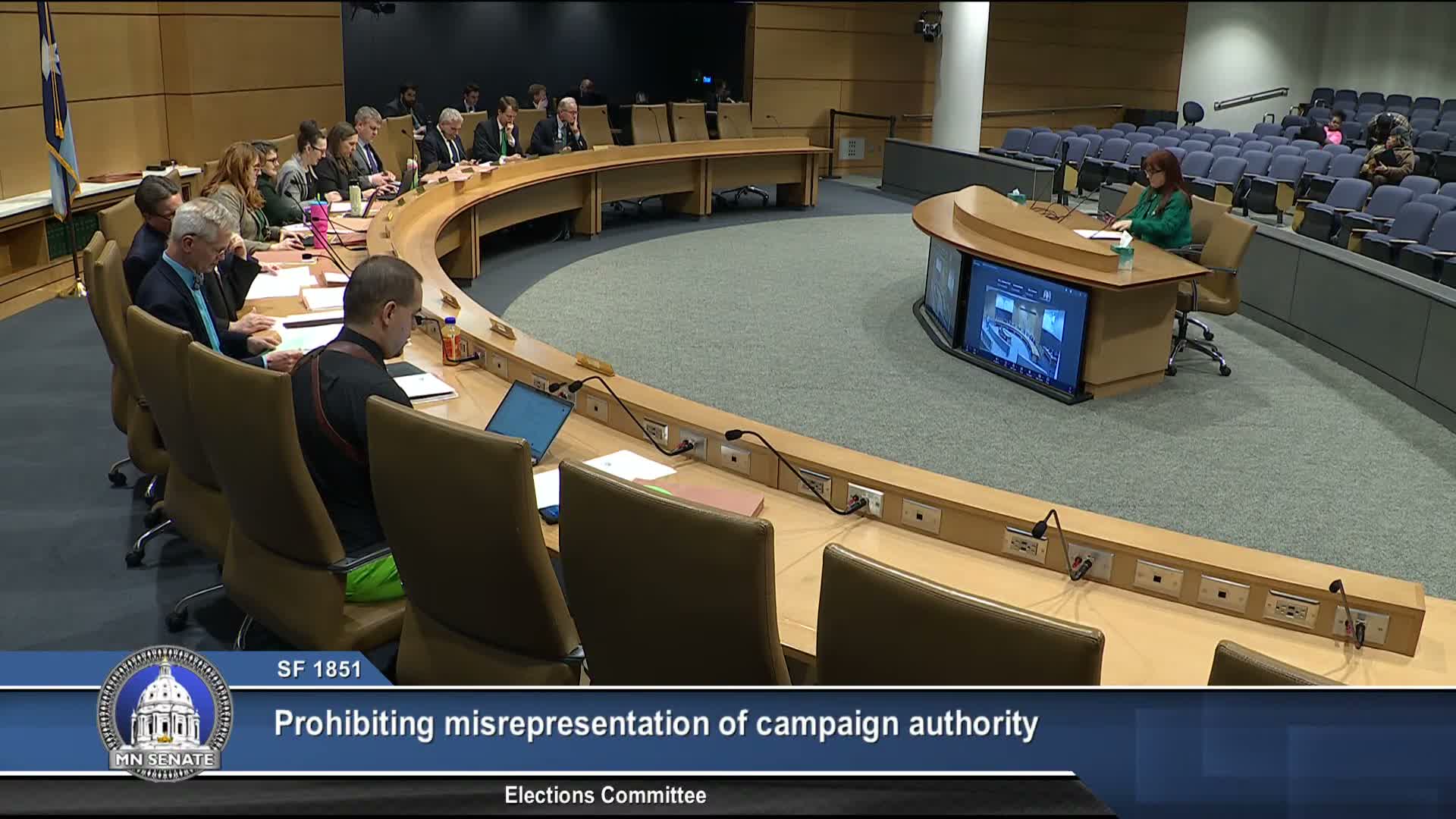
Sen. Westland, sponsor of Senate File 1851, told the Senate Elections Committee on March 17 that the bill would expand current campaign-law protections to cover “fraudulent misrepresentation and fundraising” often described as "scam packs." She said the measure would give courts a clear civil cause of action so harmed donors and prosecutors can pursue deceptive operators.
"Scam packs are ... repeated instances of organizations under feel good names asking for donations under the insinuation that the donations would go to a candidate or a political party," Sen. Westland said, describing federal and public examples of groups that raised large sums while allocating most proceeds to fundraising costs.
Proponents said the change would close a gap between general fraud statutes and campaign-specific remedies. "The benefit of a specific statute that provides a civil action is that it provides the courts with clarity," Sen. Westland said, arguing that plaintiffs now face hurdles showing standing or that an existing statute applies.
Committee members raised practical and legal questions. Sen. Barr asked whether a complainant could compel discovery from mail houses or vendors used by alleged operators; Sen. Westland and counsel said a civil suit brought by an injured party, a county attorney or the attorney general could trigger ordinary discovery processes, including document production. "If I thought I was a victim of a scam pack, I could go to the county attorney or the state attorney and complain to them," Sen. Barr said.
Counsel drew the committee's attention to existing deceptive-practice law, noting a provision on false material information in the run-up to elections: "I just wanted the committee's attention to 2 11 b 0.075, subdivision 2, which prohibits deceptive practices ... within 60 days of an election," Miss Stengel said, and observed the statute contains civil and criminal remedies in some instances.
Other senators pressed on criminal versus civil enforcement, cross‑jurisdictional investigations and the risk that broad discovery could be weaponized. Some members asked how the attorney general’s investigative authority would interact with local administrative processes; sponsors responded that administrative complaints often run first through the campaign‑finance board and that prosecutors (county attorneys or the AG) would be the prosecuting authorities if criminal charges were pursued.
Committee members did not vote to pass the bill out of committee; Sen. Westland said the bill passed another committee last year and the sponsor hoped the House would take it up this session. The committee laid Senate File 1851 over for possible inclusion in an omnibus bill.
"Scam packs are ... repeated instances of organizations under feel good names asking for donations under the insinuation that the donations would go to a candidate or a political party," Sen. Westland said, describing federal and public examples of groups that raised large sums while allocating most proceeds to fundraising costs.
Proponents said the change would close a gap between general fraud statutes and campaign-specific remedies. "The benefit of a specific statute that provides a civil action is that it provides the courts with clarity," Sen. Westland said, arguing that plaintiffs now face hurdles showing standing or that an existing statute applies.
Committee members raised practical and legal questions. Sen. Barr asked whether a complainant could compel discovery from mail houses or vendors used by alleged operators; Sen. Westland and counsel said a civil suit brought by an injured party, a county attorney or the attorney general could trigger ordinary discovery processes, including document production. "If I thought I was a victim of a scam pack, I could go to the county attorney or the state attorney and complain to them," Sen. Barr said.
Counsel drew the committee's attention to existing deceptive-practice law, noting a provision on false material information in the run-up to elections: "I just wanted the committee's attention to 2 11 b 0.075, subdivision 2, which prohibits deceptive practices ... within 60 days of an election," Miss Stengel said, and observed the statute contains civil and criminal remedies in some instances.
Other senators pressed on criminal versus civil enforcement, cross‑jurisdictional investigations and the risk that broad discovery could be weaponized. Some members asked how the attorney general’s investigative authority would interact with local administrative processes; sponsors responded that administrative complaints often run first through the campaign‑finance board and that prosecutors (county attorneys or the AG) would be the prosecuting authorities if criminal charges were pursued.
Committee members did not vote to pass the bill out of committee; Sen. Westland said the bill passed another committee last year and the sponsor hoped the House would take it up this session. The committee laid Senate File 1851 over for possible inclusion in an omnibus bill.
View the Full Meeting & All Its Details
This article offers just a summary. Unlock complete video, transcripts, and insights as a Founder Member.
✓
Watch full, unedited meeting videos
✓
Search every word spoken in unlimited transcripts
✓
AI summaries & real-time alerts (all government levels)
✓
Permanent access to expanding government content
30-day money-back guarantee
