Senate committee lays groundwork for package to limit immigration enforcement at schools, day cares and campuses
March 20, 2026 | 2026 Legislature MN, Minnesota
This article was created by AI summarizing key points discussed. AI makes mistakes, so for full details and context, please refer to the video of the full meeting. Please report any errors so we can fix them. Report an error »
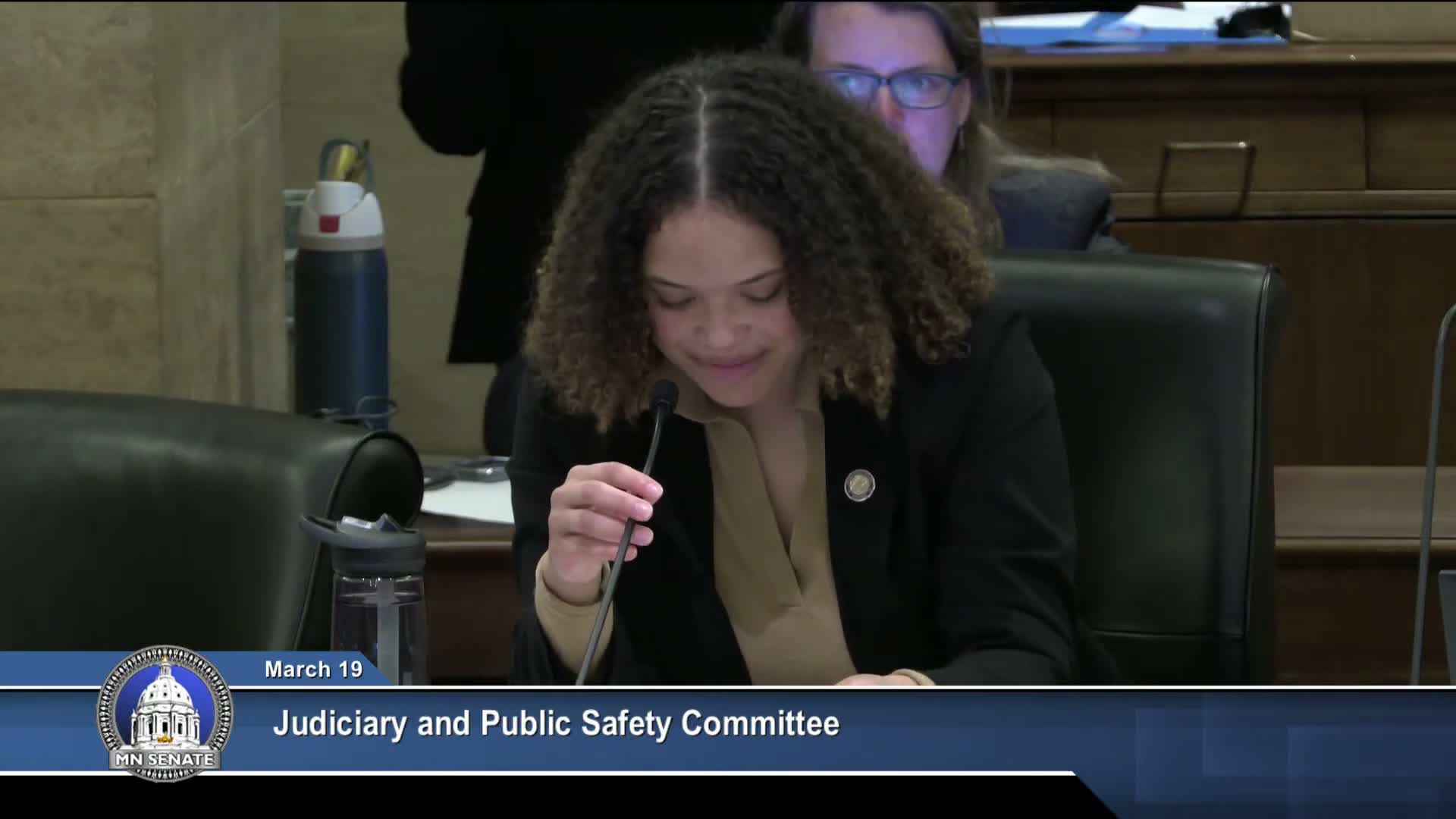
The Minnesota Senate Judiciary and Public Safety Committee on March 11 advanced a package of bills aimed at restricting civil immigration-enforcement activity on school property, at day cares and on college campuses, saying the measures are intended to restore schools and child-care sites as safe places for students and staff.
Senator Kunish, sponsor of Senate File 36-11, told the committee the bill ‘‘prohibits school districts and charter schools from consenting to federal, state or local officials entering school sites for the purposes of immigration enforcement unless the official provides a school employee with a valid judicial warrant.’’ She described reports from her district of unmarked vehicles circling school buildings, agents in camouflage and students and parents detained, and said those incidents depressed attendance and ‘‘instilled fear in the students, staff and families.’’
Supporters included Brenda Lewis, superintendent of Fridley Public Schools, who described ‘‘six ICE vehicles up and down outside of our neighborhood elementary school … circling about 100 feet from the entrance’’ and said staff and parents were terrified. Mary Granlund, school board chair for Columbia Heights Public Schools, said agents recorded license plates and did not present warrants when on or near school property.
Committee counsel and members debated drafting details. Counsel noted Minnesota already has a general severability provision in chapter 645; the committee accepted a motion to strike a short severability clause from SF 36-11 (lines 2.1–2.4) after discussion. Senators also pressed for a clearer definition of ‘‘school site’’ (whether it includes parking lots, playgrounds or portions of buildings temporarily used for school events); members asked counsel to craft precise statutory language.
Lawmakers clarified the bills are meant to apply to immigration-enforcement actions specifically and not to other law-enforcement activities, such as officers pursuing an armed felon. ‘‘If there are other purposes not related to immigration enforcement … that would not be covered by this bill,’’ the sponsor said.
The committee also heard related bills: Senate File 36-16 would extend the same protections to day-care centers after witnesses described incidents during an ‘‘operation’’ that parents said chilled teacher attendance and children’s participation; Senate File 35-70 would require judicial orders for law-enforcement access to college campuses. Testimony and drafting work on those bills led the committee to lay them over for possible improvement and to consolidate multiple measures into an omnibus draft.
Through a series of votes the committee incorporated language from several education and sensitive-space proposals into Senate File 36-99. The committee voted to recommend SF 36-99 as amended to pass and be referred to the Senate floor, directing counsel to make technical corrections. The chair said the bill would be the vehicle for ‘‘sensitive spaces’’ protections and related clarifications.
What happens next: Sponsors will work with counsel on definitions and drafting fixes before the omnibus file reaches the floor. The committee left multiple items ‘‘laid over for possible improvement’’ so staff can harmonize exemptions, definitions and emergency exceptions.
Senator Kunish, sponsor of Senate File 36-11, told the committee the bill ‘‘prohibits school districts and charter schools from consenting to federal, state or local officials entering school sites for the purposes of immigration enforcement unless the official provides a school employee with a valid judicial warrant.’’ She described reports from her district of unmarked vehicles circling school buildings, agents in camouflage and students and parents detained, and said those incidents depressed attendance and ‘‘instilled fear in the students, staff and families.’’
Supporters included Brenda Lewis, superintendent of Fridley Public Schools, who described ‘‘six ICE vehicles up and down outside of our neighborhood elementary school … circling about 100 feet from the entrance’’ and said staff and parents were terrified. Mary Granlund, school board chair for Columbia Heights Public Schools, said agents recorded license plates and did not present warrants when on or near school property.
Committee counsel and members debated drafting details. Counsel noted Minnesota already has a general severability provision in chapter 645; the committee accepted a motion to strike a short severability clause from SF 36-11 (lines 2.1–2.4) after discussion. Senators also pressed for a clearer definition of ‘‘school site’’ (whether it includes parking lots, playgrounds or portions of buildings temporarily used for school events); members asked counsel to craft precise statutory language.
Lawmakers clarified the bills are meant to apply to immigration-enforcement actions specifically and not to other law-enforcement activities, such as officers pursuing an armed felon. ‘‘If there are other purposes not related to immigration enforcement … that would not be covered by this bill,’’ the sponsor said.
The committee also heard related bills: Senate File 36-16 would extend the same protections to day-care centers after witnesses described incidents during an ‘‘operation’’ that parents said chilled teacher attendance and children’s participation; Senate File 35-70 would require judicial orders for law-enforcement access to college campuses. Testimony and drafting work on those bills led the committee to lay them over for possible improvement and to consolidate multiple measures into an omnibus draft.
Through a series of votes the committee incorporated language from several education and sensitive-space proposals into Senate File 36-99. The committee voted to recommend SF 36-99 as amended to pass and be referred to the Senate floor, directing counsel to make technical corrections. The chair said the bill would be the vehicle for ‘‘sensitive spaces’’ protections and related clarifications.
What happens next: Sponsors will work with counsel on definitions and drafting fixes before the omnibus file reaches the floor. The committee left multiple items ‘‘laid over for possible improvement’’ so staff can harmonize exemptions, definitions and emergency exceptions.
View the Full Meeting & All Its Details
This article offers just a summary. Unlock complete video, transcripts, and insights as a Founder Member.
✓
Watch full, unedited meeting videos
✓
Search every word spoken in unlimited transcripts
✓
AI summaries & real-time alerts (all government levels)
✓
Permanent access to expanding government content
30-day money-back guarantee
