House bill would expand who can seek extreme-risk firearm orders and ease some service and storage rules
March 18, 2026 | 2026 Legislature MN, Minnesota
This article was created by AI summarizing key points discussed. AI makes mistakes, so for full details and context, please refer to the video of the full meeting. Please report any errors so we can fix them. Report an error »
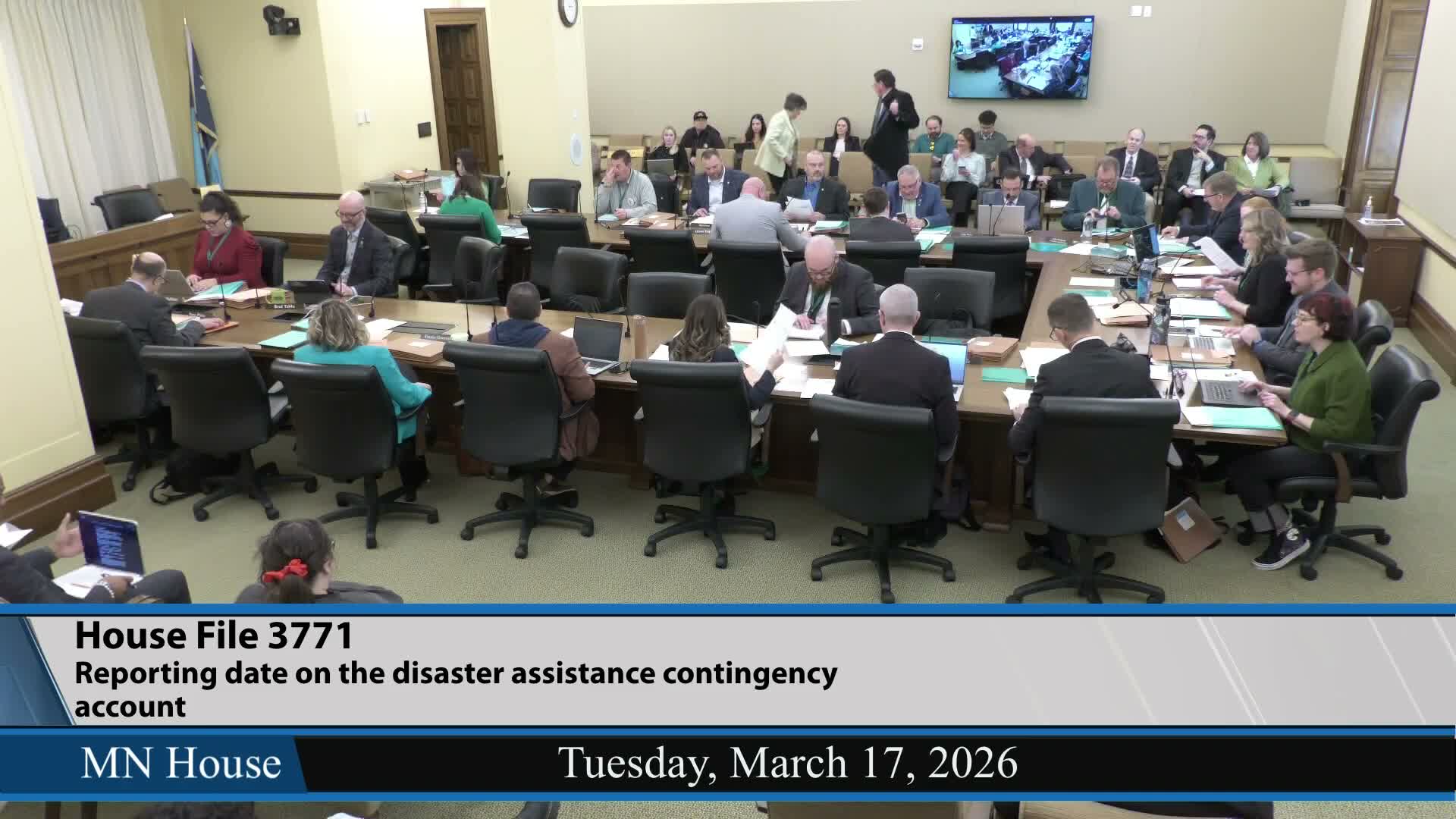
Representative Frazier introduced House File 3658 as a set of operational changes to Minnesota's extreme-risk protection order law intended to improve timeliness and practical implementation. The bill would align the definition of family or household member with Minnesota's existing protective-order statute so more relatives can petition, enable people to petition on their own behalf, and require judges to consider emergency petitions immediately when filed.
Frazier said the changes are meant to "make it easier for the right people to act" and to reduce burdens on law enforcement. Mr. Diebel, who walked the committee through the language, described changes across the bill's pages: allowing county- and city-attorney offices to apply for petitions, clarifying which agency serves orders, permitting electronic or first-class mail service when personal service is unnecessary, expanding information petitioners should provide, and setting conditions for extending orders. The bill also allows longer orders (up to five years) in cases where respondents have violated prior orders multiple times.
The committee adopted an A1 amendment that explicitly permits electronic service (including email) for some IRPO-related documents. Representative Frazier said that amendment reduces strain on law enforcement and avoids "unnecessary repeat contact." Chief Jeff Potts of the Minnesota Chiefs of Police Association explained current practicalities: firearms surrendered to a law-enforcement agency typically remain in the agency property room for the life of the order and may be transferred to a federally licensed firearms dealer (FFL) if the respondent requests it.
Several members pressed the author on protections for respondents and for government agencies. Representative Hudson asked how removing the requirement that law enforcement compensate respondents at fair market value when firearms are permanently transferred would interact with Fifth Amendment takings protections; Frazier replied that respondents may still have options to have dealers hold or purchase firearms so compensation can occur through that pathway, and that firearms would generally be returned once the petition expires. Members also raised concerns about immunity language: the bill grants immunity from prosecution for unlawful possession to respondents who voluntarily surrender firearms, and committee members asked whether that immunity would obscure evidence if surrendered weapons later proved linked to other crimes. Frazier said the immunity is limited to the act of surrendering under the IRPO statute and not to unrelated criminal prosecutions discovered through forensic testing.
Dr. Roger Day, a public witness, said he supported technical fixes but criticized the underlying civil-equity framework for restricting firearms under a civil proceeding, arguing the statute raises due-process concerns. The chair reminded the committee to limit debate to the amendments before them.
Representative Novotny and others asked for clarity on timelines: under current law respondents generally have 24 hours to surrender firearms to law enforcement or an FFL after a petition is approved; Frazier confirmed that the 24-hour surrender timeline is retained in this version and that orders generally last up to 12 months unless extended by the court. The bill's supporters said the changes are intended to preserve due process while improving timeliness and administrative feasibility.
After extended questioning and offers to tighten immunity language, the committee voted to re-refer HF3658, as amended, to the House Judiciary, Finance and Civil Law Committee for further work.
Next steps: HF3658 was referred to judiciary, where members said they will refine language on compensation, immunity and evidence handling and consider technical clarifications asked for in committee.
Frazier said the changes are meant to "make it easier for the right people to act" and to reduce burdens on law enforcement. Mr. Diebel, who walked the committee through the language, described changes across the bill's pages: allowing county- and city-attorney offices to apply for petitions, clarifying which agency serves orders, permitting electronic or first-class mail service when personal service is unnecessary, expanding information petitioners should provide, and setting conditions for extending orders. The bill also allows longer orders (up to five years) in cases where respondents have violated prior orders multiple times.
The committee adopted an A1 amendment that explicitly permits electronic service (including email) for some IRPO-related documents. Representative Frazier said that amendment reduces strain on law enforcement and avoids "unnecessary repeat contact." Chief Jeff Potts of the Minnesota Chiefs of Police Association explained current practicalities: firearms surrendered to a law-enforcement agency typically remain in the agency property room for the life of the order and may be transferred to a federally licensed firearms dealer (FFL) if the respondent requests it.
Several members pressed the author on protections for respondents and for government agencies. Representative Hudson asked how removing the requirement that law enforcement compensate respondents at fair market value when firearms are permanently transferred would interact with Fifth Amendment takings protections; Frazier replied that respondents may still have options to have dealers hold or purchase firearms so compensation can occur through that pathway, and that firearms would generally be returned once the petition expires. Members also raised concerns about immunity language: the bill grants immunity from prosecution for unlawful possession to respondents who voluntarily surrender firearms, and committee members asked whether that immunity would obscure evidence if surrendered weapons later proved linked to other crimes. Frazier said the immunity is limited to the act of surrendering under the IRPO statute and not to unrelated criminal prosecutions discovered through forensic testing.
Dr. Roger Day, a public witness, said he supported technical fixes but criticized the underlying civil-equity framework for restricting firearms under a civil proceeding, arguing the statute raises due-process concerns. The chair reminded the committee to limit debate to the amendments before them.
Representative Novotny and others asked for clarity on timelines: under current law respondents generally have 24 hours to surrender firearms to law enforcement or an FFL after a petition is approved; Frazier confirmed that the 24-hour surrender timeline is retained in this version and that orders generally last up to 12 months unless extended by the court. The bill's supporters said the changes are intended to preserve due process while improving timeliness and administrative feasibility.
After extended questioning and offers to tighten immunity language, the committee voted to re-refer HF3658, as amended, to the House Judiciary, Finance and Civil Law Committee for further work.
Next steps: HF3658 was referred to judiciary, where members said they will refine language on compensation, immunity and evidence handling and consider technical clarifications asked for in committee.
View the Full Meeting & All Its Details
This article offers just a summary. Unlock complete video, transcripts, and insights as a Founder Member.
✓
Watch full, unedited meeting videos
✓
Search every word spoken in unlimited transcripts
✓
AI summaries & real-time alerts (all government levels)
✓
Permanent access to expanding government content
30-day money-back guarantee
