Committee lays over bill to restore choice for people with disabilities between Medicaid waiver and extended employment services
March 18, 2026 | 2026 Legislature MN, Minnesota
This article was created by AI summarizing key points discussed. AI makes mistakes, so for full details and context, please refer to the video of the full meeting. Please report any errors so we can fix them. Report an error »
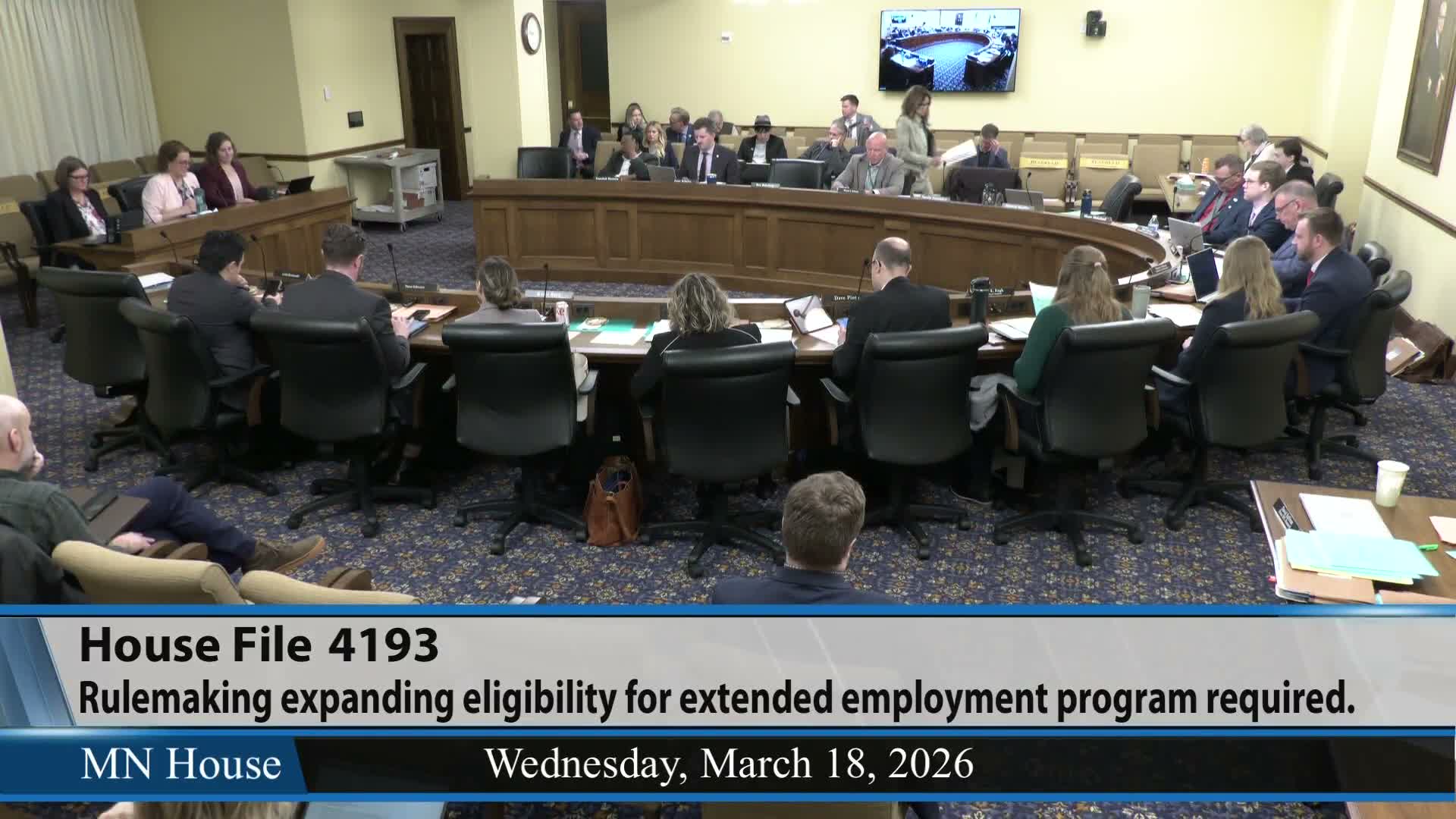
House File 4193 was introduced to restore choice for Minnesotans with disabilities to receive either Medicaid waiver services (through DHS authorized providers) or extended employment (EE) supports from DEED‑authorized providers. Representative sponsor described a rule change implemented last July that regulators said removed the schedule K mechanism that previously let providers coordinate funding and avoid duplication.
Providers testified the rule change had immediate effects: Cassia Janosic (vice president of vocational and housing services, RISE Incorporated) and Shelley Borman (workforce development manager, Goodwill Easterseals Minnesota) said the rule revision has created Medicaid waiver wait lists in Greater Minnesota, reduced participant choice, and prevented some individuals from accessing long‑term employment supports. Janosic said EE is a "long standing, highly successful" program that uses pay‑for‑performance safeguards and audits and argued the rule has produced harmful access barriers.
DEED's government relations director Devin Bowery said agency conversations with providers and DHS had been productive and described a potential compromise that would avoid duplication and suggested a two‑year trial rule to address the issue. Members asked DEED to circulate the agreed language and return; the committee laid the bill over while staff and agencies finalize statutory or rule text.
The committee did not adopt immediate statutory changes today; members expressed bipartisan interest in resolving the service access and duplication issues raised by providers.
Providers testified the rule change had immediate effects: Cassia Janosic (vice president of vocational and housing services, RISE Incorporated) and Shelley Borman (workforce development manager, Goodwill Easterseals Minnesota) said the rule revision has created Medicaid waiver wait lists in Greater Minnesota, reduced participant choice, and prevented some individuals from accessing long‑term employment supports. Janosic said EE is a "long standing, highly successful" program that uses pay‑for‑performance safeguards and audits and argued the rule has produced harmful access barriers.
DEED's government relations director Devin Bowery said agency conversations with providers and DHS had been productive and described a potential compromise that would avoid duplication and suggested a two‑year trial rule to address the issue. Members asked DEED to circulate the agreed language and return; the committee laid the bill over while staff and agencies finalize statutory or rule text.
The committee did not adopt immediate statutory changes today; members expressed bipartisan interest in resolving the service access and duplication issues raised by providers.
View the Full Meeting & All Its Details
This article offers just a summary. Unlock complete video, transcripts, and insights as a Founder Member.
✓
Watch full, unedited meeting videos
✓
Search every word spoken in unlimited transcripts
✓
AI summaries & real-time alerts (all government levels)
✓
Permanent access to expanding government content
30-day money-back guarantee
