MDH presents 340B findings; lawmakers split over HF3609 changes as roll-call amendments tie
March 19, 2026 | 2026 Legislature MN, Minnesota
This article was created by AI summarizing key points discussed. AI makes mistakes, so for full details and context, please refer to the video of the full meeting. Please report any errors so we can fix them. Report an error »
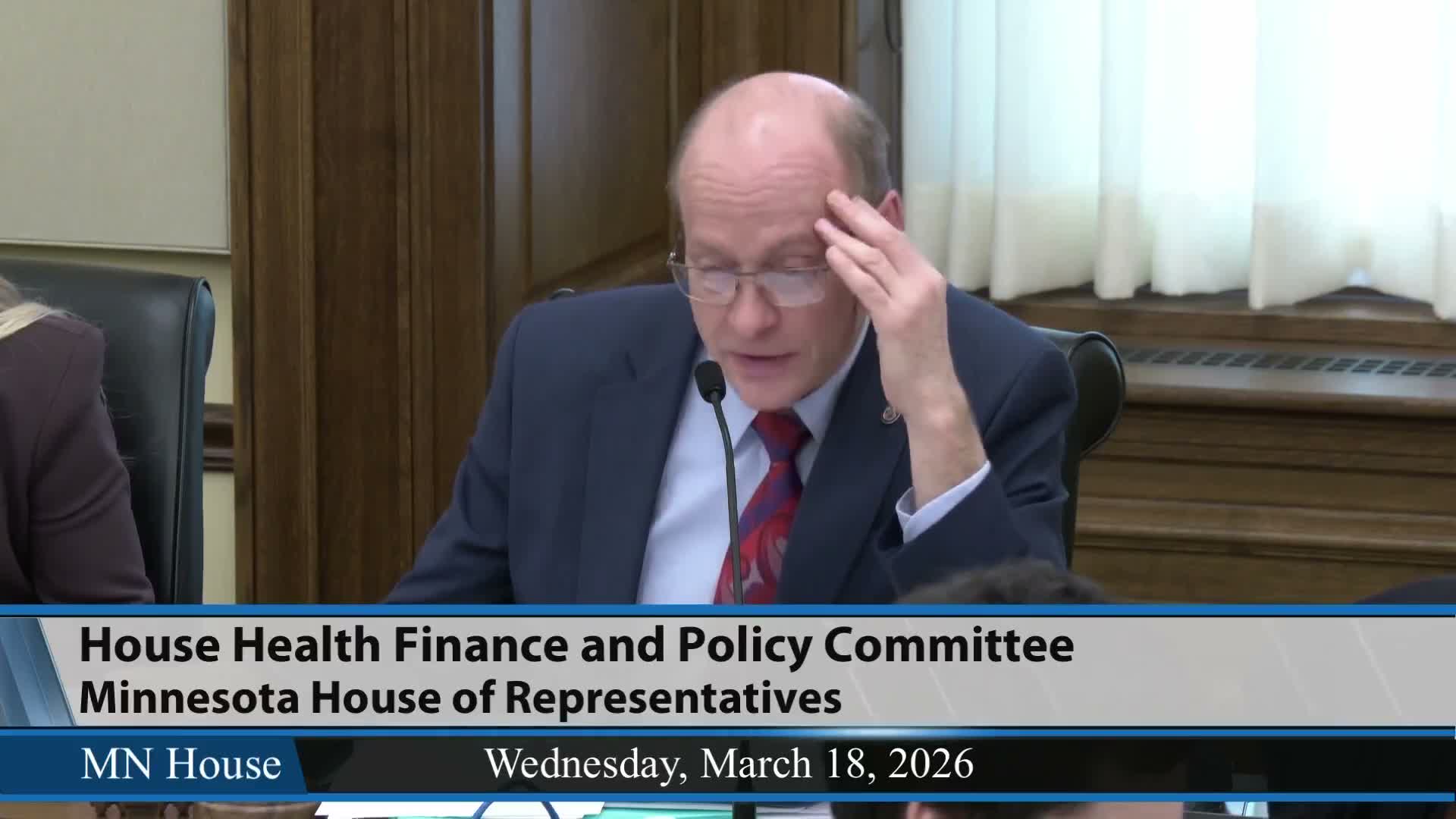
The Minnesota Department of Health presented a statutorily required second-year report on the federal 340B drug-pricing program at the March 11 committee hearing, and lawmakers debated House File 3609, a bill intended to preserve 340B access while adding reporting and oversight.
MDH presenters, including the state health economist Stefan Gildermeister and pharmaceutical-policy lead Annalisa Stieber, told the committee that roughly 200 providers in Minnesota participate in 340B — about half hospitals and half clinics — and that net program revenues vary widely by entity type. The department highlighted that much of the statewide net revenue is concentrated: "Amongst all of the statewide net 340B revenue, 90% came from 25 covered entities," an MDH presenter said.
Presenters cautioned the committee about data limitations and inconsistent reporting practices that make it difficult to determine precisely how hospitals use 340B-generated revenue. MDH flagged reporting-field inconsistencies for internal operating costs and said the second-year report collected a broader scope of drugs (including administered specialty drugs) than the first-year report, which affects year-over-year comparisons.
Representative Zalesz Sicard, sponsor of HF3609, described the bill as aiming to preserve 340B's role in sustaining safety-net services and to create a reporting structure and possible task force to study enforcement and other policy options. She moved a DE1 amendment that would retain 340B and add reporting to put the bill in format for committee work. Members debated whether the amendment removed needed enforcement tools and whether added reporting would require a fiscal note; Representative Bierman and others opposed versions that dropped enforcement, while other members said improved reporting would help build legal cases for enforcement.
Two amendments were taken up by roll call. DE1 failed on an 11–11 tie. A4 (which proposed claims-level reporting and a restriction on out-of-state contract pharmacies) also failed on an 11–11 roll call. During testimony following the amendment votes, hospital and rural health leaders described how 340B savings underwrite services in small communities, including subsidized pharmacy vending and mental-health programs; manufacturers and industry groups warned the program has grown beyond its original intent and said few patients see discounts at the pharmacy counter.
After testimony the bill sponsor withdrew the motion to move the bill forward and HF3609 was laid over for further work.
Next steps: HF3609 was laid over to be worked on; the committee will consider additional amendments, potential fiscal notes, and stakeholder-convening options before advancing the bill.
MDH presenters, including the state health economist Stefan Gildermeister and pharmaceutical-policy lead Annalisa Stieber, told the committee that roughly 200 providers in Minnesota participate in 340B — about half hospitals and half clinics — and that net program revenues vary widely by entity type. The department highlighted that much of the statewide net revenue is concentrated: "Amongst all of the statewide net 340B revenue, 90% came from 25 covered entities," an MDH presenter said.
Presenters cautioned the committee about data limitations and inconsistent reporting practices that make it difficult to determine precisely how hospitals use 340B-generated revenue. MDH flagged reporting-field inconsistencies for internal operating costs and said the second-year report collected a broader scope of drugs (including administered specialty drugs) than the first-year report, which affects year-over-year comparisons.
Representative Zalesz Sicard, sponsor of HF3609, described the bill as aiming to preserve 340B's role in sustaining safety-net services and to create a reporting structure and possible task force to study enforcement and other policy options. She moved a DE1 amendment that would retain 340B and add reporting to put the bill in format for committee work. Members debated whether the amendment removed needed enforcement tools and whether added reporting would require a fiscal note; Representative Bierman and others opposed versions that dropped enforcement, while other members said improved reporting would help build legal cases for enforcement.
Two amendments were taken up by roll call. DE1 failed on an 11–11 tie. A4 (which proposed claims-level reporting and a restriction on out-of-state contract pharmacies) also failed on an 11–11 roll call. During testimony following the amendment votes, hospital and rural health leaders described how 340B savings underwrite services in small communities, including subsidized pharmacy vending and mental-health programs; manufacturers and industry groups warned the program has grown beyond its original intent and said few patients see discounts at the pharmacy counter.
After testimony the bill sponsor withdrew the motion to move the bill forward and HF3609 was laid over for further work.
Next steps: HF3609 was laid over to be worked on; the committee will consider additional amendments, potential fiscal notes, and stakeholder-convening options before advancing the bill.
Don't Miss a Word: See the Full Meeting!
Go beyond summaries. Unlock every video, transcript, and key insight with a Founder Membership.
✓
Get instant access to full meeting videos
✓
Search and clip any phrase from complete transcripts
✓
Receive AI-powered summaries & custom alerts
✓
Enjoy lifetime, unrestricted access to government data
30-day money-back guarantee
