State and Local Government Committee amends LD 2228 to repeal three inactive boards, spares others
March 19, 2026 | 2026 Legislature ME, Maine
This article was created by AI summarizing key points discussed. AI makes mistakes, so for full details and context, please refer to the video of the full meeting. Please report any errors so we can fix them. Report an error »
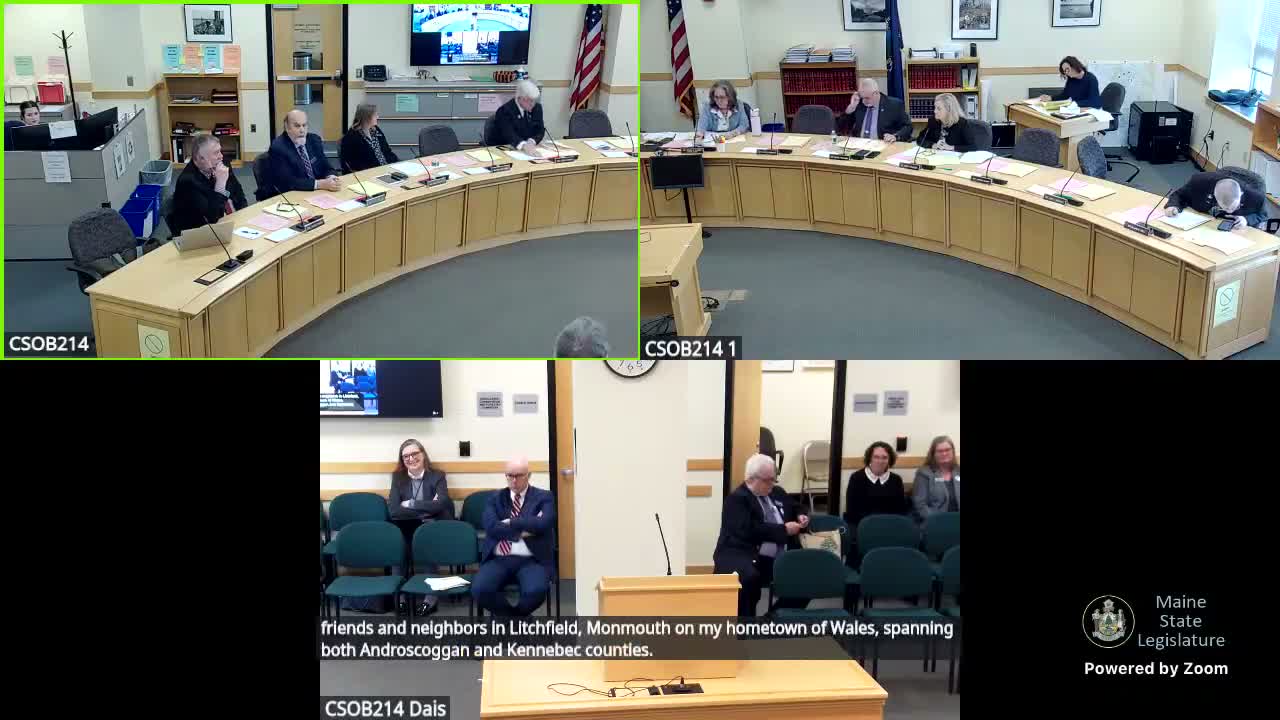
The Joint Standing Committee on State and Local Government on March 18 amended LD 2228 — the routine bill that flags inactive state boards and commissions — to repeal three specific entities while leaving most others on the list intact.
Sponsor Rep. Sue Salisbury (House District 128) opened the hearing, describing LD 2228 as an administrative review and stressing that “we are not eliminating any boards or commissions, unless they have specifically asked to be eliminated.” The bill compiles boards that failed to meet reporting requirements and gives the Legislature a chance to act or to prompt them to comply.
Counsel for the governor’s office, Tim Feeley, said two advisory boards within the Department of Public Safety had been unable to reconstitute membership and requested repeal. “They just haven't been able to get enough people who want to serve on the board,” Feeley told the committee, describing the Board of Licensure of Professional Investigators and the Polygraph Examiners Advisory Board as small, advisory groups with limited pools of potential members.
State officials and stakeholders urged the committee to exempt several commissions from repeal. Christina Lunner, deputy commissioner at the Department of Professional and Financial Regulation representing the Office of Professional and Occupational Regulation, opposed repeal of provisions affecting the Board of Respiratory Care Practitioners and said OPOR is working with the governor’s office to identify qualified candidates so the board can reach a quorum. “OPOR opposes the repeal of these sections as the continued regulation of this profession is necessary to protect the public,” Lunner said.
Advocates representing older Mainers, care providers and labor unions also urged retention for advisory bodies they described as active and valuable. Jess Faye of the Maine Council on Aging and the Essential Care and Support Workforce Partnership told lawmakers ESWAC (the Essential Support Workforce Advisory Committee) has been meeting regularly and has produced recommendations now reflected in other legislation. Jenna Jones of the Maine Association for Community Service Providers said the committee helps coordinate policy for roughly 9,000 direct support professionals.
Representatives and agency liaisons asked the committee to exempt the Citizens Trade Policy Commission and the Maine Island of Ireland Trade Commission while statutory language is updated and gubernatorial appointments are completed. Maureen Terry of the Department of Economic and Community Development said both commissions serve strategic trade functions and are in the process of being modernized and staffed.
After hearing testimony and staff advice, the committee went into work session and adopted an amendment proposed by Rep. Salisbury to remove three items from LD 2228: the Board of Licensure of Professional Investigators; the Polygraph Examiners Advisory Board; and the State Education and Employment Outcomes Task Force (which staff noted had not met since 2014). The committee reported the bill "ought to pass as amended;" the clerk recorded the vote as unanimous.
The committee left in place the other boards and commissions on the secretary of state's list and flagged several entries for follow-up, asking affected bodies to confirm clerks and file required reports so they are not listed in future biennial reviews. Staff said some items involve more complex statutory changes and may need separate legislation.
The amended report will move forward per committee procedure. The committee scheduled a work session for other items as needed and closed the public hearing.
Next steps: The committee's action reports LD 2228 "ought to pass as amended" with the three deletions; several stakeholders will follow up with clerks and the secretary of state's office to ensure compliance and to seek exemptions or statutory updates where needed.
Sponsor Rep. Sue Salisbury (House District 128) opened the hearing, describing LD 2228 as an administrative review and stressing that “we are not eliminating any boards or commissions, unless they have specifically asked to be eliminated.” The bill compiles boards that failed to meet reporting requirements and gives the Legislature a chance to act or to prompt them to comply.
Counsel for the governor’s office, Tim Feeley, said two advisory boards within the Department of Public Safety had been unable to reconstitute membership and requested repeal. “They just haven't been able to get enough people who want to serve on the board,” Feeley told the committee, describing the Board of Licensure of Professional Investigators and the Polygraph Examiners Advisory Board as small, advisory groups with limited pools of potential members.
State officials and stakeholders urged the committee to exempt several commissions from repeal. Christina Lunner, deputy commissioner at the Department of Professional and Financial Regulation representing the Office of Professional and Occupational Regulation, opposed repeal of provisions affecting the Board of Respiratory Care Practitioners and said OPOR is working with the governor’s office to identify qualified candidates so the board can reach a quorum. “OPOR opposes the repeal of these sections as the continued regulation of this profession is necessary to protect the public,” Lunner said.
Advocates representing older Mainers, care providers and labor unions also urged retention for advisory bodies they described as active and valuable. Jess Faye of the Maine Council on Aging and the Essential Care and Support Workforce Partnership told lawmakers ESWAC (the Essential Support Workforce Advisory Committee) has been meeting regularly and has produced recommendations now reflected in other legislation. Jenna Jones of the Maine Association for Community Service Providers said the committee helps coordinate policy for roughly 9,000 direct support professionals.
Representatives and agency liaisons asked the committee to exempt the Citizens Trade Policy Commission and the Maine Island of Ireland Trade Commission while statutory language is updated and gubernatorial appointments are completed. Maureen Terry of the Department of Economic and Community Development said both commissions serve strategic trade functions and are in the process of being modernized and staffed.
After hearing testimony and staff advice, the committee went into work session and adopted an amendment proposed by Rep. Salisbury to remove three items from LD 2228: the Board of Licensure of Professional Investigators; the Polygraph Examiners Advisory Board; and the State Education and Employment Outcomes Task Force (which staff noted had not met since 2014). The committee reported the bill "ought to pass as amended;" the clerk recorded the vote as unanimous.
The committee left in place the other boards and commissions on the secretary of state's list and flagged several entries for follow-up, asking affected bodies to confirm clerks and file required reports so they are not listed in future biennial reviews. Staff said some items involve more complex statutory changes and may need separate legislation.
The amended report will move forward per committee procedure. The committee scheduled a work session for other items as needed and closed the public hearing.
Next steps: The committee's action reports LD 2228 "ought to pass as amended" with the three deletions; several stakeholders will follow up with clerks and the secretary of state's office to ensure compliance and to seek exemptions or statutory updates where needed.
Don't Miss a Word: See the Full Meeting!
Go beyond summaries. Unlock every video, transcript, and key insight with a Founder Membership.
✓
Get instant access to full meeting videos
✓
Search and clip any phrase from complete transcripts
✓
Receive AI-powered summaries & custom alerts
✓
Enjoy lifetime, unrestricted access to government data
30-day money-back guarantee
