Senate committee advances bill tightening grant oversight after audit findings
March 18, 2026 | 2026 Legislature MN, Minnesota
This article was created by AI summarizing key points discussed. AI makes mistakes, so for full details and context, please refer to the video of the full meeting. Please report any errors so we can fix them. Report an error »
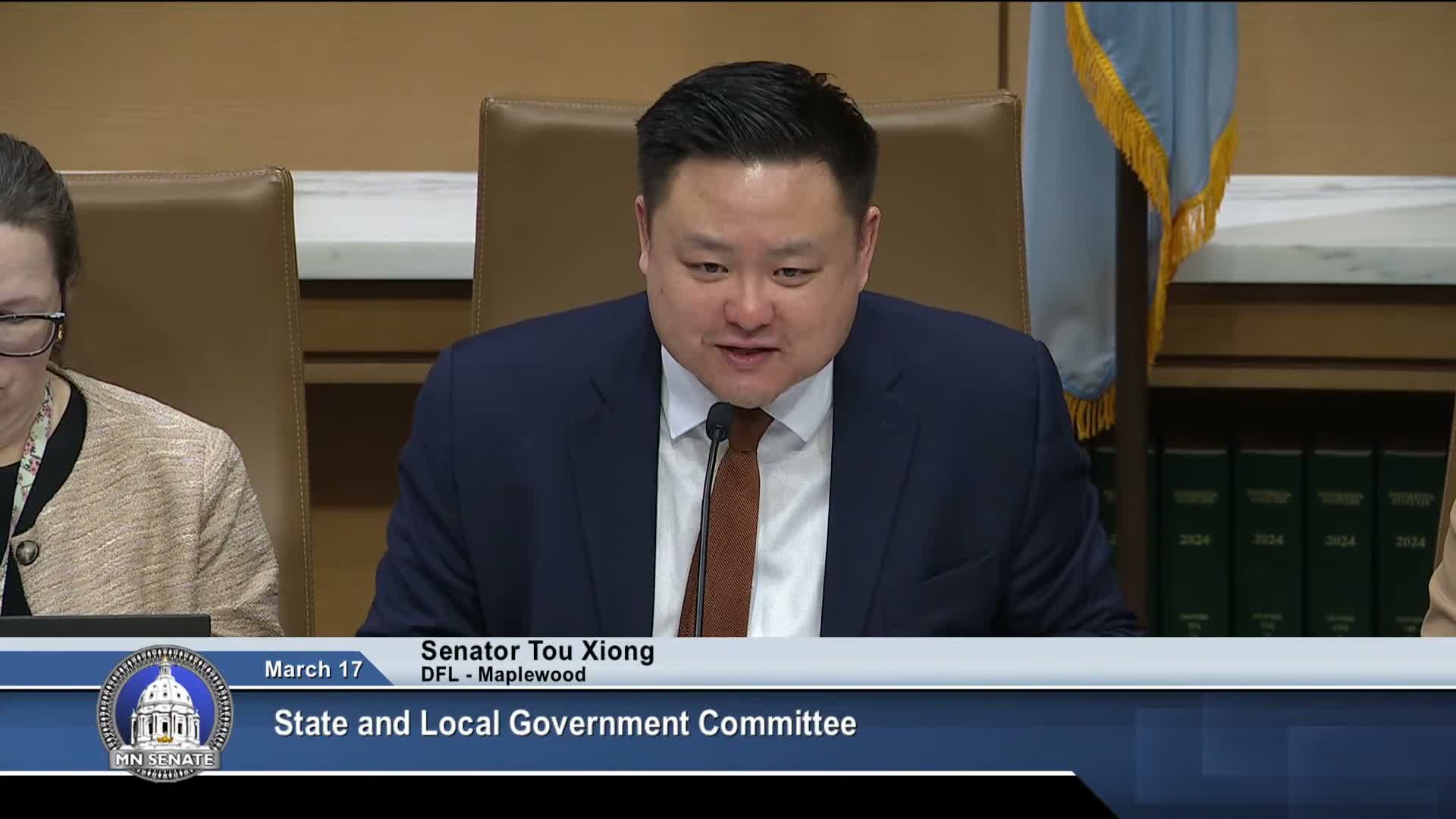
Senator Rest introduced Senate File 3900 on March 17, presenting a set of changes aimed at implementing recommendations from the Legislative Audit Commission to strengthen internal controls and improve oversight of state grants and assets. The bill adds criminal penalties for state employees who deliberately submit falsified reports to the Office of the Legislative Auditor and requires Minnesota Management and Budget (MMB) to provide regular guidance and technical assistance to agencies on internal controls.
Supporters described the bill as a set of “good governance” fixes tailored to recurring audit findings. Senator Rest said the measure moves beyond mere dismissal for falsifying records and makes clear that such conduct may constitute a felony. “Employees may not do that, even if to begin with their intentions are honorable,” he said, explaining the change. Legislative Auditor Judy Bridal told the committee that an auditor’s review found backdated records in some performance audits, prompting the tougher penalties and clearer expectations.
Other provisions described by the sponsor include training requirements for staff who maintain inventories of capital assets, requirements that granting agencies conduct unannounced on-site visits for grants above set thresholds ($50,000 and $250,000 are cited in the amendment language), and a prohibition on grantees hiring staff who participated in the granting decision (with grant termination if violated). Senator Curran and other members praised the bill as a practical response to audit work, while some members warned that agencies will need resources to carry out more frequent monitoring and training.
The committee adopted a series of author amendments during the hearing, including an amendment addressing lottery oversight prompted by a legislative audit. Senator Drazkowski offered an A2 amendment tied to lottery audit findings about lost or stolen scratch tickets; the committee adopted that amendment by voice vote. The committee then recommended Senate File 3900, as amended, to pass and referred it to the Judiciary Committee by voice vote.
The committee hearing transcript records the committee’s approvals and the referral, but it does not include a detailed roll-call tally for the final recommendation vote.
Supporters described the bill as a set of “good governance” fixes tailored to recurring audit findings. Senator Rest said the measure moves beyond mere dismissal for falsifying records and makes clear that such conduct may constitute a felony. “Employees may not do that, even if to begin with their intentions are honorable,” he said, explaining the change. Legislative Auditor Judy Bridal told the committee that an auditor’s review found backdated records in some performance audits, prompting the tougher penalties and clearer expectations.
Other provisions described by the sponsor include training requirements for staff who maintain inventories of capital assets, requirements that granting agencies conduct unannounced on-site visits for grants above set thresholds ($50,000 and $250,000 are cited in the amendment language), and a prohibition on grantees hiring staff who participated in the granting decision (with grant termination if violated). Senator Curran and other members praised the bill as a practical response to audit work, while some members warned that agencies will need resources to carry out more frequent monitoring and training.
The committee adopted a series of author amendments during the hearing, including an amendment addressing lottery oversight prompted by a legislative audit. Senator Drazkowski offered an A2 amendment tied to lottery audit findings about lost or stolen scratch tickets; the committee adopted that amendment by voice vote. The committee then recommended Senate File 3900, as amended, to pass and referred it to the Judiciary Committee by voice vote.
The committee hearing transcript records the committee’s approvals and the referral, but it does not include a detailed roll-call tally for the final recommendation vote.
View the Full Meeting & All Its Details
This article offers just a summary. Unlock complete video, transcripts, and insights as a Founder Member.
✓
Watch full, unedited meeting videos
✓
Search every word spoken in unlimited transcripts
✓
AI summaries & real-time alerts (all government levels)
✓
Permanent access to expanding government content
30-day money-back guarantee
