Committee advances tenant-privacy overhaul with edits after stakeholder debate; bill moves as amended
March 19, 2026 | 2026 Legislature ME, Maine
This article was created by AI summarizing key points discussed. AI makes mistakes, so for full details and context, please refer to the video of the full meeting. Please report any errors so we can fix them. Report an error »
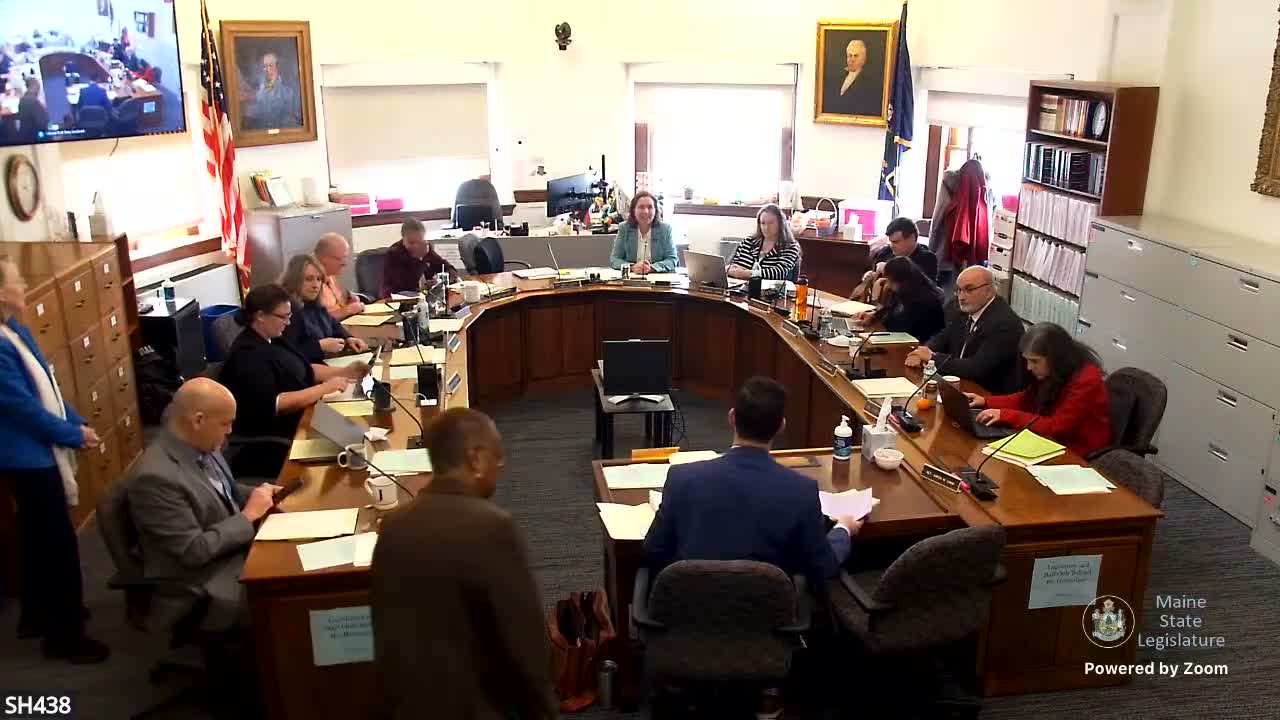
The committee took extended testimony and debate on LD 21 76, a measure altering landlord disclosure rules and creating new civil penalties for unlawful disclosure of tenants’ personal information. The bill analyst summarized multiple amendments that, among other provisions, would prohibit landlords from disclosing personal information of tenants or household members without express consent, create exceptions for judicial process and exigent law-enforcement needs, and void any agreement by a tenant to waive rights under the statute.
The current amendment would also impose a monetary penalty for unlawful disclosure; earlier drafts proposed different penalty amounts but the version discussed included a $1,000 penalty for disclosure in violation of the proposed act. Frank D’Alessandro, a veteran attorney working with legal-assistance organizations, said the language was revised to preserve the landlord’s ability to pursue eviction through judicial process: "this would not prevent the landlord from bringing an eviction," he said, pointing to explicit exceptions for the judicial eviction statute.
Landlord and owner groups, represented by Dan Bernier, told the committee they remained concerned the bill could unintentionally cover unauthorized occupants and create practical problems with routine landlord practices such as posting inspection notices, credit reporting and insurance claims. Bernier told the committee the draft "gives protection to unauthorized occupants and may give protection to trespassers," and urged clearer language and a "legitimate business purpose" standard to reduce litigation risk for small landlords.
Tenant advocates and Pine Tree Legal Assistance (represented in the room) argued the broader protections reflect the language used in the eviction statute and that narrowing protections could leave individuals without remedies; the Pine Tree attorney explained that the eviction statute often uses the term "occupant" and narrowing the term could have unintended consequences for people who later obtain tenant status through court proceedings.
The committee debated the operative standard for permissible disclosures and exceptions; representative Sinclair moved that the committee adopt an amendment replacing the phrase "legitimate business necessity" with "legitimate business purpose" and make other technical edits. The committee voted on that motion and — after further drafting and a motion to reconsider and a subsequent motion to adopt the purple-sheet technical changes affecting automated sealing language in a separate bill review — the clerk ultimately reported the committee vote on the final proposed language as 8 in favor, 3 opposed, and 3 absent.
The adopted approach preserves exceptions for judicial process, exigent law-enforcement circumstances, sales/refinancing needs and certain housing program applications, while clarifying several defenses (including business-interest defenses) and removing a rebuttable-presumption-of-retaliation provision that earlier drafts had included. Committee members directed staff to reconcile numbering/formatting and return final files for the official language review.
The current amendment would also impose a monetary penalty for unlawful disclosure; earlier drafts proposed different penalty amounts but the version discussed included a $1,000 penalty for disclosure in violation of the proposed act. Frank D’Alessandro, a veteran attorney working with legal-assistance organizations, said the language was revised to preserve the landlord’s ability to pursue eviction through judicial process: "this would not prevent the landlord from bringing an eviction," he said, pointing to explicit exceptions for the judicial eviction statute.
Landlord and owner groups, represented by Dan Bernier, told the committee they remained concerned the bill could unintentionally cover unauthorized occupants and create practical problems with routine landlord practices such as posting inspection notices, credit reporting and insurance claims. Bernier told the committee the draft "gives protection to unauthorized occupants and may give protection to trespassers," and urged clearer language and a "legitimate business purpose" standard to reduce litigation risk for small landlords.
Tenant advocates and Pine Tree Legal Assistance (represented in the room) argued the broader protections reflect the language used in the eviction statute and that narrowing protections could leave individuals without remedies; the Pine Tree attorney explained that the eviction statute often uses the term "occupant" and narrowing the term could have unintended consequences for people who later obtain tenant status through court proceedings.
The committee debated the operative standard for permissible disclosures and exceptions; representative Sinclair moved that the committee adopt an amendment replacing the phrase "legitimate business necessity" with "legitimate business purpose" and make other technical edits. The committee voted on that motion and — after further drafting and a motion to reconsider and a subsequent motion to adopt the purple-sheet technical changes affecting automated sealing language in a separate bill review — the clerk ultimately reported the committee vote on the final proposed language as 8 in favor, 3 opposed, and 3 absent.
The adopted approach preserves exceptions for judicial process, exigent law-enforcement circumstances, sales/refinancing needs and certain housing program applications, while clarifying several defenses (including business-interest defenses) and removing a rebuttable-presumption-of-retaliation provision that earlier drafts had included. Committee members directed staff to reconcile numbering/formatting and return final files for the official language review.
View the Full Meeting & All Its Details
This article offers just a summary. Unlock complete video, transcripts, and insights as a Founder Member.
✓
Watch full, unedited meeting videos
✓
Search every word spoken in unlimited transcripts
✓
AI summaries & real-time alerts (all government levels)
✓
Permanent access to expanding government content
30-day money-back guarantee
