Committee approves STAR Act to limit state and local cooperation with federal immigration enforcement
March 18, 2026 | 2026 Legislature MN, Minnesota
This article was created by AI summarizing key points discussed. AI makes mistakes, so for full details and context, please refer to the video of the full meeting. Please report any errors so we can fix them. Report an error »
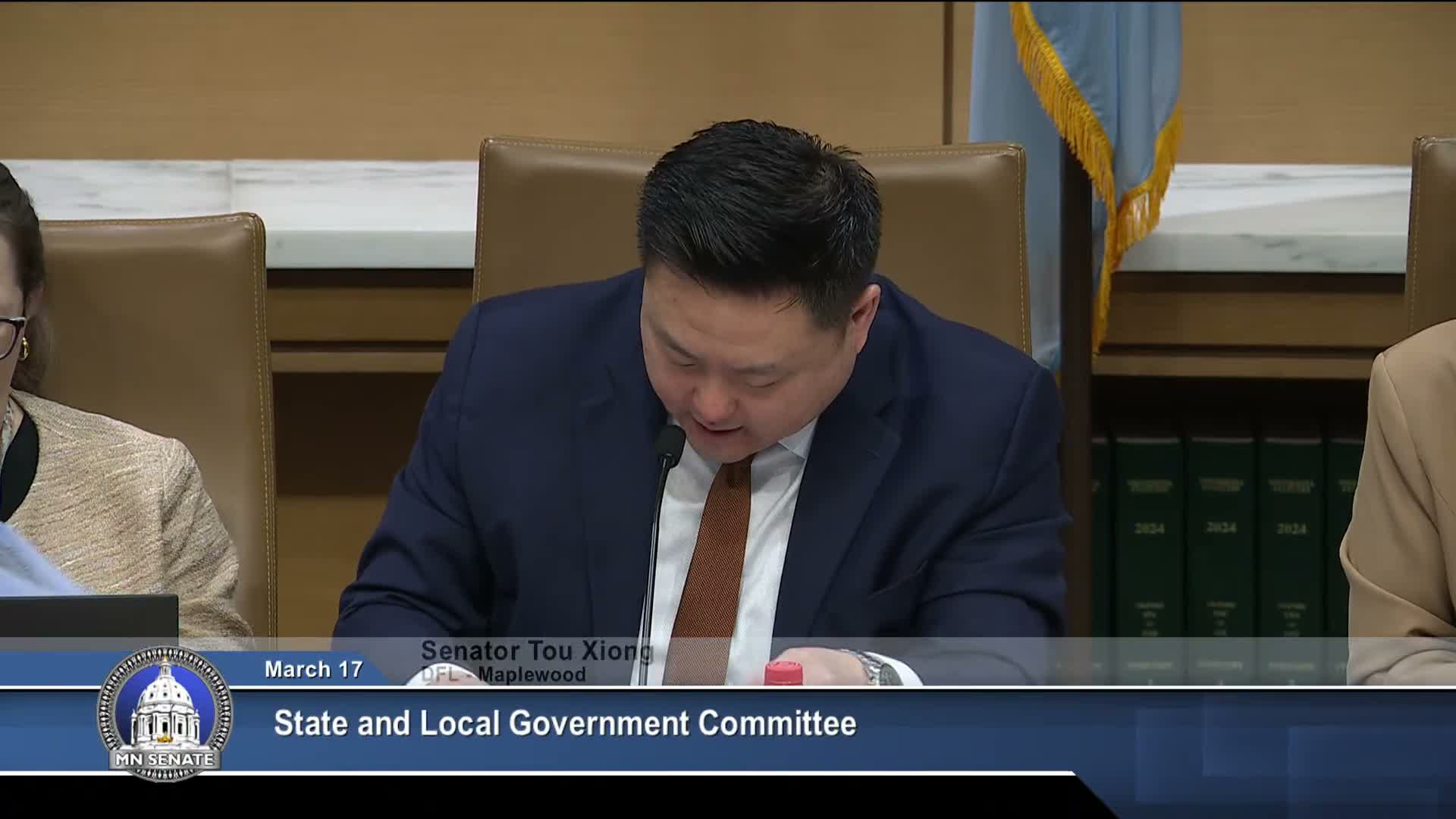
Senate File 4176, introduced by Senator Fatai, would limit state and local cooperation with federal immigration enforcement and create protections for sensitive locations including schools, healthcare facilities and courthouses. The bill also would create a state-level cause of action against federal officials in some circumstances and codify applicable precedents protecting students regardless of immigration status.
A wide set of community organizations and experts testified in favor. Thao Mei Zhang of the Coalition of Asian American Leaders recounted the coalition’s emergency legal work since recent enforcement actions and argued the bill protects constitutional rights and due process. Aaron Spovda of the Minnesota Council on Latino Affairs summarized survey results showing immigration and discrimination as top concerns among respondents. Mary Niedermeier (CAPI) and Perla Ramos provided accounts of retraumatized families and local enforcement actions that led residents to fear using services. Dr. Karen Wills, a pediatric psychologist, told the committee that federal enforcement presence in hospitals and nursing homes undermines child development and access to care.
Opponents framed the measure as effectively embedding sanctuary policies into state institutions; supporters responded that the bill restores trust and clarifies lawful boundaries between state and federal authority. Committee members engaged in extended questioning and debate. A roll call was recorded and staff reported the result as 6 ayes, 4 noes, and 2 excused; the committee recommended the bill to pass and referred it to the Judiciary Committee.
The transcript records witnesses, members’ statements, and the roll-call result. Specific statutory text and amendments were discussed at length during the hearing; readers should consult the bill text for precise legal language.
A wide set of community organizations and experts testified in favor. Thao Mei Zhang of the Coalition of Asian American Leaders recounted the coalition’s emergency legal work since recent enforcement actions and argued the bill protects constitutional rights and due process. Aaron Spovda of the Minnesota Council on Latino Affairs summarized survey results showing immigration and discrimination as top concerns among respondents. Mary Niedermeier (CAPI) and Perla Ramos provided accounts of retraumatized families and local enforcement actions that led residents to fear using services. Dr. Karen Wills, a pediatric psychologist, told the committee that federal enforcement presence in hospitals and nursing homes undermines child development and access to care.
Opponents framed the measure as effectively embedding sanctuary policies into state institutions; supporters responded that the bill restores trust and clarifies lawful boundaries between state and federal authority. Committee members engaged in extended questioning and debate. A roll call was recorded and staff reported the result as 6 ayes, 4 noes, and 2 excused; the committee recommended the bill to pass and referred it to the Judiciary Committee.
The transcript records witnesses, members’ statements, and the roll-call result. Specific statutory text and amendments were discussed at length during the hearing; readers should consult the bill text for precise legal language.
View the Full Meeting & All Its Details
This article offers just a summary. Unlock complete video, transcripts, and insights as a Founder Member.
✓
Watch full, unedited meeting videos
✓
Search every word spoken in unlimited transcripts
✓
AI summaries & real-time alerts (all government levels)
✓
Permanent access to expanding government content
30-day money-back guarantee
