Lawmaker’s plan to move waiver case management to counties laid over amid implementation concerns
March 19, 2026 | 2026 Legislature MN, Minnesota
This article was created by AI summarizing key points discussed. AI makes mistakes, so for full details and context, please refer to the video of the full meeting. Please report any errors so we can fix them. Report an error »
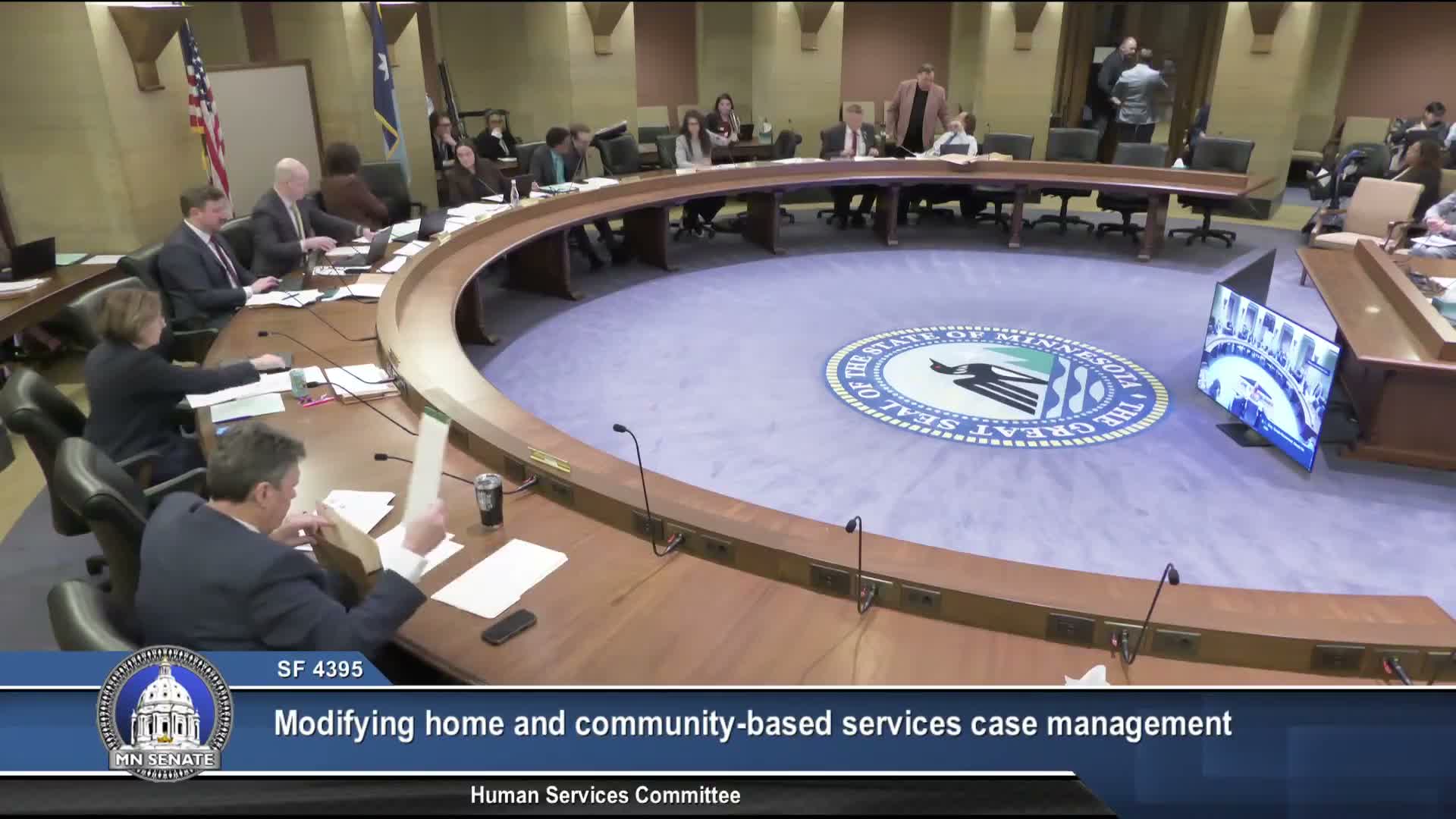
Senate File 43-95, a proposal to change how waiver case management is organized and paid, was presented to the Senate Human Services Committee on March 18 and laid over for possible inclusion in an omnibus bill after extensive witness testimony and member questions.
Senator Mohamed, who introduced the bill, said the measure would require two years of competitive bidding for county case management, create a legislative work group and set up a rate study to inform system improvements. "The goal of this legislation is that case management be brought in house...conducted as a public service by county employees who are accountable to their communities," the sponsor said.
Advocates and consumers welcomed the focus on quality and accountability but urged caution on the proposal’s pace and scope. Jillian Nelson of the Autism Society of Minnesota told the committee that while "something needs to change about case management," counties are not always the right administrators and rushing a wholesale shift risks disruption. She asked that advocacy groups be included on the statutory work group and favored phased reforms and better training.
Provider voices and county officials raised concerns about workforce capacity and continuity. Jeff Nachbar of the Minnesota Brain Injury Alliance described the proposed deadline that would limit counties’ ability to contract after July 1, 2029 as "simply untenable" and urged a more measured, surgical approach. Louella Coffer, Hennepin County’s senior administrator for aging and disability services, said contracted partners serve tens of thousands: "In Hennepin County, our 28 contracted case management providers serve almost 20,000 recipients of aging and disability programs," and urged a data‑driven evaluation before major structural change.
Multiple witnesses recommended the committee proceed with a working group, rate study, transition planning and careful monitoring of potential service disruptions before moving to a forced county takeover. Senators emphasized the need to preserve continuity of care, protect culturally specific services and ensure counties have sufficient hiring capacity.
The committee laid the bill over for possible omnibus inclusion so stakeholders can continue discussions and the work group and study language can be refined.
Next steps: The committee will use the working-group and rate-study provisions to inform future decisions; no vote on adoption occurred and lawmakers signaled they expect additional stakeholder work before any statutory structural change.
Senator Mohamed, who introduced the bill, said the measure would require two years of competitive bidding for county case management, create a legislative work group and set up a rate study to inform system improvements. "The goal of this legislation is that case management be brought in house...conducted as a public service by county employees who are accountable to their communities," the sponsor said.
Advocates and consumers welcomed the focus on quality and accountability but urged caution on the proposal’s pace and scope. Jillian Nelson of the Autism Society of Minnesota told the committee that while "something needs to change about case management," counties are not always the right administrators and rushing a wholesale shift risks disruption. She asked that advocacy groups be included on the statutory work group and favored phased reforms and better training.
Provider voices and county officials raised concerns about workforce capacity and continuity. Jeff Nachbar of the Minnesota Brain Injury Alliance described the proposed deadline that would limit counties’ ability to contract after July 1, 2029 as "simply untenable" and urged a more measured, surgical approach. Louella Coffer, Hennepin County’s senior administrator for aging and disability services, said contracted partners serve tens of thousands: "In Hennepin County, our 28 contracted case management providers serve almost 20,000 recipients of aging and disability programs," and urged a data‑driven evaluation before major structural change.
Multiple witnesses recommended the committee proceed with a working group, rate study, transition planning and careful monitoring of potential service disruptions before moving to a forced county takeover. Senators emphasized the need to preserve continuity of care, protect culturally specific services and ensure counties have sufficient hiring capacity.
The committee laid the bill over for possible omnibus inclusion so stakeholders can continue discussions and the work group and study language can be refined.
Next steps: The committee will use the working-group and rate-study provisions to inform future decisions; no vote on adoption occurred and lawmakers signaled they expect additional stakeholder work before any statutory structural change.
Don't Miss a Word: See the Full Meeting!
Go beyond summaries. Unlock every video, transcript, and key insight with a Founder Membership.
✓
Get instant access to full meeting videos
✓
Search and clip any phrase from complete transcripts
✓
Receive AI-powered summaries & custom alerts
✓
Enjoy lifetime, unrestricted access to government data
30-day money-back guarantee
