Committee sends manufactured‑home protections to floor after heated debate over 3% rent cap and first‑purchase rights
March 20, 2026 | 2026 Legislature MN, Minnesota
This article was created by AI summarizing key points discussed. AI makes mistakes, so for full details and context, please refer to the video of the full meeting. Please report any errors so we can fix them. Report an error »
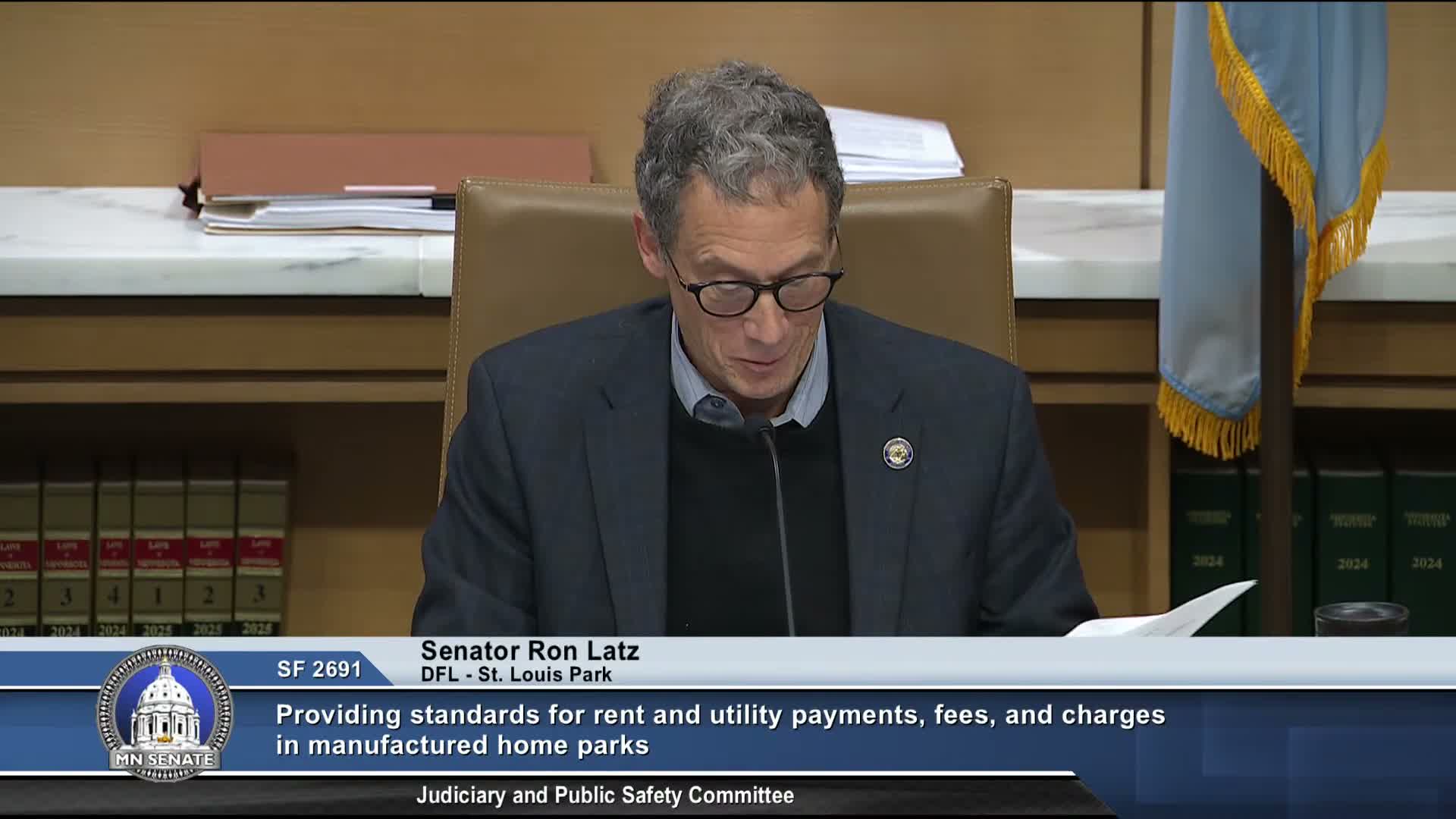
The committee recommended S.F. 26‑91 to the Senate floor following lengthy testimony and debate about proposed rent‑increase limits, resident purchase windows and enforcement provisions for manufactured‑home communities.
Senator Bolden, the bill’s sponsor, said the measure restores a reasonableness presumption to rent increases, establishes a 3% annual cap, creates clearer resident‑purchase processes, and strengthens enforcement of park‑owner responsibilities. Residents and housing advocates described predatory practices by some corporate park owners and urged protections to prevent longtime homeowners—who typically own their homes but rent the land—from being priced out of their communities.
Opponents, including the Manufactured Modular Home Association, raised concerns about property‑rights impacts, delays to sales, disclosure of confidential financial information and whether a 3% cap would allow owners to cover genuine operating or capital costs. Mark Brunner said existing 2024 notice statutes are operational and warned a right‑of‑first‑refusal regime could delay sales and invite litigation.
Committee members debated multiple amendments. A technical A‑8 amendment was adopted; a more substantive A‑9 amendment (which sought to broaden the standard for increases and change burdens of proof) failed in divided votes. A later proposal to allow a rent increase if a majority of residents pre‑approved it also failed.
Senator Bolton moved the bill to be recommended to pass and be sent to the Senate floor; the motion prevailed.
Supporters said the measure preserves affordable ownership for vulnerable households; opponents warned it risks underinvestment and legal complexity. The floor debate could test whether the compromise language withstands further amendment.
Senator Bolden, the bill’s sponsor, said the measure restores a reasonableness presumption to rent increases, establishes a 3% annual cap, creates clearer resident‑purchase processes, and strengthens enforcement of park‑owner responsibilities. Residents and housing advocates described predatory practices by some corporate park owners and urged protections to prevent longtime homeowners—who typically own their homes but rent the land—from being priced out of their communities.
Opponents, including the Manufactured Modular Home Association, raised concerns about property‑rights impacts, delays to sales, disclosure of confidential financial information and whether a 3% cap would allow owners to cover genuine operating or capital costs. Mark Brunner said existing 2024 notice statutes are operational and warned a right‑of‑first‑refusal regime could delay sales and invite litigation.
Committee members debated multiple amendments. A technical A‑8 amendment was adopted; a more substantive A‑9 amendment (which sought to broaden the standard for increases and change burdens of proof) failed in divided votes. A later proposal to allow a rent increase if a majority of residents pre‑approved it also failed.
Senator Bolton moved the bill to be recommended to pass and be sent to the Senate floor; the motion prevailed.
Supporters said the measure preserves affordable ownership for vulnerable households; opponents warned it risks underinvestment and legal complexity. The floor debate could test whether the compromise language withstands further amendment.
Don't Miss a Word: See the Full Meeting!
Go beyond summaries. Unlock every video, transcript, and key insight with a Founder Membership.
✓
Get instant access to full meeting videos
✓
Search and clip any phrase from complete transcripts
✓
Receive AI-powered summaries & custom alerts
✓
Enjoy lifetime, unrestricted access to government data
30-day money-back guarantee
