Deputy-registrar fee-sharing debated as operators warn of revenue losses; DVS flags implementation concerns
March 19, 2026 | 2026 Legislature MN, Minnesota
This article was created by AI summarizing key points discussed. AI makes mistakes, so for full details and context, please refer to the video of the full meeting. Please report any errors so we can fix them. Report an error »
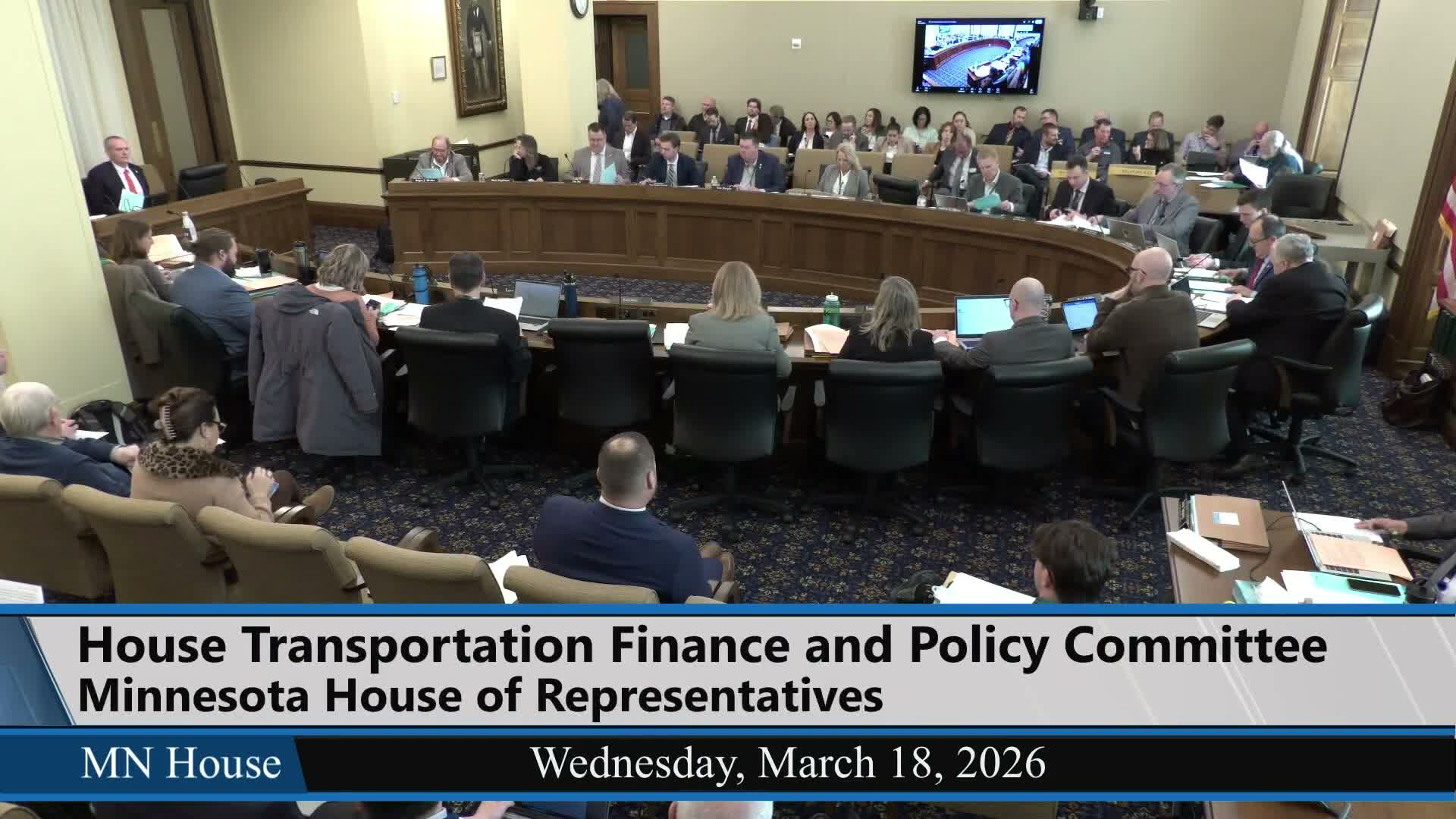
House File 2605, brought by Representative Olson, would change funding and provider-accounting for deputy-registrar services to return more revenue to local deputy registrar offices. Committee testimony described long-term revenue declines from online and mail transactions and urged a revenue-sharing approach to keep local offices open and staffed.
Jim Hurst, representing the Minnesota Deputy Registrar's Association, said deputy registrars operate about 169 offices statewide (approximately 66 county-run, 33 city-run and 70 private) and estimated a large loss of retained filing-fee revenue because more renewals occur by mail or online. "Currently, we think that we believe there's about 50% of all tab renewals are done, through, directly to the state," he said, and characterized the resulting lost filing-fee revenue as "unacceptable."
Operators described how system changes that moved work to front counters and new online systems increased per-customer processing time and reduced simple transactions that historically supported deputy offices. Jared O'Reilly and Mike Hintz urged fee sharing that would include all deputies and help offices afford staff and training.
Pong Jang, director of the Driver and Vehicle Services division, said DVS supports compensating deputy offices but cautioned that the state manages much of the mail-in and virtual transaction process and that payments should reflect the work the offices actually do. Committee members raised a separate concern about an apparent new surcharge for mail-in transactions (discussion referenced a $5 or $3.90 figure in the bill language); sponsors said they would continue conversations and the committee laid the bill over.
Representative Olson renewed his motion to lay HF2605 over; members agreed and the bill will return for further negotiation on fee-share mechanics and any surcharge language.
Jim Hurst, representing the Minnesota Deputy Registrar's Association, said deputy registrars operate about 169 offices statewide (approximately 66 county-run, 33 city-run and 70 private) and estimated a large loss of retained filing-fee revenue because more renewals occur by mail or online. "Currently, we think that we believe there's about 50% of all tab renewals are done, through, directly to the state," he said, and characterized the resulting lost filing-fee revenue as "unacceptable."
Operators described how system changes that moved work to front counters and new online systems increased per-customer processing time and reduced simple transactions that historically supported deputy offices. Jared O'Reilly and Mike Hintz urged fee sharing that would include all deputies and help offices afford staff and training.
Pong Jang, director of the Driver and Vehicle Services division, said DVS supports compensating deputy offices but cautioned that the state manages much of the mail-in and virtual transaction process and that payments should reflect the work the offices actually do. Committee members raised a separate concern about an apparent new surcharge for mail-in transactions (discussion referenced a $5 or $3.90 figure in the bill language); sponsors said they would continue conversations and the committee laid the bill over.
Representative Olson renewed his motion to lay HF2605 over; members agreed and the bill will return for further negotiation on fee-share mechanics and any surcharge language.
Don't Miss a Word: See the Full Meeting!
Go beyond summaries. Unlock every video, transcript, and key insight with a Founder Membership.
✓
Get instant access to full meeting videos
✓
Search and clip any phrase from complete transcripts
✓
Receive AI-powered summaries & custom alerts
✓
Enjoy lifetime, unrestricted access to government data
30-day money-back guarantee
