Committee takes up trooper salary-survey bill; amendments add chaplain reimbursements and narrow study scope
March 19, 2026 | 2026 Legislature MN, Minnesota
This article was created by AI summarizing key points discussed. AI makes mistakes, so for full details and context, please refer to the video of the full meeting. Please report any errors so we can fix them. Report an error »
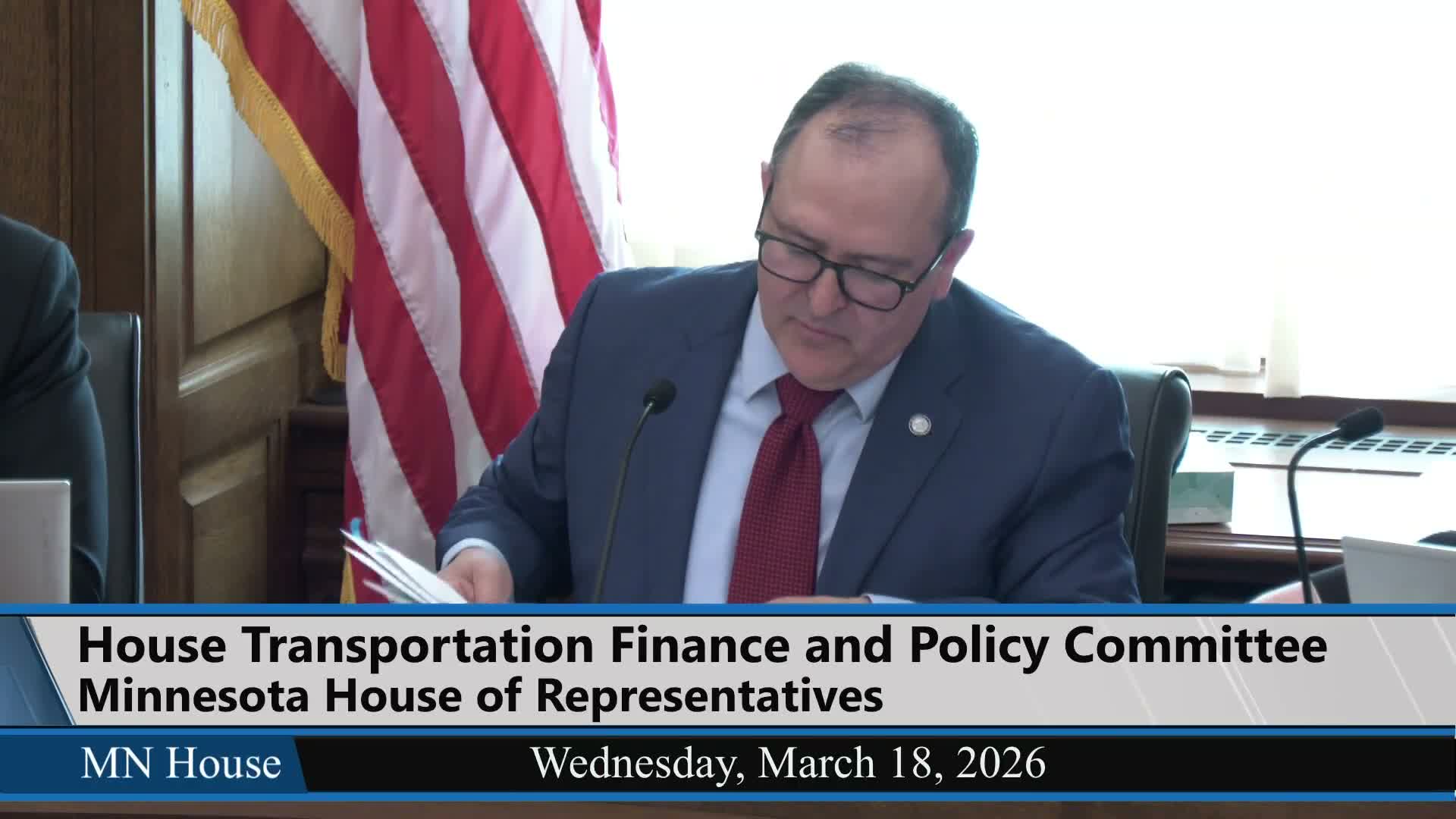
House File 4102, introduced to continue the Office of Legislative Auditor's salary-survey of state law enforcement, attracted testimony from law-enforcement organizations and the legislative auditor on March 18.
Mike Ladue, director of legislative affairs for Law Enforcement Labor Services and a former state patrol trooper, told the committee the survey provides data that keeps state law enforcement agencies competitive for recruitment and retention; he noted the State Patrol was low in comparative rankings and urged the committee to preserve a regular, objective survey process.
Jason Teal, president of the Troopers Association, described a chaplain program used in critical incidents and asked for limited statutory language similar to the Department of Natural Resources model to allow reimbursement for necessary, incidental expenses (lodging, meals) for volunteer chaplains; the state patrol committed to absorbing those costs within existing budgets when appropriate.
The committee adopted A1, which allows limited reimbursement to chaplains for necessary expenses, after questions about the clause "without regard to personnel laws or rules"; proponents said chaplains are volunteers, not employees, and the language addresses reimbursement mechanics. The committee also adopted A2, which narrows the Office of Legislative Auditor's study to compensation only (removing the benefits comparison) to lower the OLA fiscal note; OLA explained the benefits comparison requires much more staff time and complexity.
Members expressed concerns that benefit comparisons are integral to total-compensation analyses; supporters said removing benefits reduced the OLA cost and preserved a workable study for compensation. After amendment votes, HF4102 was laid over to allow additional work between stakeholders and authors.
Mike Ladue, director of legislative affairs for Law Enforcement Labor Services and a former state patrol trooper, told the committee the survey provides data that keeps state law enforcement agencies competitive for recruitment and retention; he noted the State Patrol was low in comparative rankings and urged the committee to preserve a regular, objective survey process.
Jason Teal, president of the Troopers Association, described a chaplain program used in critical incidents and asked for limited statutory language similar to the Department of Natural Resources model to allow reimbursement for necessary, incidental expenses (lodging, meals) for volunteer chaplains; the state patrol committed to absorbing those costs within existing budgets when appropriate.
The committee adopted A1, which allows limited reimbursement to chaplains for necessary expenses, after questions about the clause "without regard to personnel laws or rules"; proponents said chaplains are volunteers, not employees, and the language addresses reimbursement mechanics. The committee also adopted A2, which narrows the Office of Legislative Auditor's study to compensation only (removing the benefits comparison) to lower the OLA fiscal note; OLA explained the benefits comparison requires much more staff time and complexity.
Members expressed concerns that benefit comparisons are integral to total-compensation analyses; supporters said removing benefits reduced the OLA cost and preserved a workable study for compensation. After amendment votes, HF4102 was laid over to allow additional work between stakeholders and authors.
View the Full Meeting & All Its Details
This article offers just a summary. Unlock complete video, transcripts, and insights as a Founder Member.
✓
Watch full, unedited meeting videos
✓
Search every word spoken in unlimited transcripts
✓
AI summaries & real-time alerts (all government levels)
✓
Permanent access to expanding government content
30-day money-back guarantee
