Committee hears testimony on psychotropic informed‑consent bill; sponsor agrees to roll for further drafting
March 18, 2026 | 2026 Legislature TN, Tennessee
This article was created by AI summarizing key points discussed. AI makes mistakes, so for full details and context, please refer to the video of the full meeting. Please report any errors so we can fix them. Report an error »
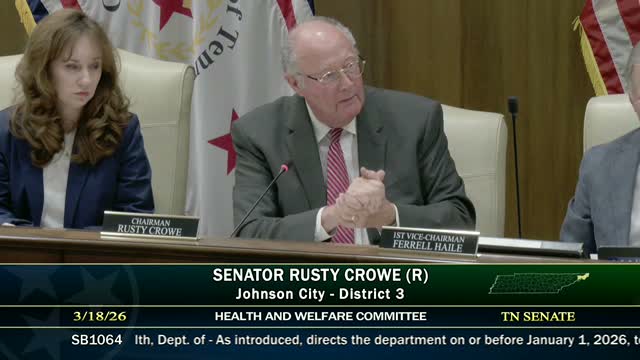
Senator Paul Bailey introduced an amendment that would require prescribers to give patients (or parents) the FDA product label and any FDA‑required patient med‑guide when starting a psychotropic medication, review risks, obtain a signed acknowledgment of receipt, and report serious adverse events to FDA MedWatch within 20 days.
Supporters described cases they say show harms when families were not informed of known risks. Kim Witsack, a former consumer representative to an FDA psychopharmacology advisory committee, recounted a family tragedy she said resulted from an absence of adequate informed consent. Britney Ruiz of CCHR Tennessee described multiple instances she said reflect insufficient family notification and adverse‑event reporting.
Several senators, including members of the medical community, warned a written‑consent requirement could create barriers to access for patients who benefit from psychotropic treatment or place unusual administrative burdens on prescribers. Senator Harshbarger and others asked the sponsor to work with stakeholders to refine the language to avoid unintended consequences in emergency situations and to ensure the bill does not impede access for patients who need treatment.
Senator Bailey agreed to roll the measure to the next calendar to address concerns raised by clinicians and to clarify exceptions for emergencies or other clinical circumstances.
The sponsor said the bill does not ban any medication or limit clinical judgement but seeks to improve patient and family information; critics said existing practice and professional standards already require informed counseling and worried about creating new obstacles to care.
Supporters described cases they say show harms when families were not informed of known risks. Kim Witsack, a former consumer representative to an FDA psychopharmacology advisory committee, recounted a family tragedy she said resulted from an absence of adequate informed consent. Britney Ruiz of CCHR Tennessee described multiple instances she said reflect insufficient family notification and adverse‑event reporting.
Several senators, including members of the medical community, warned a written‑consent requirement could create barriers to access for patients who benefit from psychotropic treatment or place unusual administrative burdens on prescribers. Senator Harshbarger and others asked the sponsor to work with stakeholders to refine the language to avoid unintended consequences in emergency situations and to ensure the bill does not impede access for patients who need treatment.
Senator Bailey agreed to roll the measure to the next calendar to address concerns raised by clinicians and to clarify exceptions for emergencies or other clinical circumstances.
The sponsor said the bill does not ban any medication or limit clinical judgement but seeks to improve patient and family information; critics said existing practice and professional standards already require informed counseling and worried about creating new obstacles to care.
Don't Miss a Word: See the Full Meeting!
Go beyond summaries. Unlock every video, transcript, and key insight with a Founder Membership.
✓
Get instant access to full meeting videos
✓
Search and clip any phrase from complete transcripts
✓
Receive AI-powered summaries & custom alerts
✓
Enjoy lifetime, unrestricted access to government data
30-day money-back guarantee
