Senate adopts new protections for minors appearing in monetized online content
March 19, 2026 | 2026 Legislature TN, Tennessee
This article was created by AI summarizing key points discussed. AI makes mistakes, so for full details and context, please refer to the video of the full meeting. Please report any errors so we can fix them. Report an error »
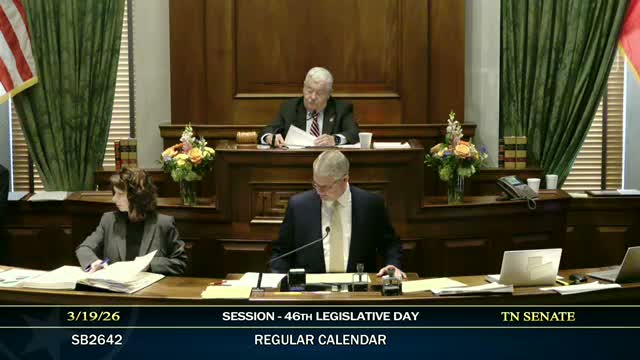
The Senate adopted Senate Bill 14‑69, an amended measure that updates Tennessee law to address monetized online content featuring minors. The amendment narrows the law’s scope to commercialized content meeting three conditions: (1) the child appears in at least 30% of the compensated content, (2) the content generates revenue through monetization, and (3) the child’s earnings from that content reach at least $15,000 annually.
Under the adopted amendment, a portion of earnings attributable to a minor’s appearance is to be placed in a protected account consistent with the Tennessee Uniform Transfers to Minors Act; children aged 14 and older also gain a statutory right to request removal of content featuring their likeness as they mature. Sponsors framed the bill as extending long‑standing protections for child performers into the modern digital economy; proponents said the thresholds prevent the law from covering casual family posts.
During floor debate several senators raised concerns that the bill could overreach into parental decisions or disadvantage minors who rely on content income for necessities. Senator Lamar warned that imposing trust requirements could limit access to earnings for disadvantaged minors; Senator Oliver asked about enforcement and how civil remedies would be handled. The sponsor said enforcement is primarily civil and that remedies focus on restitution and injunctive relief rather than criminal penalties.
The Senate adopted the amendment and passed the bill on third and final consideration (recorded vote: Ayes 29, Noes 2).
What the bill does: It creates a narrow, threshold‑based regime for monetized content involving minors, mandates protected accounts for earnings, allows certain content‑removal requests by older minors, and provides civil remedies for exploitation or improper financial handling.
Votes and formal action: The Senate recorded 29 in favor and 2 opposed on third and final consideration; motion to reconsider tabled.
Why it matters: The law updates child‑labor and child‑protection principles for a new media environment and establishes civil mechanisms to address commercialization and exploitation of minors online.
Under the adopted amendment, a portion of earnings attributable to a minor’s appearance is to be placed in a protected account consistent with the Tennessee Uniform Transfers to Minors Act; children aged 14 and older also gain a statutory right to request removal of content featuring their likeness as they mature. Sponsors framed the bill as extending long‑standing protections for child performers into the modern digital economy; proponents said the thresholds prevent the law from covering casual family posts.
During floor debate several senators raised concerns that the bill could overreach into parental decisions or disadvantage minors who rely on content income for necessities. Senator Lamar warned that imposing trust requirements could limit access to earnings for disadvantaged minors; Senator Oliver asked about enforcement and how civil remedies would be handled. The sponsor said enforcement is primarily civil and that remedies focus on restitution and injunctive relief rather than criminal penalties.
The Senate adopted the amendment and passed the bill on third and final consideration (recorded vote: Ayes 29, Noes 2).
What the bill does: It creates a narrow, threshold‑based regime for monetized content involving minors, mandates protected accounts for earnings, allows certain content‑removal requests by older minors, and provides civil remedies for exploitation or improper financial handling.
Votes and formal action: The Senate recorded 29 in favor and 2 opposed on third and final consideration; motion to reconsider tabled.
Why it matters: The law updates child‑labor and child‑protection principles for a new media environment and establishes civil mechanisms to address commercialization and exploitation of minors online.
View the Full Meeting & All Its Details
This article offers just a summary. Unlock complete video, transcripts, and insights as a Founder Member.
✓
Watch full, unedited meeting videos
✓
Search every word spoken in unlimited transcripts
✓
AI summaries & real-time alerts (all government levels)
✓
Permanent access to expanding government content
30-day money-back guarantee
