Proposal to let buses use camera enforcement for bus and bike lanes fails in committee
March 18, 2026 | 2026 Legislature MN, Minnesota
This article was created by AI summarizing key points discussed. AI makes mistakes, so for full details and context, please refer to the video of the full meeting. Please report any errors so we can fix them. Report an error »
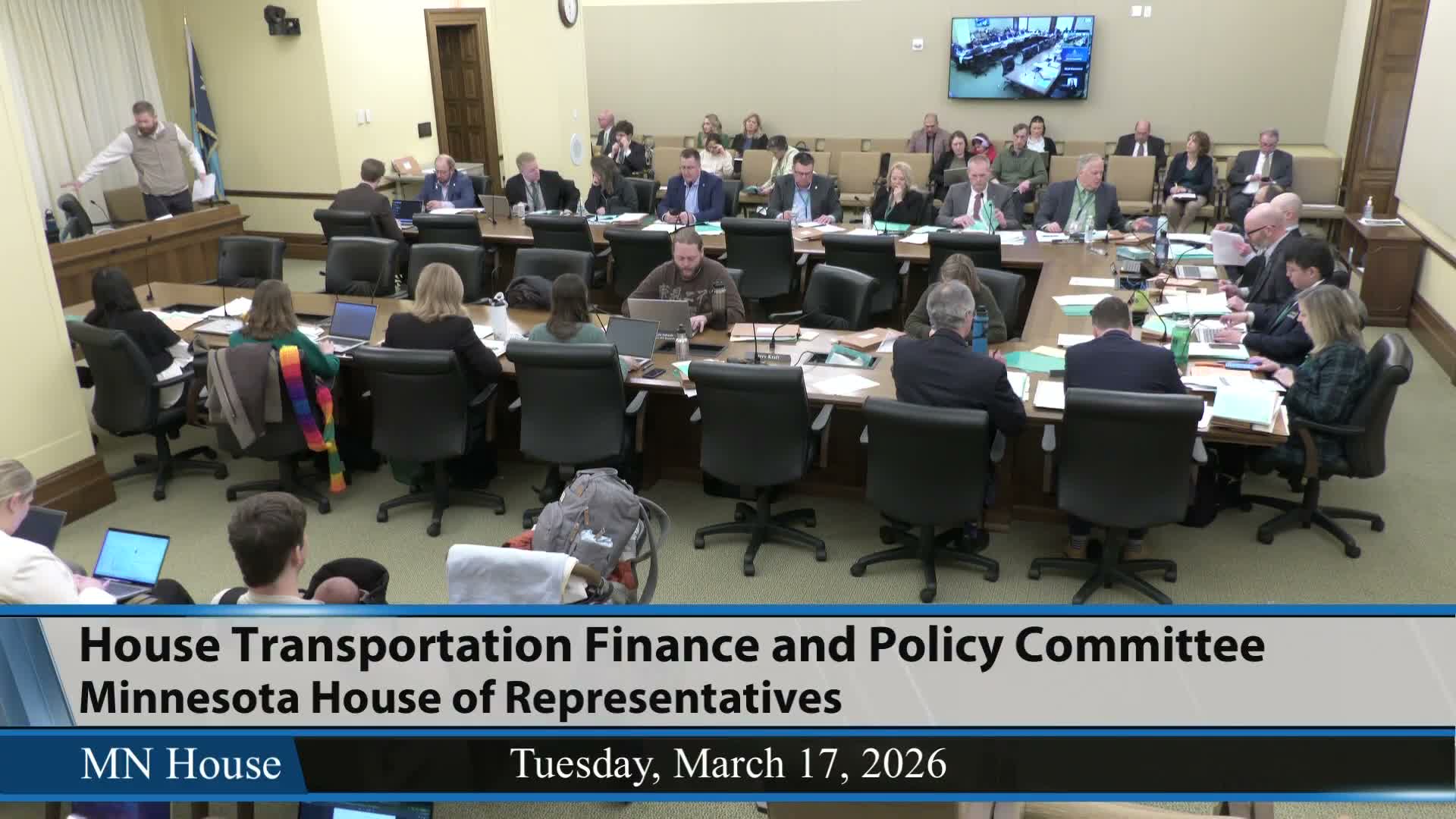
Representative Jones introduced House File 39‑66, saying the bill would allow transit operators and local governments to use vehicle‑mounted automated parking enforcement cameras on buses to deter and enforce illegally parked or stopped vehicles in bus and bike lanes. "We need to free the buses," Jones said, arguing the cameras would protect the state's investment in bus rapid transit and improve reliability.
Steve Huser, senior government relations representative for the City of Minneapolis, told the committee that blocked bus lanes are a recurring problem—citing daily blockages on 7th Street and Nicollet Mall—and that clearer enforcement would improve transit speed and cyclist safety. Anne Shekani of Hayden AI described the camera systems and privacy protections: the systems capture short video and stills for human review, ban biometric uses such as facial recognition, and include on‑device blurring and retention rules.
Members pressed the author and testifiers on cost and operational details. Representative Joy asked whether the program would create a fiscal cost; Jones said transit agencies could use existing funds but the bill included a placeholder appropriation in case additional funding were available. Representative Murphy asked whether cameras collect other license plates or facial data; Shekani said the system reads only the violating vehicle’s plate and deletes non‑violation footage, with blurring available and human review before issuing citations. Members also raised practical questions about tickets going to vehicle owners when drivers borrow cars and fraud from swapped plates.
After discussion, Representative Jones renewed a motion to refer House File 39‑66, as amended, to the Judiciary, Finance and Civil Law committee. Members voted; the motion did not prevail.
Because the committee recorded the motion as failing on a voice vote, the bill will not be referred from this committee at this time; proponents said more technical coordination with transit operators was needed before moving forward.
Steve Huser, senior government relations representative for the City of Minneapolis, told the committee that blocked bus lanes are a recurring problem—citing daily blockages on 7th Street and Nicollet Mall—and that clearer enforcement would improve transit speed and cyclist safety. Anne Shekani of Hayden AI described the camera systems and privacy protections: the systems capture short video and stills for human review, ban biometric uses such as facial recognition, and include on‑device blurring and retention rules.
Members pressed the author and testifiers on cost and operational details. Representative Joy asked whether the program would create a fiscal cost; Jones said transit agencies could use existing funds but the bill included a placeholder appropriation in case additional funding were available. Representative Murphy asked whether cameras collect other license plates or facial data; Shekani said the system reads only the violating vehicle’s plate and deletes non‑violation footage, with blurring available and human review before issuing citations. Members also raised practical questions about tickets going to vehicle owners when drivers borrow cars and fraud from swapped plates.
After discussion, Representative Jones renewed a motion to refer House File 39‑66, as amended, to the Judiciary, Finance and Civil Law committee. Members voted; the motion did not prevail.
Because the committee recorded the motion as failing on a voice vote, the bill will not be referred from this committee at this time; proponents said more technical coordination with transit operators was needed before moving forward.
Don't Miss a Word: See the Full Meeting!
Go beyond summaries. Unlock every video, transcript, and key insight with a Founder Membership.
✓
Get instant access to full meeting videos
✓
Search and clip any phrase from complete transcripts
✓
Receive AI-powered summaries & custom alerts
✓
Enjoy lifetime, unrestricted access to government data
30-day money-back guarantee
