Committee narrows enforcement data retention in language review, Turnpike Authority flags evidence-timing concerns
March 20, 2026 | 2026 Legislature ME, Maine
This article was created by AI summarizing key points discussed. AI makes mistakes, so for full details and context, please refer to the video of the full meeting. Please report any errors so we can fix them. Report an error »
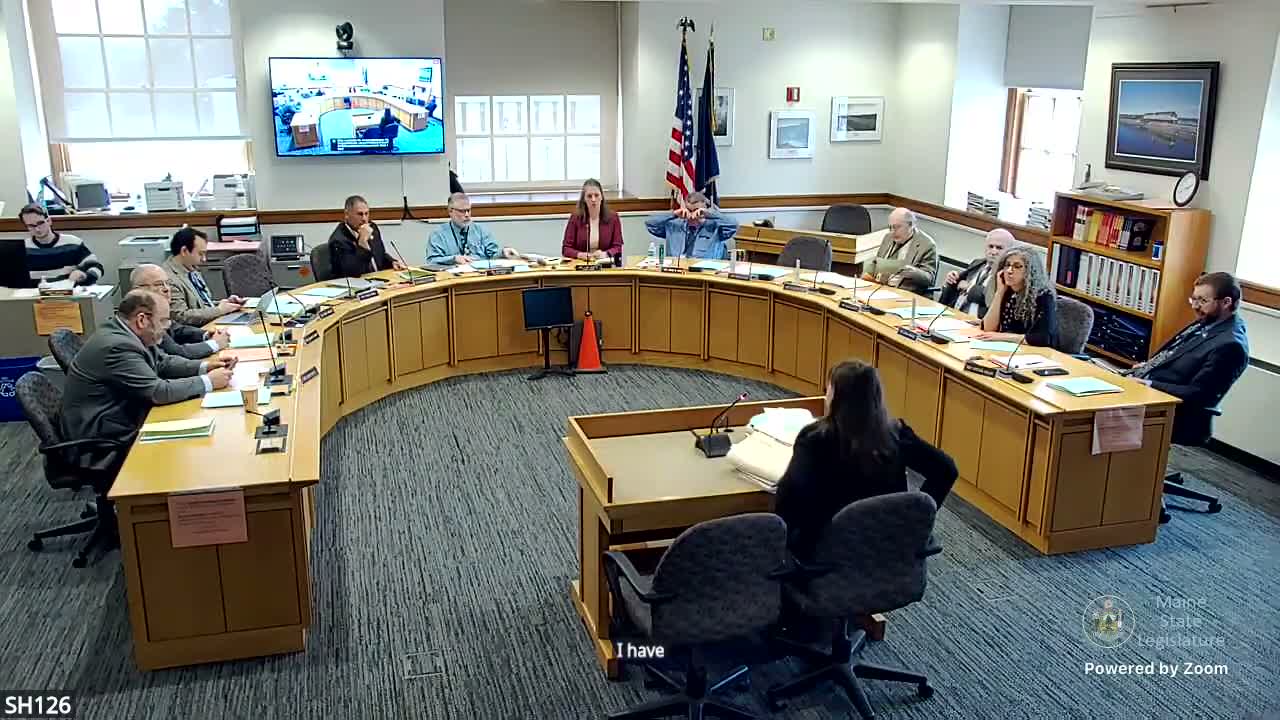
The Transportation Committee reviewed majority-report language for a vehicle-enforcement and public-records provision (LD 1457) on March 19, focusing on what enforcement systems could retain and how long images and other personally identifiable information would be kept.
OPLA analyst Melanie Furman said the judiciary committee recommended narrowing the set of retained personally identifiable information and moving language so images of faces are destroyed quickly. The revised draft would allow the authority and vendors to retain a license-plate number and, at the committee's discretion, registration-plate type and state for purposes of identifying repeat violations while requiring the destruction of other personal data.
Jonathan Airy, staff attorney and board secretary for the Maine Turnpike Authority, told the committee the addition of registration-plate type and state addressed the authority's main concern but raised two operational questions: whether auditors would need access to the retained data and whether requiring auditors to destroy data after an audit might impede necessary reviews. Airy also warned that the draft's 21-day destruction timeline in certain flows could lead to a situation where a photo is destroyed before a later Secretary of State hearing could consider it, potentially complicating appeals. "If this language was adopted 21 days after they failed to respond, we would have to destroy the photo," Airy said, noting the authority currently certifies records as they proceed.
Members debated using the phrase "as soon as possible" versus a fixed 21-day window; the judiciary committee had approved the narrower structure, and Melanie said the draft attempts to distinguish immediate destruction of images from retention of narrowly defined enforcement data. The committee added registration-plate type and state to the allowed retained fields and included language that auditing firms must destroy any information they receive after completing audits.
Emily Cook, Deputy Secretary of State, said the Secretary of State's office could manage the review flow and that using a pilot would let agencies and the Legislature test whether the destruction timing created practical problems for appeals.
The committee will circulate final language by email and carry the changes forward in the majority report; the draft changes were reviewed by judiciary and the Turnpike Authority and remain subject to further technical edits.
OPLA analyst Melanie Furman said the judiciary committee recommended narrowing the set of retained personally identifiable information and moving language so images of faces are destroyed quickly. The revised draft would allow the authority and vendors to retain a license-plate number and, at the committee's discretion, registration-plate type and state for purposes of identifying repeat violations while requiring the destruction of other personal data.
Jonathan Airy, staff attorney and board secretary for the Maine Turnpike Authority, told the committee the addition of registration-plate type and state addressed the authority's main concern but raised two operational questions: whether auditors would need access to the retained data and whether requiring auditors to destroy data after an audit might impede necessary reviews. Airy also warned that the draft's 21-day destruction timeline in certain flows could lead to a situation where a photo is destroyed before a later Secretary of State hearing could consider it, potentially complicating appeals. "If this language was adopted 21 days after they failed to respond, we would have to destroy the photo," Airy said, noting the authority currently certifies records as they proceed.
Members debated using the phrase "as soon as possible" versus a fixed 21-day window; the judiciary committee had approved the narrower structure, and Melanie said the draft attempts to distinguish immediate destruction of images from retention of narrowly defined enforcement data. The committee added registration-plate type and state to the allowed retained fields and included language that auditing firms must destroy any information they receive after completing audits.
Emily Cook, Deputy Secretary of State, said the Secretary of State's office could manage the review flow and that using a pilot would let agencies and the Legislature test whether the destruction timing created practical problems for appeals.
The committee will circulate final language by email and carry the changes forward in the majority report; the draft changes were reviewed by judiciary and the Turnpike Authority and remain subject to further technical edits.
View the Full Meeting & All Its Details
This article offers just a summary. Unlock complete video, transcripts, and insights as a Founder Member.
✓
Watch full, unedited meeting videos
✓
Search every word spoken in unlimited transcripts
✓
AI summaries & real-time alerts (all government levels)
✓
Permanent access to expanding government content
30-day money-back guarantee
