City reviews wastewater budget, plans rebuild of Poland Avenue pump station and phases $43 million project
March 12, 2026 | Youngstown City, Mahoning County, Ohio
This article was created by AI summarizing key points discussed. AI makes mistakes, so for full details and context, please refer to the video of the full meeting. Please report any errors so we can fix them. Report an error »
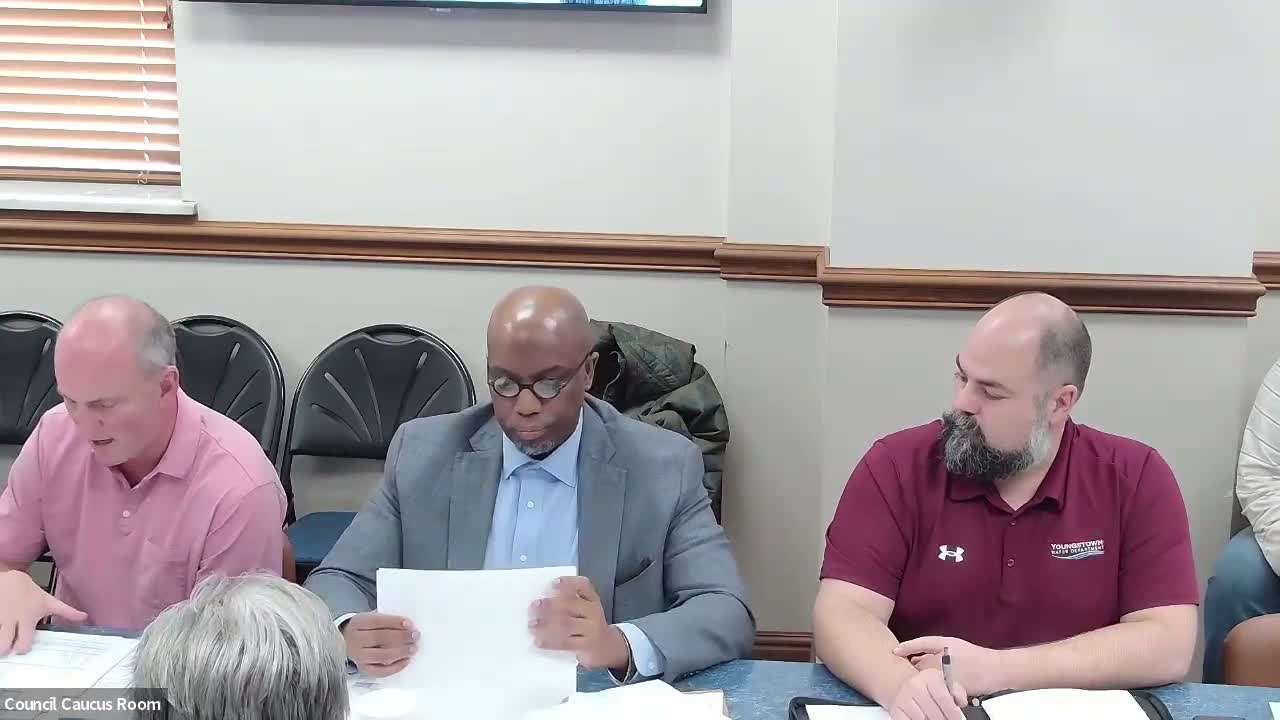
Youngstown City Council heard details on the wastewater budget on March 10, where finance and wastewater staff outlined operating increases and several capital projects expected to span multiple years. Finance staff said the sewer maintenance/rehab division shows a year‑over‑year increase of $263,000 driven by the 27th payroll and higher insurance costs.
Wastewater director Abby Benison said the division handles operating supplies in‑house (pipe, castings, pumps) to avoid contractor markups, while larger pipe and basin replacements require outside contractors because the department lacks a construction crew. She said the system has 14 wastewater pump stations and is designing a 15th.
Treating and disposing sewage will carry the bulk of operations headcount, the administration said, producing a $482,000 increase in wages and benefits for treatment and disposal. Benison noted ongoing sludge disposal costs and that the city currently hauls sludge to Republic Landfill.
Benison and Finance Director Kyle Mizeck outlined several capital projects. The Poland Avenue pump station, at Poland Avenue and Walton Street, will be completely rebuilt on the existing footprint; staff said construction is expected to start in April and finish by fall. That work will be covered from the wastewater treatment plant surplus, with no loan or grant financing anticipated for the immediate rebuild.
The West Division Sewer project is nearing completion and was funded in part by a $4.8 million grant; the city must front contractor costs and then seek reimbursement under the Ohio Water Development Authority and state processes, staff said. Separately, the administration described a previously approved roughly $43 million project in the Mill Creek/Glacier Lake area; because state reimbursement schedules now require the city to show and expend funds up front, finance said the city will add the appropriation incrementally as invoices arrive rather than recording the full $43 million at once.
The administration also highlighted a long‑term control plan that includes design work for a high‑rate treatment facility on the city's west side. A presenter estimated the multi‑phase program could total in the low hundreds of millions over several years (a rough estimate mentioned in the hearing was about $140–150 million through 2030). Staff said design and site work for large projects account for a large portion of the administration's professional services request for 2026; some contract balances may carry into 2027.
The council requested a consolidated roll‑up of water and wastewater budgets; finance said it would provide that summary to council staff. The hearing closed without votes on any of the projects; councilmembers asked staff to return with ordinance language and phasing details when specific appropriations are requested.
Wastewater director Abby Benison said the division handles operating supplies in‑house (pipe, castings, pumps) to avoid contractor markups, while larger pipe and basin replacements require outside contractors because the department lacks a construction crew. She said the system has 14 wastewater pump stations and is designing a 15th.
Treating and disposing sewage will carry the bulk of operations headcount, the administration said, producing a $482,000 increase in wages and benefits for treatment and disposal. Benison noted ongoing sludge disposal costs and that the city currently hauls sludge to Republic Landfill.
Benison and Finance Director Kyle Mizeck outlined several capital projects. The Poland Avenue pump station, at Poland Avenue and Walton Street, will be completely rebuilt on the existing footprint; staff said construction is expected to start in April and finish by fall. That work will be covered from the wastewater treatment plant surplus, with no loan or grant financing anticipated for the immediate rebuild.
The West Division Sewer project is nearing completion and was funded in part by a $4.8 million grant; the city must front contractor costs and then seek reimbursement under the Ohio Water Development Authority and state processes, staff said. Separately, the administration described a previously approved roughly $43 million project in the Mill Creek/Glacier Lake area; because state reimbursement schedules now require the city to show and expend funds up front, finance said the city will add the appropriation incrementally as invoices arrive rather than recording the full $43 million at once.
The administration also highlighted a long‑term control plan that includes design work for a high‑rate treatment facility on the city's west side. A presenter estimated the multi‑phase program could total in the low hundreds of millions over several years (a rough estimate mentioned in the hearing was about $140–150 million through 2030). Staff said design and site work for large projects account for a large portion of the administration's professional services request for 2026; some contract balances may carry into 2027.
The council requested a consolidated roll‑up of water and wastewater budgets; finance said it would provide that summary to council staff. The hearing closed without votes on any of the projects; councilmembers asked staff to return with ordinance language and phasing details when specific appropriations are requested.
Don't Miss a Word: See the Full Meeting!
Go beyond summaries. Unlock every video, transcript, and key insight with a Founder Membership.
✓
Get instant access to full meeting videos
✓
Search and clip any phrase from complete transcripts
✓
Receive AI-powered summaries & custom alerts
✓
Enjoy lifetime, unrestricted access to government data
30-day money-back guarantee
