City legal staff outlines who can appeal zoning decisions and how 'aggrieved party' is defined
March 17, 2026 | Billings, Yellowstone, Montana
This article was created by AI summarizing key points discussed. AI makes mistakes, so for full details and context, please refer to the video of the full meeting. Please report any errors so we can fix them. Report an error »
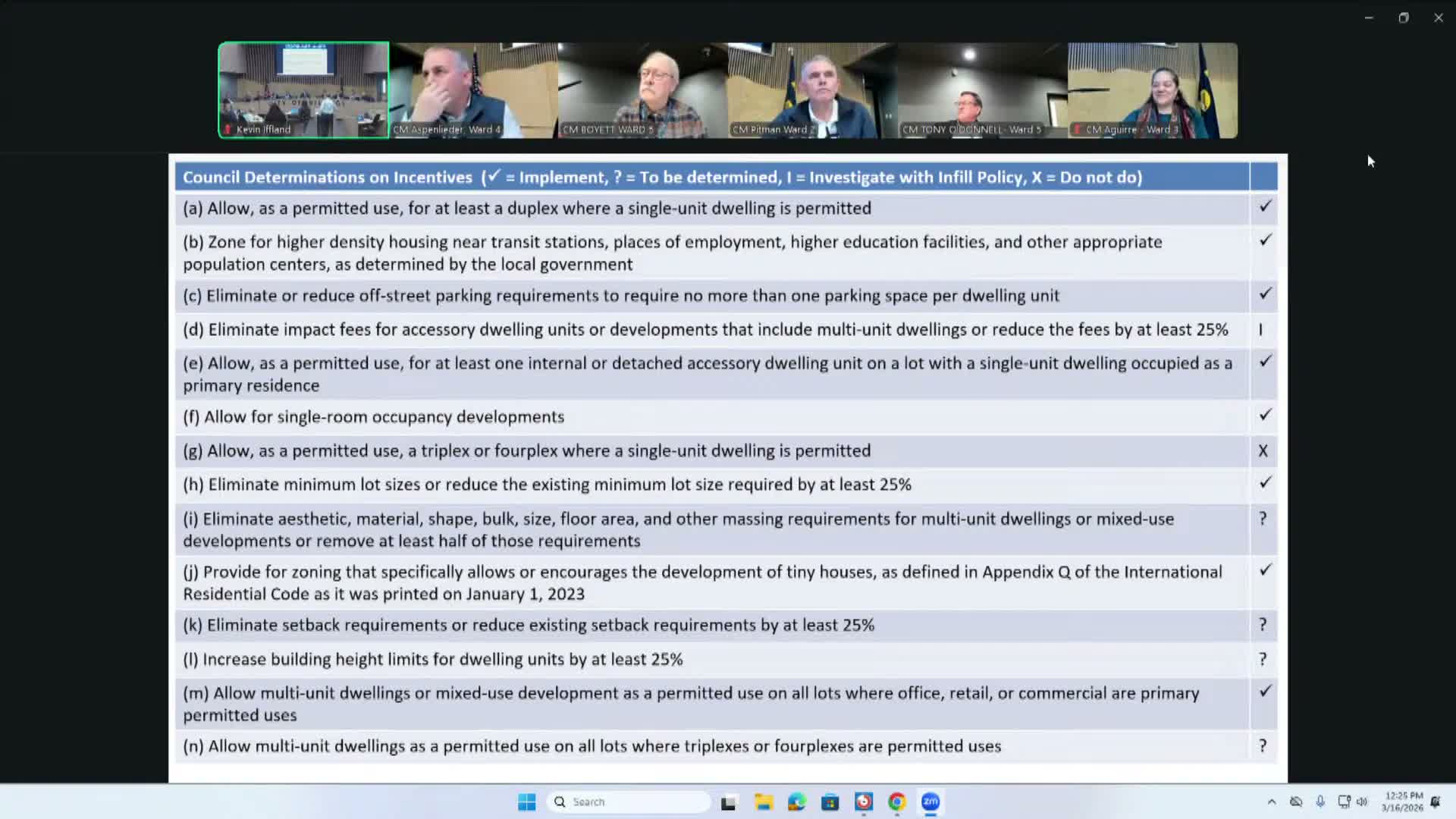
City legal staff gave a detailed explanation of the 'aggrieved party' concept under the Montana Land Use Planning Act and how appeals proceed when a planning division action is taken on a permit or zone change.
Jessica McKee, civil division attorney assisting the project, told council that an 'aggrieved party' is distinct from someone in the notice area who simply has a comment. An aggrieved party is someone who can show a specific, cognizable injury caused by a zoning action (not merely a speculative reduction in property value). McKee said such a party may appeal a staff grant to the planning commission and, if aggrievement is found, the appeal can be granted and the application put on hold; further appeal can move to the city council and ultimately to district court.
Council members asked practical questions about whether a developer denied a permit could be an aggrieved party and whether routine neighborhood objections would qualify. McKee and staff explained that developers can be aggrieved if a lawful entitlement is denied, but general notice‑area comments without evidence of a cognizable injury typically do not meet the aggrieved‑party standard. Staff clarified that the planning division initially decides whether comments rise to a valid objection and that the planning commission determines aggrievement during an appeal.
Council asked staff to prepare a simple flowchart explaining the 15‑day notice, planning division review, appeal to planning commission, and possible city council review. Legal staff agreed to provide a flowchart to make the procedural steps clearer to council and the public.
Representative quotes: Jessica McKee said, "An aggrieved party comes into effect when there is a zoning action... If they are aggrieved under the statute, which means that they have an injury that's not just general... they can appeal." A council member asked for a flowchart; McKee replied, "We'd be happy to do that."
Jessica McKee, civil division attorney assisting the project, told council that an 'aggrieved party' is distinct from someone in the notice area who simply has a comment. An aggrieved party is someone who can show a specific, cognizable injury caused by a zoning action (not merely a speculative reduction in property value). McKee said such a party may appeal a staff grant to the planning commission and, if aggrievement is found, the appeal can be granted and the application put on hold; further appeal can move to the city council and ultimately to district court.
Council members asked practical questions about whether a developer denied a permit could be an aggrieved party and whether routine neighborhood objections would qualify. McKee and staff explained that developers can be aggrieved if a lawful entitlement is denied, but general notice‑area comments without evidence of a cognizable injury typically do not meet the aggrieved‑party standard. Staff clarified that the planning division initially decides whether comments rise to a valid objection and that the planning commission determines aggrievement during an appeal.
Council asked staff to prepare a simple flowchart explaining the 15‑day notice, planning division review, appeal to planning commission, and possible city council review. Legal staff agreed to provide a flowchart to make the procedural steps clearer to council and the public.
Representative quotes: Jessica McKee said, "An aggrieved party comes into effect when there is a zoning action... If they are aggrieved under the statute, which means that they have an injury that's not just general... they can appeal." A council member asked for a flowchart; McKee replied, "We'd be happy to do that."
View the Full Meeting & All Its Details
This article offers just a summary. Unlock complete video, transcripts, and insights as a Founder Member.
✓
Watch full, unedited meeting videos
✓
Search every word spoken in unlimited transcripts
✓
AI summaries & real-time alerts (all government levels)
✓
Permanent access to expanding government content
30-day money-back guarantee
