DEQ director outlines $142M base budget and says lab relocation will take months to complete
March 18, 2026 | 2026 Legislature ND, North Dakota
This article was created by AI summarizing key points discussed. AI makes mistakes, so for full details and context, please refer to the video of the full meeting. Please report any errors so we can fix them. Report an error »
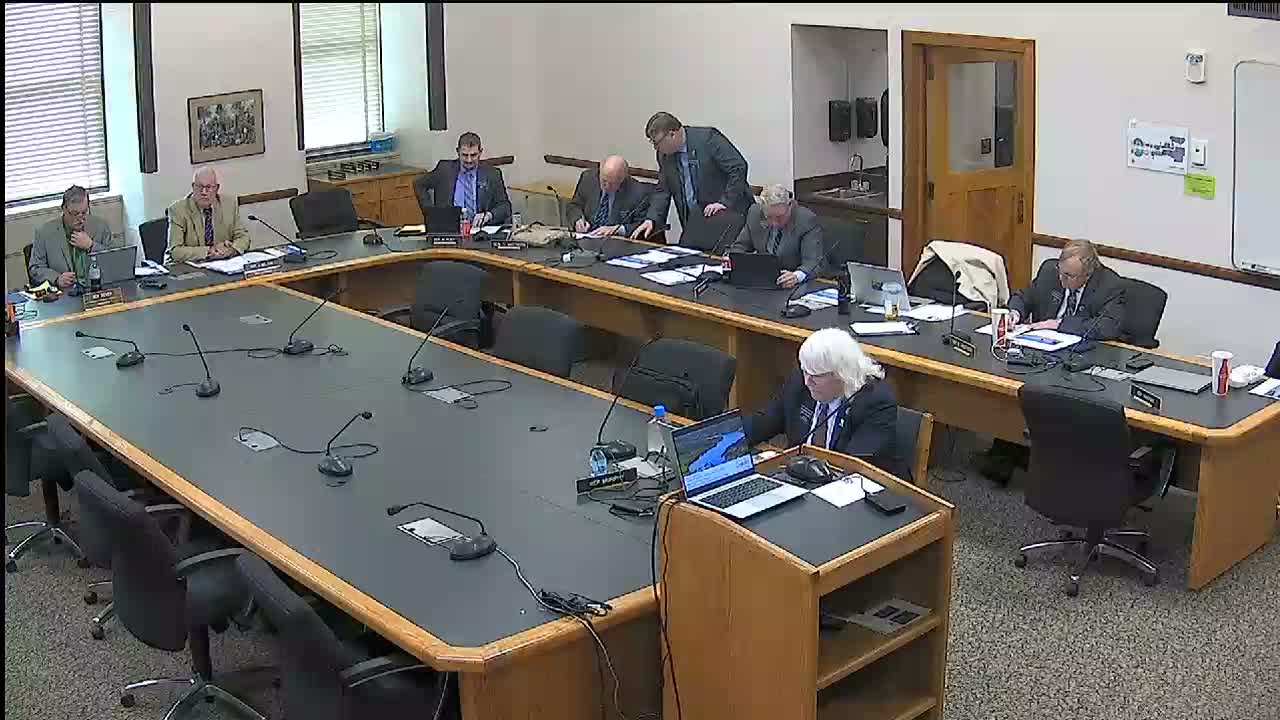
Dave Glott, director of the Department of Environmental Quality, told the HR division budget section that the agency’s base appropriation for the current biennium is roughly $142 million and is funded primarily by federal and special funds.
"We have 175 FTEs," Glott said, describing the agency’s six divisions and core responsibilities. He said DEQ’s operating expenses are driven largely by travel, rental, repairs, IT, and laboratory supplies.
Beth Jacobson, DEQ’s director of accounting, gave a line‑item overview and said one‑time funding this biennium largely supports the department’s move to a new chemistry laboratory on the state capital complex. She listed a $1.5 million moving budget for equipment procurement and setup and a separate $9.7 million line of credit for wastewater infrastructure subawards.
Jacobson said the agency’s grants line totals about $59.9 million and that much of the federal infrastructure funding is passed through to project partners. She added that salaries and wages are running near expected burn rates and that capital asset spending will accelerate when equipment is delivered and the lab move begins.
Glott described the technical work of relocating delicate instruments and said the department plans a staged move to avoid the busy sampling season. "These are very technical, very sensitive instrumentation," he said, and the department expects most of the move to occur in October to avoid disrupting May–August laboratory work.
Committee members asked whether travel spending reflected statewide fieldwork and whether an EPA policy shift might increase state responsibilities. Jacobson confirmed DEQ maintains field offices (Fargo, Sawyer, Gwinner) and that much travel supports on‑site inspections. Glott said he expects some operational changes if EPA roles shift, but he also warned that any federal divestment could bring added unfunded duties to the state.
The committee did not take formal action on appropriations at this meeting; the presentation served as the agency’s base budget briefing.
"We have 175 FTEs," Glott said, describing the agency’s six divisions and core responsibilities. He said DEQ’s operating expenses are driven largely by travel, rental, repairs, IT, and laboratory supplies.
Beth Jacobson, DEQ’s director of accounting, gave a line‑item overview and said one‑time funding this biennium largely supports the department’s move to a new chemistry laboratory on the state capital complex. She listed a $1.5 million moving budget for equipment procurement and setup and a separate $9.7 million line of credit for wastewater infrastructure subawards.
Jacobson said the agency’s grants line totals about $59.9 million and that much of the federal infrastructure funding is passed through to project partners. She added that salaries and wages are running near expected burn rates and that capital asset spending will accelerate when equipment is delivered and the lab move begins.
Glott described the technical work of relocating delicate instruments and said the department plans a staged move to avoid the busy sampling season. "These are very technical, very sensitive instrumentation," he said, and the department expects most of the move to occur in October to avoid disrupting May–August laboratory work.
Committee members asked whether travel spending reflected statewide fieldwork and whether an EPA policy shift might increase state responsibilities. Jacobson confirmed DEQ maintains field offices (Fargo, Sawyer, Gwinner) and that much travel supports on‑site inspections. Glott said he expects some operational changes if EPA roles shift, but he also warned that any federal divestment could bring added unfunded duties to the state.
The committee did not take formal action on appropriations at this meeting; the presentation served as the agency’s base budget briefing.
Don't Miss a Word: See the Full Meeting!
Go beyond summaries. Unlock every video, transcript, and key insight with a Founder Membership.
✓
Get instant access to full meeting videos
✓
Search and clip any phrase from complete transcripts
✓
Receive AI-powered summaries & custom alerts
✓
Enjoy lifetime, unrestricted access to government data
30-day money-back guarantee
