Sen. Jonathan Sickler: state holds about $35 billion; board urges better timing, forecasting and simpler CD process
March 18, 2026 | 2026 Legislature ND, North Dakota
This article was created by AI summarizing key points discussed. AI makes mistakes, so for full details and context, please refer to the video of the full meeting. Please report any errors so we can fix them. Report an error »
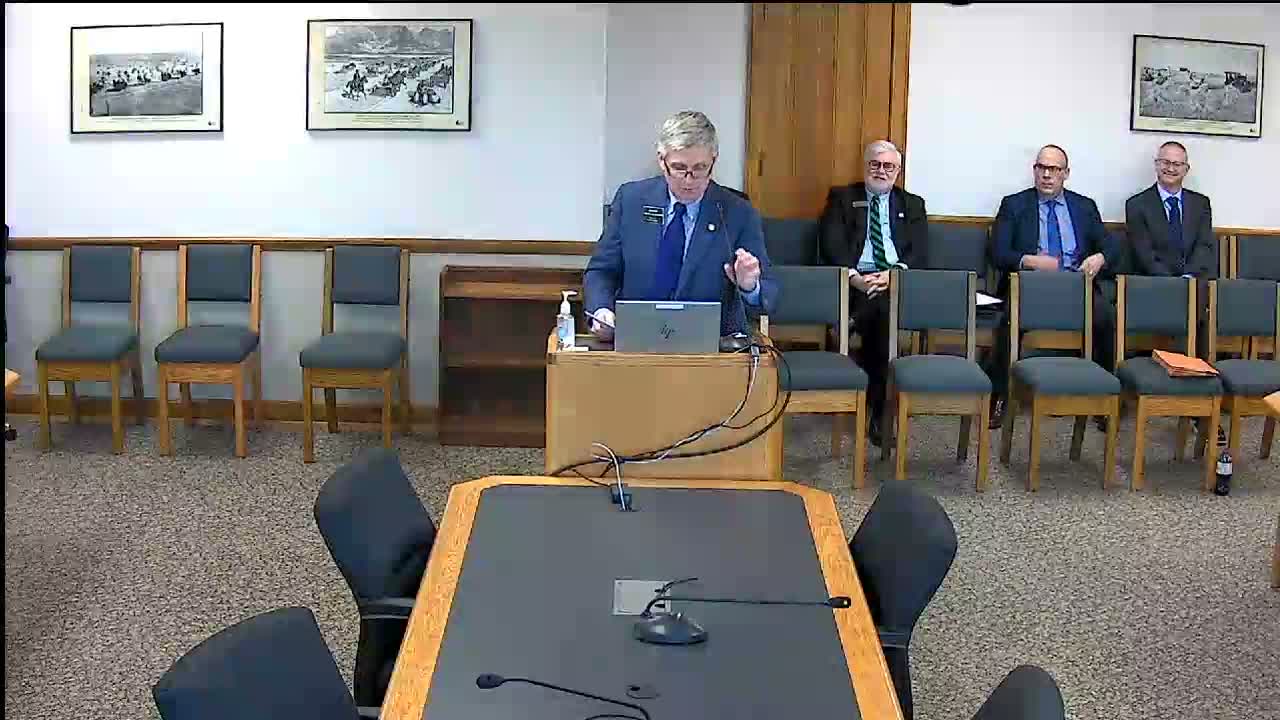
Sen. Jonathan Sickler, a member of the Cash Management Board, told the Leadership Division the board’s interim review (authorized under House Bill 1228) found roughly $35,000,000,000 in state investments and liquid assets and urged the Legislature to improve statewide forecasting and the timing of transfers to boost returns without increasing risk.
The board’s work, Sickler said, focused on consolidating visibility of the state’s liquidity. “Without a clear understanding of the state's overall liquidity position … it becomes difficult to determine how much can be invested long term, how much must remain available for daily operations, and how the timing of transfers and payments affects performance,” he said. Sickler said about 89% of the state’s funds are held in longer-term investments and about 11% in cash or cash equivalents, citing one-year returns of 9.48% (long-term funds) and 4.68% (cash equivalents) through Sept. 30, 2025.
Sickler described an operational change already under way: instead of managing hundreds of short-term certificates of deposit (the testimony cites "over 506 months CDs" in the record), the Bank of North Dakota and the State Treasurer now use a “special rate savings account that pays virtually the same interest rate and significantly reduces the administrative process.” He said the primary benefit is reduced administrative time for agencies rather than a materially higher state return.
The senator also highlighted a timing problem created by last year’s homestead tax relief (House Bill 1176), which required a large, single transfer of legacy‑fund earnings to fund credits. Sickler said that single transfer forced the state to move roughly $409,000,000 in earnings at once, costing what the board estimates as more than $200,000,000 in forgone higher returns; the board plans to consider legislative fixes for the 2027 session.
Members pressed for details on how agencies will communicate with the Bank of North Dakota and whether special funds held outside the bank (for example, at Northern Trust) could be brought onto a statewide platform. Kelvin Hullitt of the Bank of North Dakota told lawmakers the board is examining instances where special funds are invested outside the bank and whether bringing more balances into state management would be appropriate.
Next steps: the Cash Management Board will continue to examine agency cash flows, explore forecasting tools and consider whether statutory or rule changes are needed to avoid large, single-year transfers that lower returns.
The board’s work, Sickler said, focused on consolidating visibility of the state’s liquidity. “Without a clear understanding of the state's overall liquidity position … it becomes difficult to determine how much can be invested long term, how much must remain available for daily operations, and how the timing of transfers and payments affects performance,” he said. Sickler said about 89% of the state’s funds are held in longer-term investments and about 11% in cash or cash equivalents, citing one-year returns of 9.48% (long-term funds) and 4.68% (cash equivalents) through Sept. 30, 2025.
Sickler described an operational change already under way: instead of managing hundreds of short-term certificates of deposit (the testimony cites "over 506 months CDs" in the record), the Bank of North Dakota and the State Treasurer now use a “special rate savings account that pays virtually the same interest rate and significantly reduces the administrative process.” He said the primary benefit is reduced administrative time for agencies rather than a materially higher state return.
The senator also highlighted a timing problem created by last year’s homestead tax relief (House Bill 1176), which required a large, single transfer of legacy‑fund earnings to fund credits. Sickler said that single transfer forced the state to move roughly $409,000,000 in earnings at once, costing what the board estimates as more than $200,000,000 in forgone higher returns; the board plans to consider legislative fixes for the 2027 session.
Members pressed for details on how agencies will communicate with the Bank of North Dakota and whether special funds held outside the bank (for example, at Northern Trust) could be brought onto a statewide platform. Kelvin Hullitt of the Bank of North Dakota told lawmakers the board is examining instances where special funds are invested outside the bank and whether bringing more balances into state management would be appropriate.
Next steps: the Cash Management Board will continue to examine agency cash flows, explore forecasting tools and consider whether statutory or rule changes are needed to avoid large, single-year transfers that lower returns.
Don't Miss a Word: See the Full Meeting!
Go beyond summaries. Unlock every video, transcript, and key insight with a Founder Membership.
✓
Get instant access to full meeting videos
✓
Search and clip any phrase from complete transcripts
✓
Receive AI-powered summaries & custom alerts
✓
Enjoy lifetime, unrestricted access to government data
30-day money-back guarantee
