Rep. Nathan Toleman says task force found agencies lack consistent metrics; proposes program evaluators and dashboards
March 18, 2026 | 2026 Legislature ND, North Dakota
This article was created by AI summarizing key points discussed. AI makes mistakes, so for full details and context, please refer to the video of the full meeting. Please report any errors so we can fix them. Report an error »
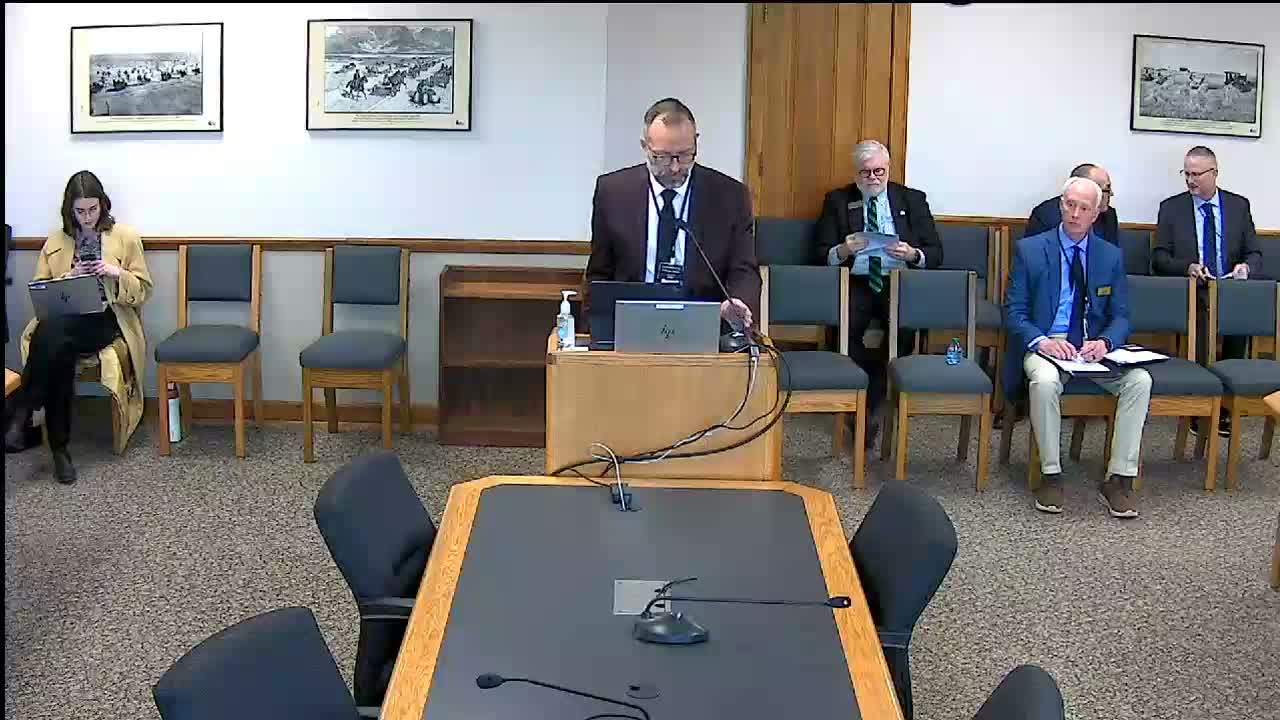
Representative Nathan Toleman (District 34), chair of the Task Force on Government Efficiency, told the committee the group met multiple times and identified a central problem: the Legislature and agencies lack consistent metrics to determine whether programs are delivering intended outcomes.
“We don’t have metrics to measure these things or they get lost if there are metrics,” Toleman said, describing five guiding questions the task force recommends agencies answer for new or expanding programs: who it affects, expected outcomes, alternatives, measurement of success and cost. He said administrative buy-in exists and that agencies including HHS, Commerce and the university system will return with program-specific findings.
The task force declined to submit study legislation but Toleman said he submitted stand-alone legislation during a special session that did not pass; the group is exploring whether the Legislature should require these metrics by statute or rely on joint rules or administrative rulemaking. He said program evaluators and dashboards — and possibly AI tools to find duplicate or outdated programs — could be useful but would require investment and better centralized data.
Members discussed workforce program overlap across nine agencies and flagged potential duplication. Toleman said a Utah-like model (a collaborative efficiency office working closely with the governor’s efficiency staff) is under consideration and that program evaluators could be assigned based on legislative management priorities.
Next steps: the task force will continue agency reviews, the Legislative Council’s program-evaluation staff will prioritize projects (childcare evaluation already underway) and lawmakers may consider statutory changes to require metrics for future budgets.
“We don’t have metrics to measure these things or they get lost if there are metrics,” Toleman said, describing five guiding questions the task force recommends agencies answer for new or expanding programs: who it affects, expected outcomes, alternatives, measurement of success and cost. He said administrative buy-in exists and that agencies including HHS, Commerce and the university system will return with program-specific findings.
The task force declined to submit study legislation but Toleman said he submitted stand-alone legislation during a special session that did not pass; the group is exploring whether the Legislature should require these metrics by statute or rely on joint rules or administrative rulemaking. He said program evaluators and dashboards — and possibly AI tools to find duplicate or outdated programs — could be useful but would require investment and better centralized data.
Members discussed workforce program overlap across nine agencies and flagged potential duplication. Toleman said a Utah-like model (a collaborative efficiency office working closely with the governor’s efficiency staff) is under consideration and that program evaluators could be assigned based on legislative management priorities.
Next steps: the task force will continue agency reviews, the Legislative Council’s program-evaluation staff will prioritize projects (childcare evaluation already underway) and lawmakers may consider statutory changes to require metrics for future budgets.
View the Full Meeting & All Its Details
This article offers just a summary. Unlock complete video, transcripts, and insights as a Founder Member.
✓
Watch full, unedited meeting videos
✓
Search every word spoken in unlimited transcripts
✓
AI summaries & real-time alerts (all government levels)
✓
Permanent access to expanding government content
30-day money-back guarantee
