OMB projects nearly $397 million ending general-fund balance; special funds remain strong
March 19, 2026 | 2026 Legislature ND, North Dakota
This article was created by AI summarizing key points discussed. AI makes mistakes, so for full details and context, please refer to the video of the full meeting. Please report any errors so we can fix them. Report an error »
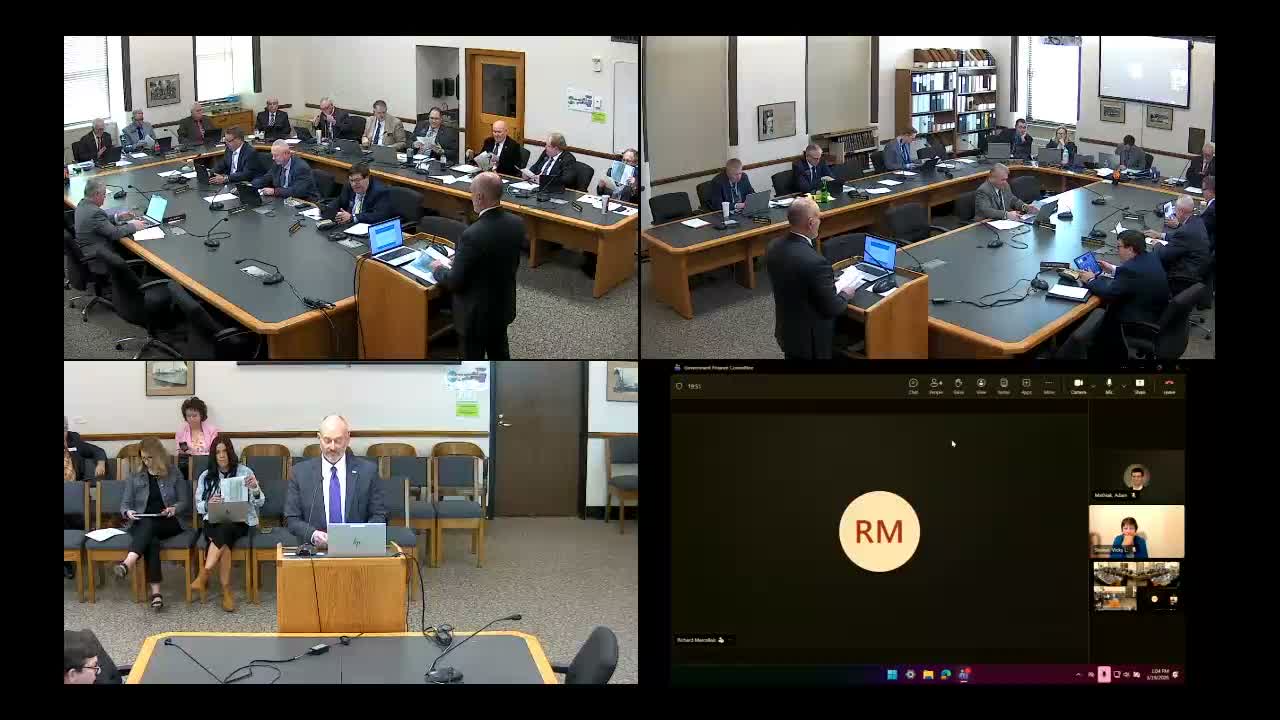
Joe Morissette of the Office of Management and Budget told the Government Finance Committee the state’s general fund is tracking very close to forecast and is projected to end the biennium with an approximate balance of $397,000,000. "So $397,000,000 which is about 170,000,000 higher than the balance that was expected when you finalize the budget," Morissette said.
Morissette said the state began the biennium with about $1.3 billion, has collected roughly $1.68 billion so far and anticipates remaining forecasted revenues of about $3.6 billion, which would bring total projected collections and lead to the estimated ending balance. He described the current variance as "a fraction of a percent" relative to the forecast and said revenues overall are "tracking very, very close to the forecast."
The presentation included detailed balances for major special funds tied to oil tax allocations. Morissette said the Budget Stabilization Fund had a January balance of about $977 million — roughly $38 million above its statutory cap and therefore subject to transfer rules at fiscal year end. He said oil‑tax allocations have raised the Legacy Fund balance to just above $14 billion after February distributions. The Foundation Aid Stabilization Fund — the K–12 reserve funded from oil and gas tax receipts — has a required minimum balance of about $261 million; Morissette said the fund is significantly above that floor. He also reported the social services fund balance at approximately $340 million while noting ongoing appropriations out of that fund will continue through the biennium.
Morissette identified revenue drivers and risks: sales tax is tracking close to forecast (within about 0.5 percent), motor‑vehicle excise tax is modestly below forecast and individual income tax collections have been softer year‑to‑date, with some expected further movement as more federal filing data arrive. He said interest income has been well above forecast — roughly 106 percent of expectations — because of higher interest rates and larger cash balances, which helped cushion shortfalls in other categories.
Why it matters: the improved projected ending balance gives state leaders more cushion heading into the next budget cycle, but Morissette and staff emphasized the projection is sensitive to near‑term revenue swings, federal tax changes and commodity price movements that affect oil tax allocations. The committee did not take any action on the projection; the material was provided for members’ consideration as they plan budgets for the next biennium.
The committee received the report and asked clarifying questions about fund management and oil tax timing; Morissette said staff will continue to report monthly updates as new receipts are posted.
Morissette said the state began the biennium with about $1.3 billion, has collected roughly $1.68 billion so far and anticipates remaining forecasted revenues of about $3.6 billion, which would bring total projected collections and lead to the estimated ending balance. He described the current variance as "a fraction of a percent" relative to the forecast and said revenues overall are "tracking very, very close to the forecast."
The presentation included detailed balances for major special funds tied to oil tax allocations. Morissette said the Budget Stabilization Fund had a January balance of about $977 million — roughly $38 million above its statutory cap and therefore subject to transfer rules at fiscal year end. He said oil‑tax allocations have raised the Legacy Fund balance to just above $14 billion after February distributions. The Foundation Aid Stabilization Fund — the K–12 reserve funded from oil and gas tax receipts — has a required minimum balance of about $261 million; Morissette said the fund is significantly above that floor. He also reported the social services fund balance at approximately $340 million while noting ongoing appropriations out of that fund will continue through the biennium.
Morissette identified revenue drivers and risks: sales tax is tracking close to forecast (within about 0.5 percent), motor‑vehicle excise tax is modestly below forecast and individual income tax collections have been softer year‑to‑date, with some expected further movement as more federal filing data arrive. He said interest income has been well above forecast — roughly 106 percent of expectations — because of higher interest rates and larger cash balances, which helped cushion shortfalls in other categories.
Why it matters: the improved projected ending balance gives state leaders more cushion heading into the next budget cycle, but Morissette and staff emphasized the projection is sensitive to near‑term revenue swings, federal tax changes and commodity price movements that affect oil tax allocations. The committee did not take any action on the projection; the material was provided for members’ consideration as they plan budgets for the next biennium.
The committee received the report and asked clarifying questions about fund management and oil tax timing; Morissette said staff will continue to report monthly updates as new receipts are posted.
View the Full Meeting & All Its Details
This article offers just a summary. Unlock complete video, transcripts, and insights as a Founder Member.
✓
Watch full, unedited meeting videos
✓
Search every word spoken in unlimited transcripts
✓
AI summaries & real-time alerts (all government levels)
✓
Permanent access to expanding government content
30-day money-back guarantee
