Urban transit leaders tell ND subcommittee rising costs, fleet shortages threaten service; urge state support
March 19, 2026 | 2026 Legislature ND, North Dakota
This article was created by AI summarizing key points discussed. AI makes mistakes, so for full details and context, please refer to the video of the full meeting. Please report any errors so we can fix them. Report an error »
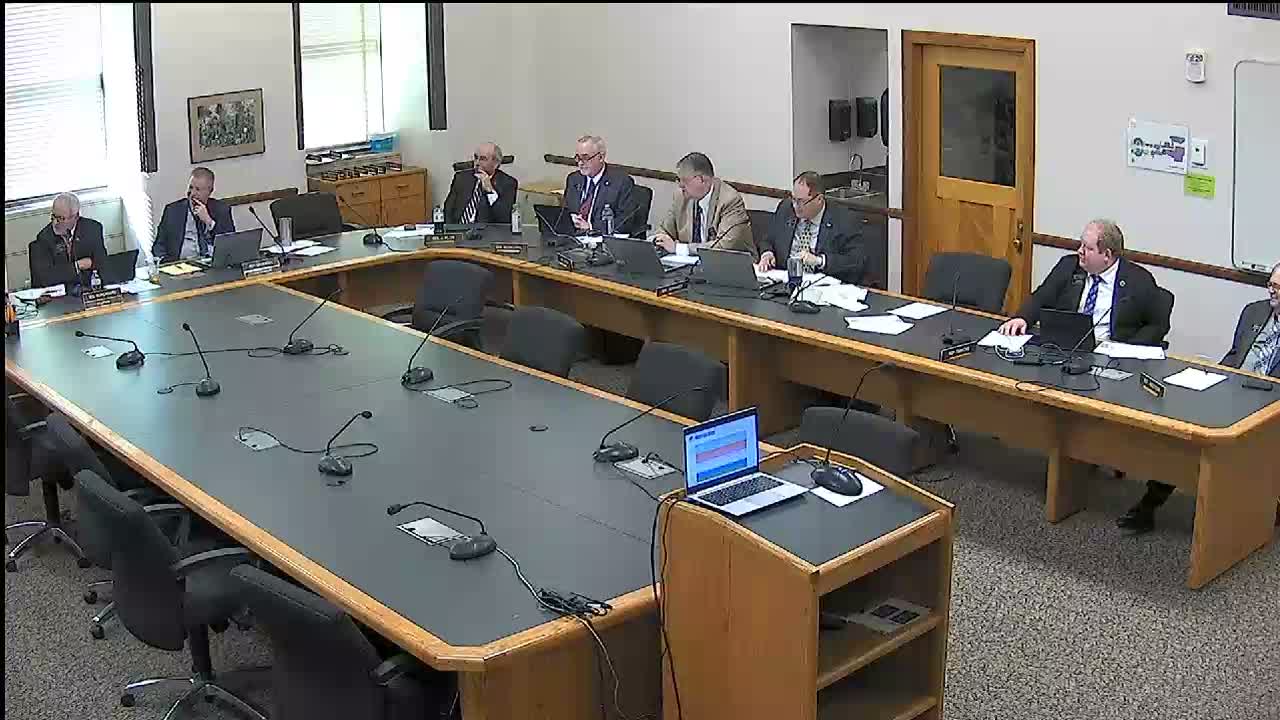
Transit leaders from North Dakota’s four urban fixed-route systems told a Government Finance subcommittee on March 22 that persistent budget pressure — not a lack of demand — threatens service continuity and the ability to capture federal grant funds.
“Public transportation provides essential mobility for many members of our community,” said Christie Sleinski, public transportation director for the City of Grand Forks’ Cities Area Transit, as she outlined local operations, paratransit coverage and ridership trends. Sleinski noted students account for about 41% of riders and said operating costs rose roughly 46% over six years, driven by wages, fuel and parts.
Deidre Hughes, executive director of Biz Man Transit (CAP bus) in Bismarck, said service expansions beginning April 1 — adding early-morning and later-evening hours and expanded Sunday demand-response — are designed to reach shift workers but will increase costs: roughly $665,000 for the remainder of 2026 and about $954,000 in 2027. Hughes emphasized that federal capital grants (notably sections 5307, 5310 and 5339) fund vehicle replacement at an 85/15 split, but agencies often cannot use federal dollars without reliable local matching funds.
Representatives of Minot and Fargo reinforced the point. Brian Hurinka, transit superintendent for Minot, described a refurbished-bus pilot that reduces lead time (60–90 days versus 18–24 months for new buses) and lowers upfront costs compared with new vehicles; Minot also faces recruitment challenges for CDL drivers. Jordan Smith, assistant transit director for Fargo, said his agency has increased fares and reduced routes to balance budgets while preserving paratransit service.
Committee members pressed for specific numbers. Sleinski gave an operating-cost-per-passenger figure for Grand Forks in 2025 of $43.53 overall ($12.33 fixed-route, $31.20 paratransit). Hughes said Biz Man Transit’s 2025 section 5307 award was $2,176,599 and reported local mill levy and sales-tax contributions — Bismarck provided 3 mills, Mandan 2; local sales-tax measures approved in 2024 dedicate two-tenths of a cent in each city to public transit and are accessed through an application process.
Advocates and providers also warned against replacing fixed routes with rideshare. Michael Olsen, attorney at North Dakota Protection & Advocacy, said rideshare is “not a viable option for most disabled people,” especially wheelchair users, and that fixed routes and paratransit are essential for many riders.
The subcommittee voted to include the findings of the interim study in the full Government Finance Committee report and asked the four urban providers to coordinate a concise funding request or recommended figure for the full committee to consider later this year.
What’s next: the urban providers agreed to meet and return to the committee with a proposed funding ask and distribution approach; the subcommittee’s summary will be prepared by legislative council for inclusion in the full committee’s November report.
“Public transportation provides essential mobility for many members of our community,” said Christie Sleinski, public transportation director for the City of Grand Forks’ Cities Area Transit, as she outlined local operations, paratransit coverage and ridership trends. Sleinski noted students account for about 41% of riders and said operating costs rose roughly 46% over six years, driven by wages, fuel and parts.
Deidre Hughes, executive director of Biz Man Transit (CAP bus) in Bismarck, said service expansions beginning April 1 — adding early-morning and later-evening hours and expanded Sunday demand-response — are designed to reach shift workers but will increase costs: roughly $665,000 for the remainder of 2026 and about $954,000 in 2027. Hughes emphasized that federal capital grants (notably sections 5307, 5310 and 5339) fund vehicle replacement at an 85/15 split, but agencies often cannot use federal dollars without reliable local matching funds.
Representatives of Minot and Fargo reinforced the point. Brian Hurinka, transit superintendent for Minot, described a refurbished-bus pilot that reduces lead time (60–90 days versus 18–24 months for new buses) and lowers upfront costs compared with new vehicles; Minot also faces recruitment challenges for CDL drivers. Jordan Smith, assistant transit director for Fargo, said his agency has increased fares and reduced routes to balance budgets while preserving paratransit service.
Committee members pressed for specific numbers. Sleinski gave an operating-cost-per-passenger figure for Grand Forks in 2025 of $43.53 overall ($12.33 fixed-route, $31.20 paratransit). Hughes said Biz Man Transit’s 2025 section 5307 award was $2,176,599 and reported local mill levy and sales-tax contributions — Bismarck provided 3 mills, Mandan 2; local sales-tax measures approved in 2024 dedicate two-tenths of a cent in each city to public transit and are accessed through an application process.
Advocates and providers also warned against replacing fixed routes with rideshare. Michael Olsen, attorney at North Dakota Protection & Advocacy, said rideshare is “not a viable option for most disabled people,” especially wheelchair users, and that fixed routes and paratransit are essential for many riders.
The subcommittee voted to include the findings of the interim study in the full Government Finance Committee report and asked the four urban providers to coordinate a concise funding request or recommended figure for the full committee to consider later this year.
What’s next: the urban providers agreed to meet and return to the committee with a proposed funding ask and distribution approach; the subcommittee’s summary will be prepared by legislative council for inclusion in the full committee’s November report.
Don't Miss a Word: See the Full Meeting!
Go beyond summaries. Unlock every video, transcript, and key insight with a Founder Membership.
✓
Get instant access to full meeting videos
✓
Search and clip any phrase from complete transcripts
✓
Receive AI-powered summaries & custom alerts
✓
Enjoy lifetime, unrestricted access to government data
30-day money-back guarantee
