DOT says driver's‑license fees recover roughly half program costs; specialty plate demand high
March 19, 2026 | 2026 Legislature ND, North Dakota
This article was created by AI summarizing key points discussed. AI makes mistakes, so for full details and context, please refer to the video of the full meeting. Please report any errors so we can fix them. Report an error »
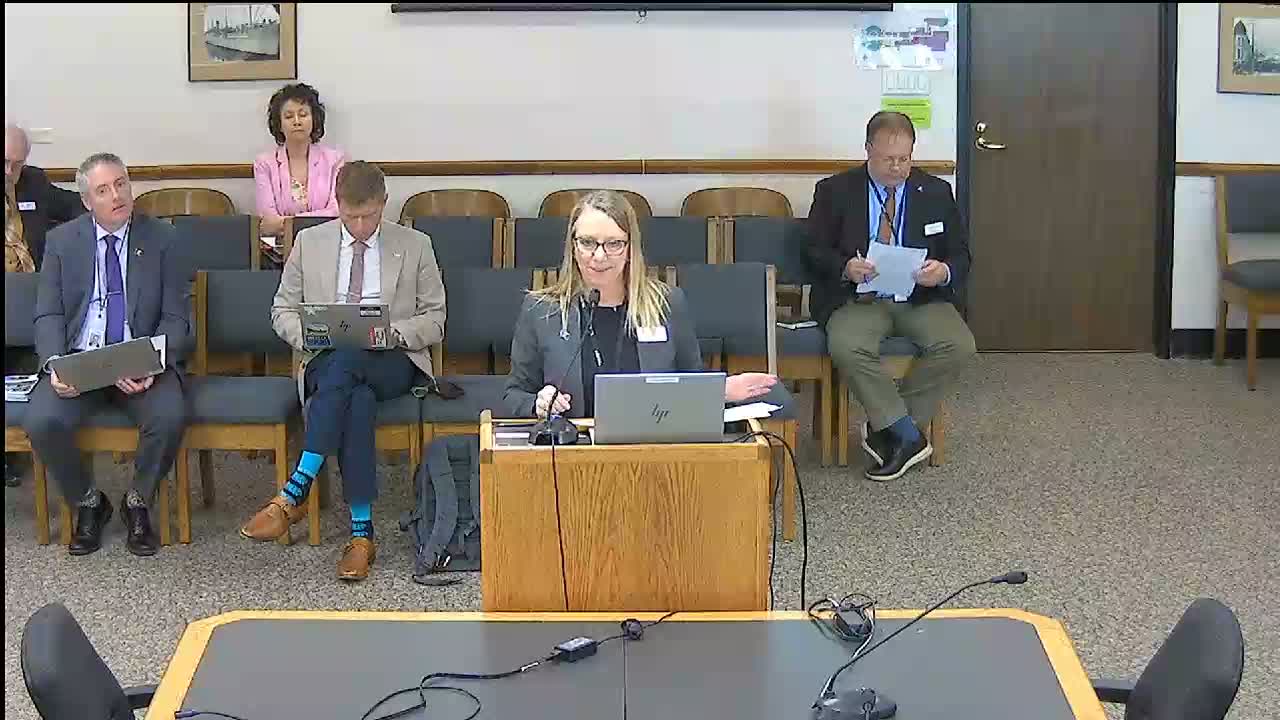
Robin Reberg, deputy director for driver safety at the North Dakota Department of Transportation, told the committee the department collects more than 125 separate fees and that most fees are set by North Dakota Century Code. "We did an analysis ... the fees that we're collecting pay for about 50% of what it costs us to run the driver's license program," Reberg said.
Members asked whether the driver's license program is subsidized from highway construction funds; Reberg confirmed the agency analysis indicates the program covers only about half its operating costs and that, historically, fee increases proposed in prior sessions failed to pass. She said a rough break‑even estimate for the renewal fee would be about $30 (current renewal $15). Senator Beckettall and others pressed the committee on whether those cross‑subsidies are appropriate, with several members arguing the cost of licensing should at least cover program operating costs.
Reberg also reviewed motor vehicle excise tax distributions (50% general fund, 25% highway distribution fund, 25% flexible transportation fund), specialty plates enacted last session (the blackout plate carries an additional $25 fee), and the mobile driver's license rollout (began September 2025). When asked about blackout‑plate uptake, she said "so far we have as of yesterday, the number is 38,888 plates that we've issued." Non‑driver ID cards are $8, she said; members suggested the state might consider subsidizing non‑driver IDs for voting access while treating driver's licenses as a user‑fee program.
Why it matters: with fee revenue covering roughly half of licensing costs, lawmakers face a policy choice about raising fees incrementally, shifting general funds, or accepting continued cross‑subsidy from highway or other funds. Reberg said staff can provide additional comparisons to other states on fee levels if desired.
The committee did not vote on fee changes; members asked DOT to provide state‑by‑state comparisons and additional break‑even analysis.
Members asked whether the driver's license program is subsidized from highway construction funds; Reberg confirmed the agency analysis indicates the program covers only about half its operating costs and that, historically, fee increases proposed in prior sessions failed to pass. She said a rough break‑even estimate for the renewal fee would be about $30 (current renewal $15). Senator Beckettall and others pressed the committee on whether those cross‑subsidies are appropriate, with several members arguing the cost of licensing should at least cover program operating costs.
Reberg also reviewed motor vehicle excise tax distributions (50% general fund, 25% highway distribution fund, 25% flexible transportation fund), specialty plates enacted last session (the blackout plate carries an additional $25 fee), and the mobile driver's license rollout (began September 2025). When asked about blackout‑plate uptake, she said "so far we have as of yesterday, the number is 38,888 plates that we've issued." Non‑driver ID cards are $8, she said; members suggested the state might consider subsidizing non‑driver IDs for voting access while treating driver's licenses as a user‑fee program.
Why it matters: with fee revenue covering roughly half of licensing costs, lawmakers face a policy choice about raising fees incrementally, shifting general funds, or accepting continued cross‑subsidy from highway or other funds. Reberg said staff can provide additional comparisons to other states on fee levels if desired.
The committee did not vote on fee changes; members asked DOT to provide state‑by‑state comparisons and additional break‑even analysis.
View the Full Meeting & All Its Details
This article offers just a summary. Unlock complete video, transcripts, and insights as a Founder Member.
✓
Watch full, unedited meeting videos
✓
Search every word spoken in unlimited transcripts
✓
AI summaries & real-time alerts (all government levels)
✓
Permanent access to expanding government content
30-day money-back guarantee
