Alan Knutson presents S&P Global update: oil volatility lifts near‑term revenue outlook; alternate scenario raises SIF by ~$120M
March 18, 2026 | 2026 Legislature ND, North Dakota
This article was created by AI summarizing key points discussed. AI makes mistakes, so for full details and context, please refer to the video of the full meeting. Please report any errors so we can fix them. Report an error »
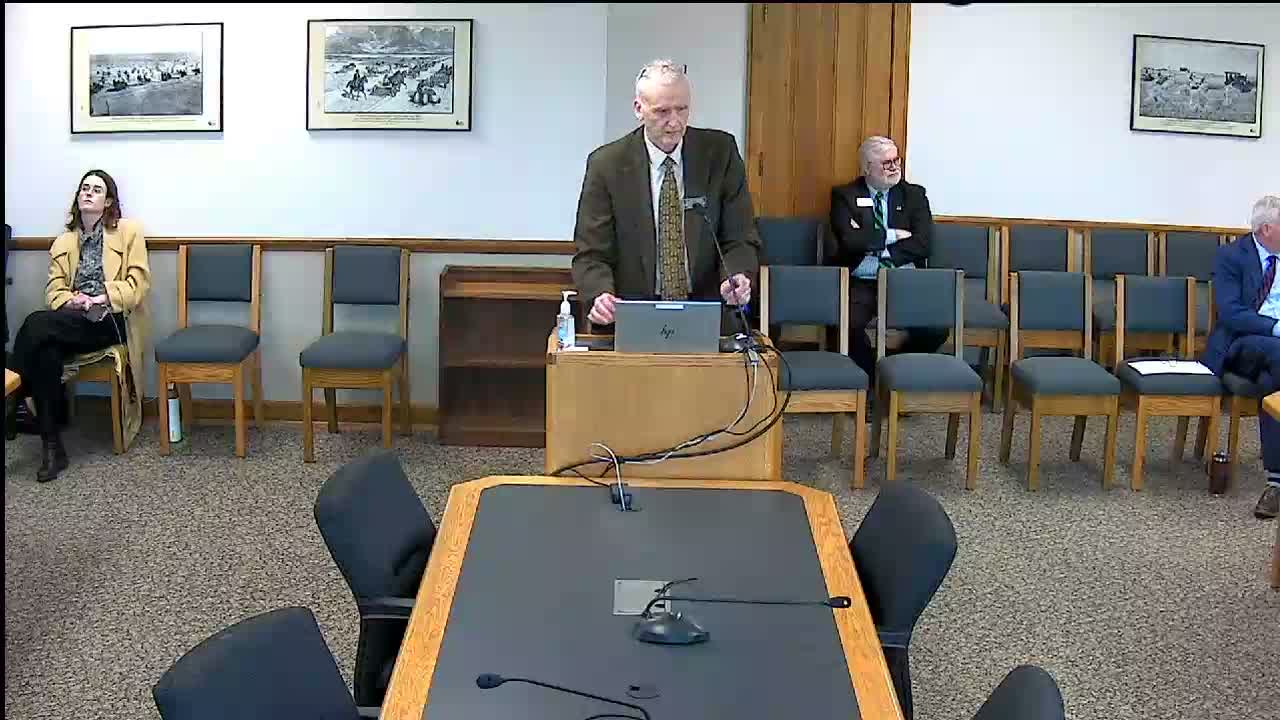
Alan Knutson, presenting S&P Global’s March forecast update, told the Leadership Division that global oil-price volatility is the primary near-term risk to North Dakota revenues and that recent price moves materially affect short‑term collections.
Knockson (sic) explained S&P’s base case uses Brent prices averaging about $75 per barrel in 2026, with a short-term upside scenario that raised near-term collections. He said S&P’s baseline update projects roughly $89 million more for the four major tax types in the current biennium versus the Legislature’s adopted forecast and a preliminary projection of about $500 million more for the next biennium under S&P’s baseline.
Knockson also presented an alternate scenario driven by a temporary price spike (Brent near $85 in March falling to $60 by July) that would add an estimated $242 million in oil-and-gas tax collections compared with the legislative forecast and raise the Strategic Investment Fund (SIF) balance by approximately $120 million to around $415 million. He cautioned that these results rest on volatile assumptions — especially the duration of shipping disruptions in the Strait of Hormuz — and that forecasts will be updated as new data arrive.
Members asked whether another forecast should be requested once markets stabilize. Knutson said the Office of Management and Budget and other vendors normally update forecasts periodically (April guidance, another in September, and the executive forecast in December) and that the committee could ask for additional runs if desired.
Next steps: S&P’s update will be used with OMB and other vendor updates as the committee and agencies refine budget guidance.
Knockson (sic) explained S&P’s base case uses Brent prices averaging about $75 per barrel in 2026, with a short-term upside scenario that raised near-term collections. He said S&P’s baseline update projects roughly $89 million more for the four major tax types in the current biennium versus the Legislature’s adopted forecast and a preliminary projection of about $500 million more for the next biennium under S&P’s baseline.
Knockson also presented an alternate scenario driven by a temporary price spike (Brent near $85 in March falling to $60 by July) that would add an estimated $242 million in oil-and-gas tax collections compared with the legislative forecast and raise the Strategic Investment Fund (SIF) balance by approximately $120 million to around $415 million. He cautioned that these results rest on volatile assumptions — especially the duration of shipping disruptions in the Strait of Hormuz — and that forecasts will be updated as new data arrive.
Members asked whether another forecast should be requested once markets stabilize. Knutson said the Office of Management and Budget and other vendors normally update forecasts periodically (April guidance, another in September, and the executive forecast in December) and that the committee could ask for additional runs if desired.
Next steps: S&P’s update will be used with OMB and other vendor updates as the committee and agencies refine budget guidance.
View the Full Meeting & All Its Details
This article offers just a summary. Unlock complete video, transcripts, and insights as a Founder Member.
✓
Watch full, unedited meeting videos
✓
Search every word spoken in unlimited transcripts
✓
AI summaries & real-time alerts (all government levels)
✓
Permanent access to expanding government content
30-day money-back guarantee
