State IT and facilities staff propose rate and space plans as agencies return to offices
March 19, 2026 | 2026 Legislature ND, North Dakota
This article was created by AI summarizing key points discussed. AI makes mistakes, so for full details and context, please refer to the video of the full meeting. Please report any errors so we can fix them. Report an error »
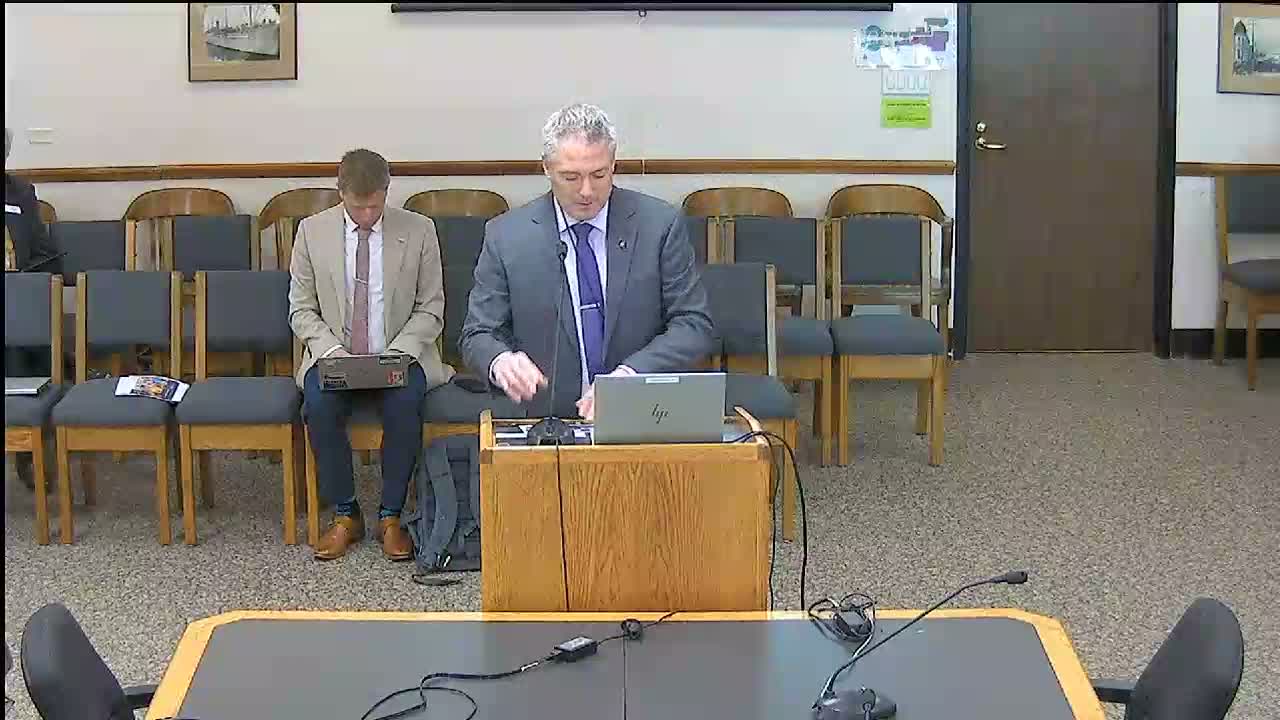
Greg Hoffman, Deputy CIO and CFO for the State Information Technology Department, explained the state's internal service fund model for IT services and described proposed rate adjustments for the next biennium. Hoffman said the department groups fees into hourly services, consumption‑based charges, hosting services and enterprise chargebacks; he gave an example of a client technology line where standard PC desktop support would move from about $83 to $92 per device per month. Hoffman discussed administrative and cash‑management considerations of switching to annual billing, options to simplify invoices and planned improvements to the billing system and reporting tools.
Brandon Solberg, Director of Facility Management at the Office of Management and Budget, presented a spreadsheet of off‑site leased space in Bismarck‑Mandan: after correcting a duplicate he reported about 315,000 sq ft privately leased and about 45,000 sq ft publicly leased (about 360,000 sq ft total), with an overall average rent near $16.91 per sq ft; he also noted roughly 165,000 sq ft of off‑site storage averaging $5.82 per sq ft. Solberg said state leased space statewide declined by about 33% over the last four years and cautioned that returning more staff to offices could increase future leasing needs.
John Bjornson of the Legislative Council said the council engaged an architect (Klein McCarthy Architects) to produce conceptual plans for legislative branch space needs — a three‑level concept with parking, committee rooms, and offices that could address long‑term requirements. Bjornson said the legislative branch footprint is about 46,000 sq ft and the council is adding 25 positions to support committee work and program evaluation; architect work should continue into the summer with a report later in the year.
Why it matters: IT rate changes and facility plans affect agency budgets and the capital/operational decisions that determine where and how state employees work. Committee members asked about cash flows, administrative burden on smaller agencies, and the timing of rate adoption.
The committee did not vote on rates or lease decisions at this meeting; staff offered to return with more granular billing and comparative data.
Brandon Solberg, Director of Facility Management at the Office of Management and Budget, presented a spreadsheet of off‑site leased space in Bismarck‑Mandan: after correcting a duplicate he reported about 315,000 sq ft privately leased and about 45,000 sq ft publicly leased (about 360,000 sq ft total), with an overall average rent near $16.91 per sq ft; he also noted roughly 165,000 sq ft of off‑site storage averaging $5.82 per sq ft. Solberg said state leased space statewide declined by about 33% over the last four years and cautioned that returning more staff to offices could increase future leasing needs.
John Bjornson of the Legislative Council said the council engaged an architect (Klein McCarthy Architects) to produce conceptual plans for legislative branch space needs — a three‑level concept with parking, committee rooms, and offices that could address long‑term requirements. Bjornson said the legislative branch footprint is about 46,000 sq ft and the council is adding 25 positions to support committee work and program evaluation; architect work should continue into the summer with a report later in the year.
Why it matters: IT rate changes and facility plans affect agency budgets and the capital/operational decisions that determine where and how state employees work. Committee members asked about cash flows, administrative burden on smaller agencies, and the timing of rate adoption.
The committee did not vote on rates or lease decisions at this meeting; staff offered to return with more granular billing and comparative data.
Don't Miss a Word: See the Full Meeting!
Go beyond summaries. Unlock every video, transcript, and key insight with a Founder Membership.
✓
Get instant access to full meeting videos
✓
Search and clip any phrase from complete transcripts
✓
Receive AI-powered summaries & custom alerts
✓
Enjoy lifetime, unrestricted access to government data
30-day money-back guarantee
