Commerce Outlines Workforce Strategy, Web 'Front Door' and In-Demand Occupations List
March 18, 2026 | 2026 Legislature ND, North Dakota
This article was created by AI summarizing key points discussed. AI makes mistakes, so for full details and context, please refer to the video of the full meeting. Please report any errors so we can fix them. Report an error »
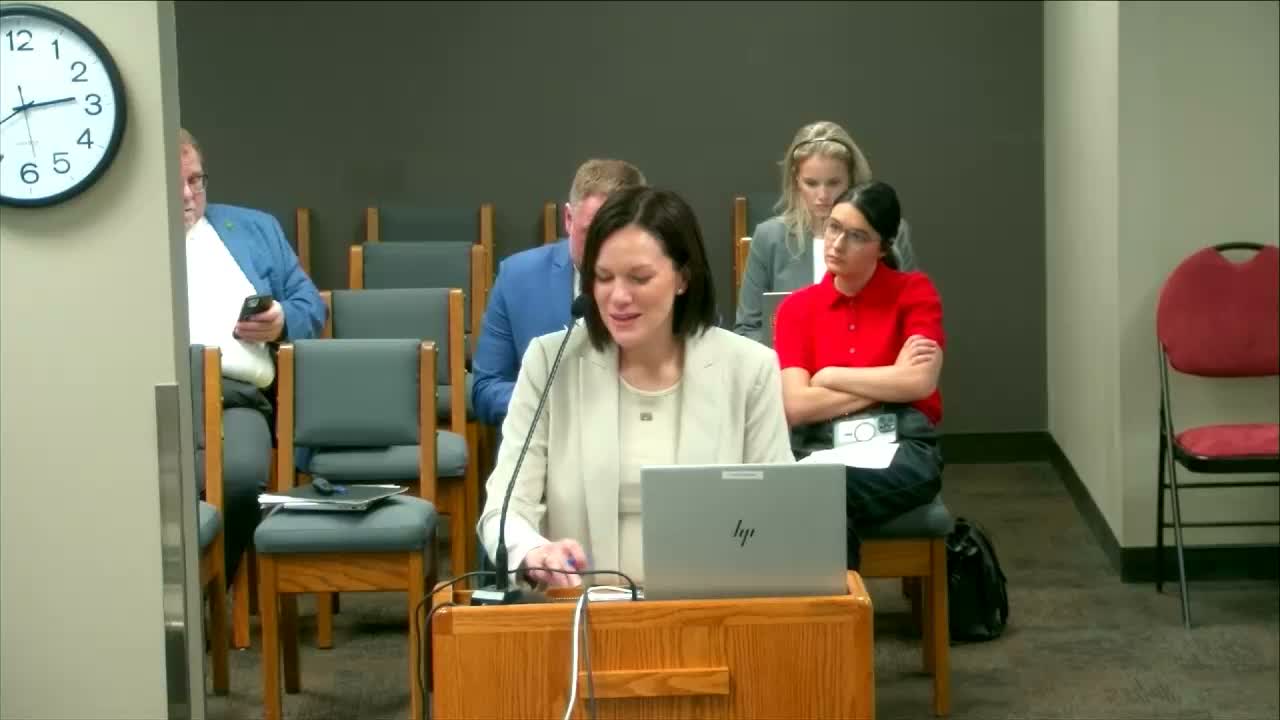
Katie Ralston Howe, deputy commissioner and workforce director at the Department of Commerce, briefed the committee on a statewide workforce assessment and the subcabinet's recommended strategy.
She said the assessment found fragmentation across at least nine agencies, limited rural access to workforce services and an overreliance on relational, ad-hoc connections. To address that, the workforce subcabinet adopted 13 recommendations organized into four buckets: a strategic vision, customer focus, awareness and engagement, and information/data sharing.
Key deliverables: Howe described three task forces charged with building a workforce 'front door' (a public-facing landing page and centralized directory), a warm-handoff protocol (tip sheets and desk guides to enable staff to refer job seekers between programs) and a data systems integration effort that will surface shared success measures in a public dashboard. She said a minimum viable product of the landing page is planned for this fall.
On the in-demand occupations list: Howe explained the Workforce Development Council updates the list annually using labor market information, SOC codes, wage and posting data and competitive analysis; she noted the list's primary use is for WIOA eligibility and other state programs and that a secondary list of high-need occupations (not meeting WIOA criteria) is in development. The council agreed to provide the list and scoring criteria to members.
Why it matters: lawmakers asked how the strategy would tie to higher education incentives and retention of graduates in state jobs. Howe said the council and the subcabinet are coordinating with K-12, CTE and the university system and that short-term credentials, apprenticeships and warm handoffs are central to the plan.
Next steps: the subcabinet will finalize a unified workforce budget; members asked for more documentation on metrics, and Howe agreed to circulate the in-demand list and the criteria used to compile it.
She said the assessment found fragmentation across at least nine agencies, limited rural access to workforce services and an overreliance on relational, ad-hoc connections. To address that, the workforce subcabinet adopted 13 recommendations organized into four buckets: a strategic vision, customer focus, awareness and engagement, and information/data sharing.
Key deliverables: Howe described three task forces charged with building a workforce 'front door' (a public-facing landing page and centralized directory), a warm-handoff protocol (tip sheets and desk guides to enable staff to refer job seekers between programs) and a data systems integration effort that will surface shared success measures in a public dashboard. She said a minimum viable product of the landing page is planned for this fall.
On the in-demand occupations list: Howe explained the Workforce Development Council updates the list annually using labor market information, SOC codes, wage and posting data and competitive analysis; she noted the list's primary use is for WIOA eligibility and other state programs and that a secondary list of high-need occupations (not meeting WIOA criteria) is in development. The council agreed to provide the list and scoring criteria to members.
Why it matters: lawmakers asked how the strategy would tie to higher education incentives and retention of graduates in state jobs. Howe said the council and the subcabinet are coordinating with K-12, CTE and the university system and that short-term credentials, apprenticeships and warm handoffs are central to the plan.
Next steps: the subcabinet will finalize a unified workforce budget; members asked for more documentation on metrics, and Howe agreed to circulate the in-demand list and the criteria used to compile it.
View the Full Meeting & All Its Details
This article offers just a summary. Unlock complete video, transcripts, and insights as a Founder Member.
✓
Watch full, unedited meeting videos
✓
Search every word spoken in unlimited transcripts
✓
AI summaries & real-time alerts (all government levels)
✓
Permanent access to expanding government content
30-day money-back guarantee
