Alaska committee hears extensive testimony on bill to allow limited prescribing by naturopathic doctors
March 20, 2026 | 2026 Legislature Alaska, Alaska
This article was created by AI summarizing key points discussed. AI makes mistakes, so for full details and context, please refer to the video of the full meeting. Please report any errors so we can fix them. Report an error »
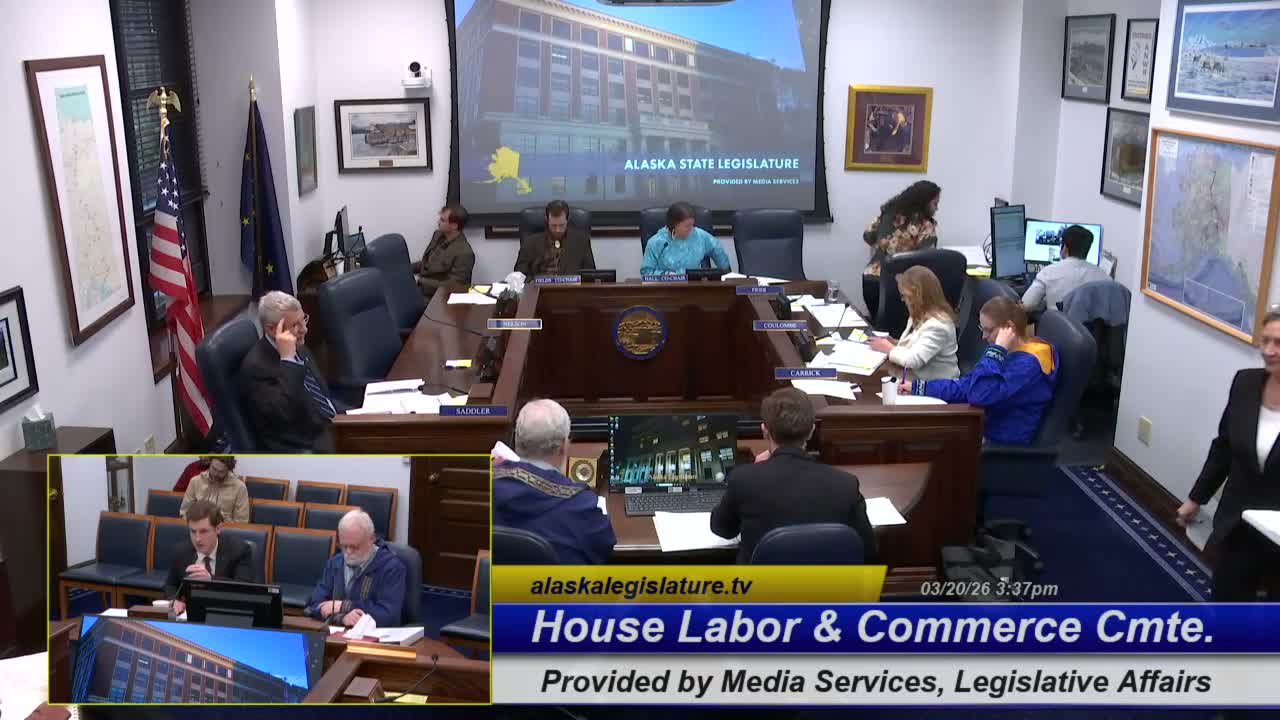
The House Labor and Commerce Committee heard extensive testimony March 20 on House Bill 147, a measure that would allow licensed naturopathic doctors in Alaska to seek a temporary prescriptive endorsement after passing a pharmacology exam and complete a supervised collaboration period with a physician. Representative Mike Prox, the sponsor, told the panel the bill is aimed at expanding primary-care capacity in rural and underserved parts of the state.
Supporters — including Representative Andrew Gray, physician assistant, and several naturopathic doctors and regulators — said the change would reduce delays and unnecessary referrals and allow naturopaths to treat conditions they already diagnose. "HB147 allows naturopathic doctors to treat their patients for the conditions they diagnose them with according to the standard of care," said Representative Andrew Gray, urging the committee to move the bill quickly.
The bill as presented by staff would create a temporary endorsement that lasts for a minimum of 12 months during which a licensed Alaska physician with at least five years' prescribing experience would participate in a written collaborative agreement to evaluate and provide feedback on the naturopath's prescriptive practice. After the collaboration period the Division of Corporations, Business and Professional Licensing (CBPL) would consider the physician's recommendation to issue, deny or require further supervision for an endorsement. HB147 also would require 60 hours of division‑approved continuing education as part of biennial license renewal, preserve statutory prohibitions on surgeries and using the word "physician" in an ND's title, authorize disciplinary actions against endorsements, and create criminal penalties for unauthorized prescribing (a fine of up to $500 or imprisonment up to six months, or both).
Proponents emphasized workforce shortages: Representative Prox said the number of practicing naturopaths in Alaska dropped from 62 in 2014 to 38 in 2026, making it harder for some Alaskans to find primary-care services. Dr. Scott Luper, a Fairbanks naturopathic doctor, said that without prescribing authority he frequently must refer patients to already overburdened physicians or to emergency departments. "I help teach [patients] how to use different kinds of insulin and I manage diabetes," Luper said, describing delays and extra costs when he must refer for prescriptions.
Medical-education and regulatory experts testified to training and safety safeguards. Dr. Clyde Jensen (PhD, pharmacology) said pharmacology coursework in naturopathic programs is comparable in contact hours and rigor to other programs and supported a supervised collaboration period. Laura Farr, executive director of the American Association of Naturopathic Physicians, cited 15 other states with ND prescribing rights and said HB147 is modeled on conservative state frameworks such as Vermont's. Shannon Braden of the Federation of Naturopathic Medicine Regulatory Authorities presented comparative disciplinary data and a federation letter supporting HB147.
Committee members questioned liability, the exact content of collaborative agreements, and how "standard of care" would be defined and enforced. Representative Sadler and others pressed witnesses on whether the bill would change payor recognition or Medicaid status; witnesses said reimbursement and payor policies vary by jurisdiction and are not directly decided by the licensing language in HB147. Representative Fields asked whether IV therapies and cancer adjunctive treatments discussed by witnesses would be included; Dr. Luper said some IV therapies could be part of practice under the bill's limits.
No committee vote was taken. Sponsors and advocates said the bill includes safeguards — pharmacology testing, a collaboration period, continuing education, and disciplinary authority — intended to reduce risk, while backers argued the measure would expand access to primary care in parts of Alaska with provider shortages. The committee set HB147 aside for further consideration.
Supporters — including Representative Andrew Gray, physician assistant, and several naturopathic doctors and regulators — said the change would reduce delays and unnecessary referrals and allow naturopaths to treat conditions they already diagnose. "HB147 allows naturopathic doctors to treat their patients for the conditions they diagnose them with according to the standard of care," said Representative Andrew Gray, urging the committee to move the bill quickly.
The bill as presented by staff would create a temporary endorsement that lasts for a minimum of 12 months during which a licensed Alaska physician with at least five years' prescribing experience would participate in a written collaborative agreement to evaluate and provide feedback on the naturopath's prescriptive practice. After the collaboration period the Division of Corporations, Business and Professional Licensing (CBPL) would consider the physician's recommendation to issue, deny or require further supervision for an endorsement. HB147 also would require 60 hours of division‑approved continuing education as part of biennial license renewal, preserve statutory prohibitions on surgeries and using the word "physician" in an ND's title, authorize disciplinary actions against endorsements, and create criminal penalties for unauthorized prescribing (a fine of up to $500 or imprisonment up to six months, or both).
Proponents emphasized workforce shortages: Representative Prox said the number of practicing naturopaths in Alaska dropped from 62 in 2014 to 38 in 2026, making it harder for some Alaskans to find primary-care services. Dr. Scott Luper, a Fairbanks naturopathic doctor, said that without prescribing authority he frequently must refer patients to already overburdened physicians or to emergency departments. "I help teach [patients] how to use different kinds of insulin and I manage diabetes," Luper said, describing delays and extra costs when he must refer for prescriptions.
Medical-education and regulatory experts testified to training and safety safeguards. Dr. Clyde Jensen (PhD, pharmacology) said pharmacology coursework in naturopathic programs is comparable in contact hours and rigor to other programs and supported a supervised collaboration period. Laura Farr, executive director of the American Association of Naturopathic Physicians, cited 15 other states with ND prescribing rights and said HB147 is modeled on conservative state frameworks such as Vermont's. Shannon Braden of the Federation of Naturopathic Medicine Regulatory Authorities presented comparative disciplinary data and a federation letter supporting HB147.
Committee members questioned liability, the exact content of collaborative agreements, and how "standard of care" would be defined and enforced. Representative Sadler and others pressed witnesses on whether the bill would change payor recognition or Medicaid status; witnesses said reimbursement and payor policies vary by jurisdiction and are not directly decided by the licensing language in HB147. Representative Fields asked whether IV therapies and cancer adjunctive treatments discussed by witnesses would be included; Dr. Luper said some IV therapies could be part of practice under the bill's limits.
No committee vote was taken. Sponsors and advocates said the bill includes safeguards — pharmacology testing, a collaboration period, continuing education, and disciplinary authority — intended to reduce risk, while backers argued the measure would expand access to primary care in parts of Alaska with provider shortages. The committee set HB147 aside for further consideration.
View the Full Meeting & All Its Details
This article offers just a summary. Unlock complete video, transcripts, and insights as a Founder Member.
✓
Watch full, unedited meeting videos
✓
Search every word spoken in unlimited transcripts
✓
AI summaries & real-time alerts (all government levels)
✓
Permanent access to expanding government content
30-day money-back guarantee
