Sen. Kathy Tilton pushes bill to regulate cryptocurrency kiosks after fraud targeting her mother
March 20, 2026 | 2026 Legislature Alaska, Alaska
This article was created by AI summarizing key points discussed. AI makes mistakes, so for full details and context, please refer to the video of the full meeting. Please report any errors so we can fix them. Report an error »
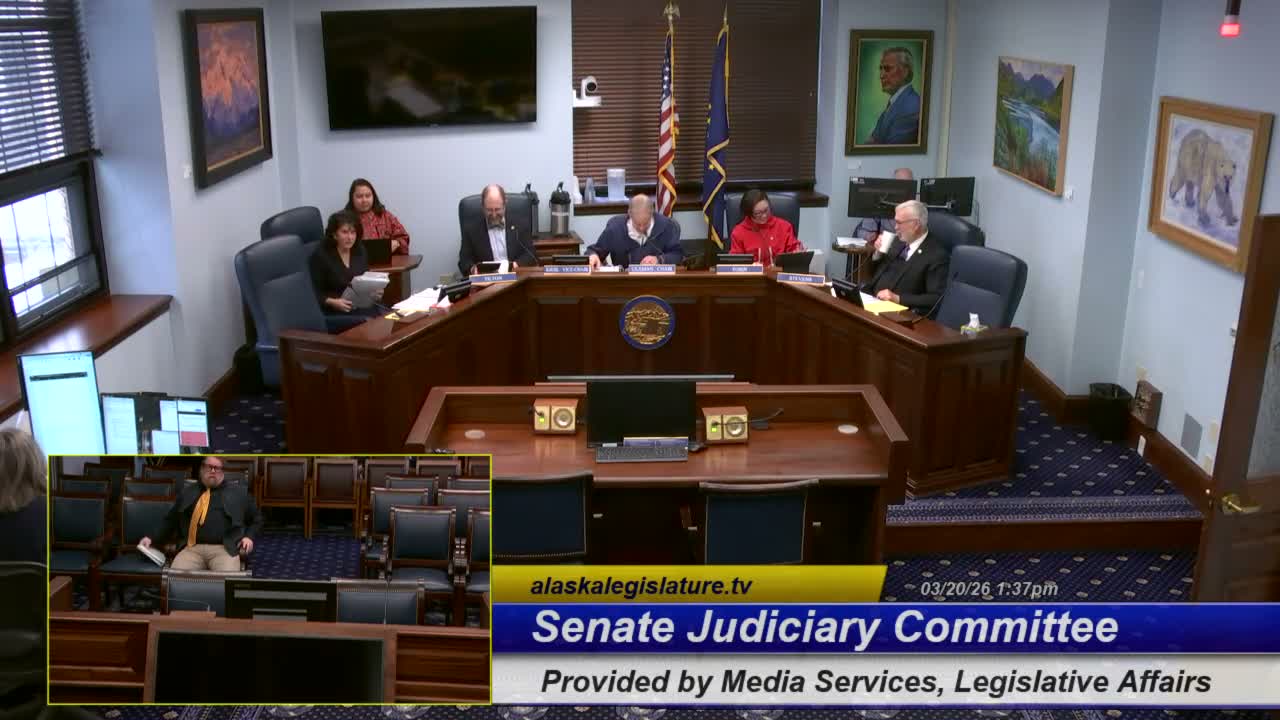
Senator Kathy Tilton urged the Senate Judiciary Committee on March 20 to adopt guardrails for cryptocurrency kiosks after describing a phone scam that used an AI‑generated voice to impersonate her and convince her elderly mother to deposit cash at a kiosk.
Tilton said the proposed Senate Bill 249 would require kiosk operators to hold a license similar to a money‑transmitter license, register each physical kiosk location, post mandatory fraud warnings, impose transaction limits, require fee transparency and give victims a right to a refund for fraudulent transactions. She told the committee that, according to the FBI Internet Crime Complaint Center and state reports she cited, investigations related to kiosk fraud rose from two in 2023 to 83 in 2024 and that ‘‘in 2025 there was over $26,000,000 worth of fraudulent transactions’’ reported against Alaskan seniors.
Heath Hilliard, staff to Senator Tilton, said kiosks serve a population that includes people who are unbanked or underbanked and who use the machines for convenience or remittances. Hilliard and the sponsor said kiosks are mainly sited in Anchorage, Fairbanks and the Matanuska‑Susitna Borough; Hilliard estimated "nearly 60" kiosks while the fiscal note and the Division of Banking and Securities later cited 76 active kiosks as of February.
Tracy Reno, director of the Division of Banking and Securities, told the committee that kiosks operate as registered agent locations under the state money‑services framework and that money‑service businesses are required to comply with the Bank Secrecy Act anti‑money‑laundering (AML) procedures, including having a compliance officer, audits, employee training and suspicious‑activity reporting. Reno said those federal and state compliance obligations exist but acknowledged the division does not have a detailed statistic tying kiosk activity specifically to money‑laundering prosecutions and directed law‑enforcement questions to federal agencies and investigators.
Committee members pressed a range of policy choices. Senator Stevens asked why the committee would not simply ban kiosks given the fraud figures; Tilton and staff emphasized the bill seeks to protect consumers while preserving legitimate access for remittances and the underbanked. The bill as introduced included a $1,000 daily transaction cap that a prior committee lowered to $500 per day and $5,000 per month; initial fee caps were proposed at 3 percent and later reduced to 2 percent in Labor and Commerce. Kiosk operators have previously testified in other committees that strict fee caps or limits could make operations in Alaska uneconomic.
The committee did not take final action on SB 249 on March 20; Chair Klayman said the bill was set aside for further review and that the committee intends to invite kiosk operators, law‑enforcement and other stakeholders to testify at a future hearing.
(Reporting in this article is based on on‑the‑record statements during the March 20 Senate Judiciary Committee hearing.)
Tilton said the proposed Senate Bill 249 would require kiosk operators to hold a license similar to a money‑transmitter license, register each physical kiosk location, post mandatory fraud warnings, impose transaction limits, require fee transparency and give victims a right to a refund for fraudulent transactions. She told the committee that, according to the FBI Internet Crime Complaint Center and state reports she cited, investigations related to kiosk fraud rose from two in 2023 to 83 in 2024 and that ‘‘in 2025 there was over $26,000,000 worth of fraudulent transactions’’ reported against Alaskan seniors.
Heath Hilliard, staff to Senator Tilton, said kiosks serve a population that includes people who are unbanked or underbanked and who use the machines for convenience or remittances. Hilliard and the sponsor said kiosks are mainly sited in Anchorage, Fairbanks and the Matanuska‑Susitna Borough; Hilliard estimated "nearly 60" kiosks while the fiscal note and the Division of Banking and Securities later cited 76 active kiosks as of February.
Tracy Reno, director of the Division of Banking and Securities, told the committee that kiosks operate as registered agent locations under the state money‑services framework and that money‑service businesses are required to comply with the Bank Secrecy Act anti‑money‑laundering (AML) procedures, including having a compliance officer, audits, employee training and suspicious‑activity reporting. Reno said those federal and state compliance obligations exist but acknowledged the division does not have a detailed statistic tying kiosk activity specifically to money‑laundering prosecutions and directed law‑enforcement questions to federal agencies and investigators.
Committee members pressed a range of policy choices. Senator Stevens asked why the committee would not simply ban kiosks given the fraud figures; Tilton and staff emphasized the bill seeks to protect consumers while preserving legitimate access for remittances and the underbanked. The bill as introduced included a $1,000 daily transaction cap that a prior committee lowered to $500 per day and $5,000 per month; initial fee caps were proposed at 3 percent and later reduced to 2 percent in Labor and Commerce. Kiosk operators have previously testified in other committees that strict fee caps or limits could make operations in Alaska uneconomic.
The committee did not take final action on SB 249 on March 20; Chair Klayman said the bill was set aside for further review and that the committee intends to invite kiosk operators, law‑enforcement and other stakeholders to testify at a future hearing.
(Reporting in this article is based on on‑the‑record statements during the March 20 Senate Judiciary Committee hearing.)
Don't Miss a Word: See the Full Meeting!
Go beyond summaries. Unlock every video, transcript, and key insight with a Founder Membership.
✓
Get instant access to full meeting videos
✓
Search and clip any phrase from complete transcripts
✓
Receive AI-powered summaries & custom alerts
✓
Enjoy lifetime, unrestricted access to government data
30-day money-back guarantee
