MMIP unit describes cold‑case work, DNA advances and family outreach to committee
March 19, 2026 | 2026 Legislature Alaska, Alaska
This article was created by AI summarizing key points discussed. AI makes mistakes, so for full details and context, please refer to the video of the full meeting. Please report any errors so we can fix them. Report an error »
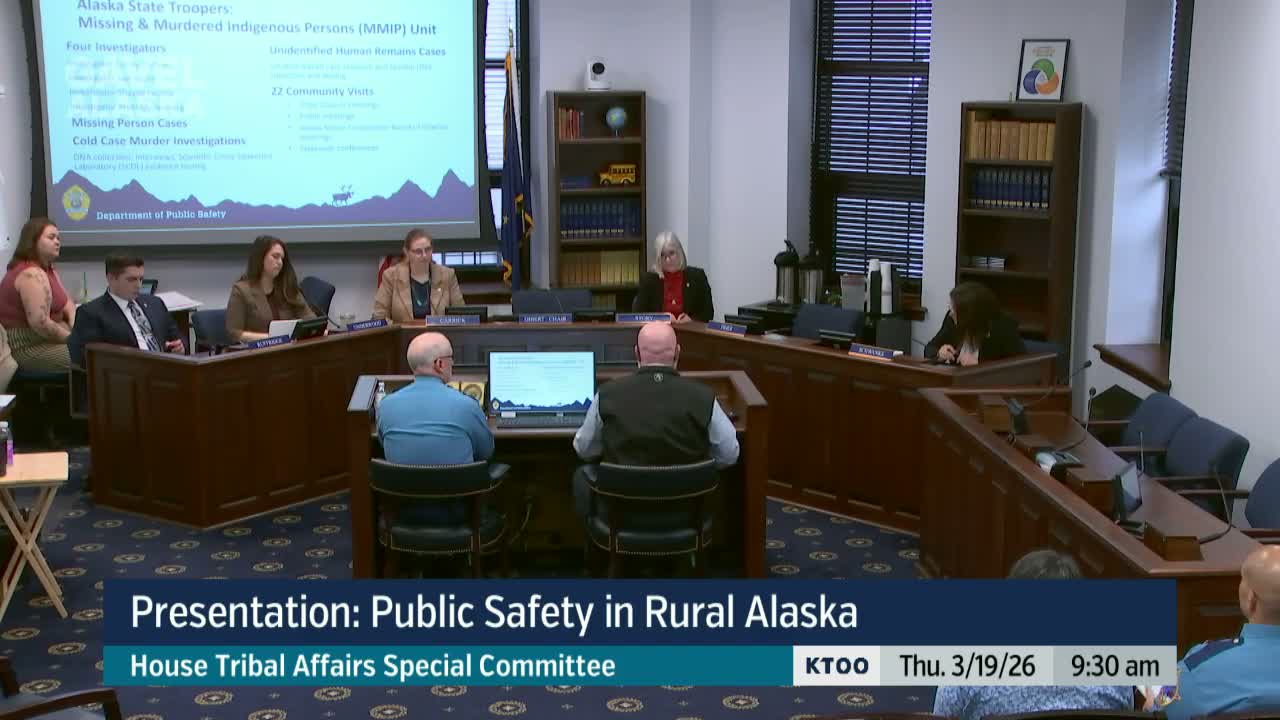
Joel Smith, an investigator with the Department of Public Safety's Missing and Murdered Indigenous Persons (MMIP) unit, told the House Tribal Affairs Committee on March 19 that the unit combines missing‑person work with a cold‑case homicide function and aims to bring unresolved cases up to modern investigative standards.
"Our missing person side really kinda gets broken into two categories," Smith said. "Our mission is to find the person alive and well and get them reunited back with their family." He described two recent successes in which the unit located missing people and reunited them with families, including a case where a person missing more than a decade was found and returned.
Smith described the unit's methods: comprehensive file reviews, re‑examining physical evidence with newer forensic tools, obtaining family reference DNA samples with consent for identification purposes, and conducting community visits (22 visits to date). He said cold cases require re‑interviewing witnesses, reviewing lab results and applying advances in DNA technology to degraded evidence.
The unit, Smith said, tries to keep investigators' active caseloads limited so teams can focus on bringing cases to current investigative standards. He also described outreach to families and said the unit has handled both missing‑person recoveries and cases in which remains were identified and returned to relatives.
Representative Underwood asked how families are engaged and when missing cases become cold cases; Smith said the unit follows up with families, seeks family reference samples when appropriate, and selects cases across the state that the unit has capacity to investigate further. The committee asked for additional data on how many MMIP cases are open and the ages of those cases; Smith and the department agreed to provide records to the committee.
No vote or policy change was taken at the hearing.
"Our missing person side really kinda gets broken into two categories," Smith said. "Our mission is to find the person alive and well and get them reunited back with their family." He described two recent successes in which the unit located missing people and reunited them with families, including a case where a person missing more than a decade was found and returned.
Smith described the unit's methods: comprehensive file reviews, re‑examining physical evidence with newer forensic tools, obtaining family reference DNA samples with consent for identification purposes, and conducting community visits (22 visits to date). He said cold cases require re‑interviewing witnesses, reviewing lab results and applying advances in DNA technology to degraded evidence.
The unit, Smith said, tries to keep investigators' active caseloads limited so teams can focus on bringing cases to current investigative standards. He also described outreach to families and said the unit has handled both missing‑person recoveries and cases in which remains were identified and returned to relatives.
Representative Underwood asked how families are engaged and when missing cases become cold cases; Smith said the unit follows up with families, seeks family reference samples when appropriate, and selects cases across the state that the unit has capacity to investigate further. The committee asked for additional data on how many MMIP cases are open and the ages of those cases; Smith and the department agreed to provide records to the committee.
No vote or policy change was taken at the hearing.
View the Full Meeting & All Its Details
This article offers just a summary. Unlock complete video, transcripts, and insights as a Founder Member.
✓
Watch full, unedited meeting videos
✓
Search every word spoken in unlimited transcripts
✓
AI summaries & real-time alerts (all government levels)
✓
Permanent access to expanding government content
30-day money-back guarantee
