Committee hears bill to require dementia-related competencies in CNA training; sponsor asks follow-up and sets bill aside
March 19, 2026 | 2026 Legislature Alaska, Alaska
This article was created by AI summarizing key points discussed. AI makes mistakes, so for full details and context, please refer to the video of the full meeting. Please report any errors so we can fix them. Report an error »
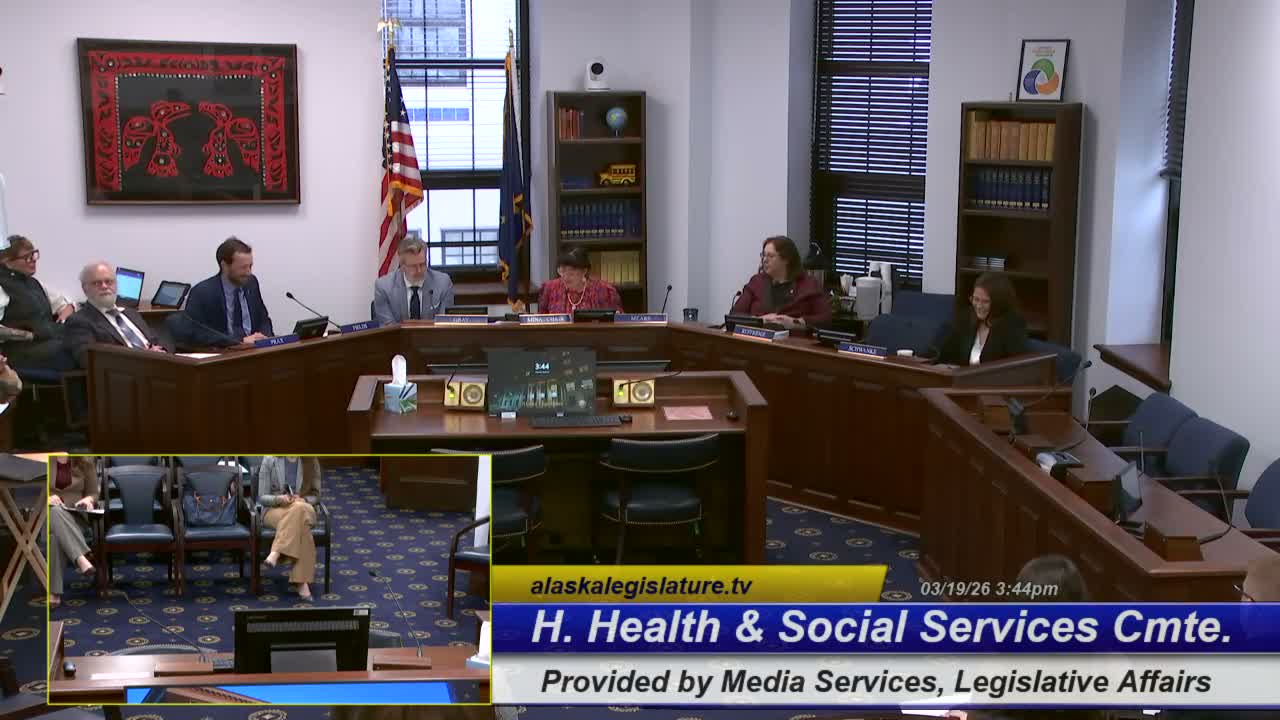
Representative Jubilee Underwood introduced House Bill 244 on March 19, proposing statutory requirements that certified nursing assistant (CNA) training programs include core competencies such as effective communication, recognition and response to behavioral and mental-health needs, supporting dignity and independence, and care for people with Alzheimer’s disease and other cognitive impairments. The bill’s sponsor and staff said it does not create new licensing requirements but clarifies training standards.
Buddy Witt, staff to Representative Underwood, described the bill’s structure and said the substantive changes are in the training curriculum specified in section 1; the bill also sets an effective date of Jan. 1, 2027. Invited testimony included Michelle Giro (Hope Community Resources), Lisa Souder (CEO, Alzheimer’s Resource of Alaska) and Michelle Casano (Alzheimer’s Association). Souder said the existing CNA module contains about one hour of dementia content and cited an estimate that as many as about 14,000 Alaskans are affected by Alzheimer’s or related dementias; she and others described an online learning-management system and in-person modules being finalized with UAA and partners, to be offered free of charge at launch.
Committee members pressed on implementation details. Sylvan Robb, director of the Division of Corporations, Business and Professional Licensing, told the committee the CNA training program standards are laid out in regulation and described program structure in regulation as 140 total hours (60 classroom and 80 clinical supervised hours). Robb said the bill’s new curriculum requirements would apply to programs going forward and that currently certified CNAs would be grandfathered, though committee members discussed the possibility of adding continuing-education requirements for incumbents.
Witnesses and the sponsor said development of the curriculum was supported using remaining ARPA funds and partnership with the University of Alaska Anchorage’s Alaska Training Cooperative and other stakeholders. Committee members asked for follow-up information on costs, curriculum details, and potential operational supports (grants or apprenticeship models) to implement mandatory training. Chair Mina set HB 244 aside for follow-up; the committee did not vote on the bill at this hearing.
Why it matters: Testimony emphasized that CNAs are frontline caregivers who increasingly care for residents with dementia and that clarifying and standardizing dementia-care competencies in statute would prepare the workforce and reduce adverse outcomes and unnecessary emergency transfers.
Next steps: Committee staff and witnesses agreed to provide curricular materials, cost estimates and regulatory context to the committee for follow-up before a final committee vote.
Buddy Witt, staff to Representative Underwood, described the bill’s structure and said the substantive changes are in the training curriculum specified in section 1; the bill also sets an effective date of Jan. 1, 2027. Invited testimony included Michelle Giro (Hope Community Resources), Lisa Souder (CEO, Alzheimer’s Resource of Alaska) and Michelle Casano (Alzheimer’s Association). Souder said the existing CNA module contains about one hour of dementia content and cited an estimate that as many as about 14,000 Alaskans are affected by Alzheimer’s or related dementias; she and others described an online learning-management system and in-person modules being finalized with UAA and partners, to be offered free of charge at launch.
Committee members pressed on implementation details. Sylvan Robb, director of the Division of Corporations, Business and Professional Licensing, told the committee the CNA training program standards are laid out in regulation and described program structure in regulation as 140 total hours (60 classroom and 80 clinical supervised hours). Robb said the bill’s new curriculum requirements would apply to programs going forward and that currently certified CNAs would be grandfathered, though committee members discussed the possibility of adding continuing-education requirements for incumbents.
Witnesses and the sponsor said development of the curriculum was supported using remaining ARPA funds and partnership with the University of Alaska Anchorage’s Alaska Training Cooperative and other stakeholders. Committee members asked for follow-up information on costs, curriculum details, and potential operational supports (grants or apprenticeship models) to implement mandatory training. Chair Mina set HB 244 aside for follow-up; the committee did not vote on the bill at this hearing.
Why it matters: Testimony emphasized that CNAs are frontline caregivers who increasingly care for residents with dementia and that clarifying and standardizing dementia-care competencies in statute would prepare the workforce and reduce adverse outcomes and unnecessary emergency transfers.
Next steps: Committee staff and witnesses agreed to provide curricular materials, cost estimates and regulatory context to the committee for follow-up before a final committee vote.
Don't Miss a Word: See the Full Meeting!
Go beyond summaries. Unlock every video, transcript, and key insight with a Founder Membership.
✓
Get instant access to full meeting videos
✓
Search and clip any phrase from complete transcripts
✓
Receive AI-powered summaries & custom alerts
✓
Enjoy lifetime, unrestricted access to government data
30-day money-back guarantee
