Sheridan officials recommend buying two new side‑loader refuse trucks despite budget shortfalls
December 22, 2025 | Sheridan, Sheridan County, Wyoming
This article was created by AI summarizing key points discussed. AI makes mistakes, so for full details and context, please refer to the video of the full meeting. Please report any errors so we can fix them. Report an error »
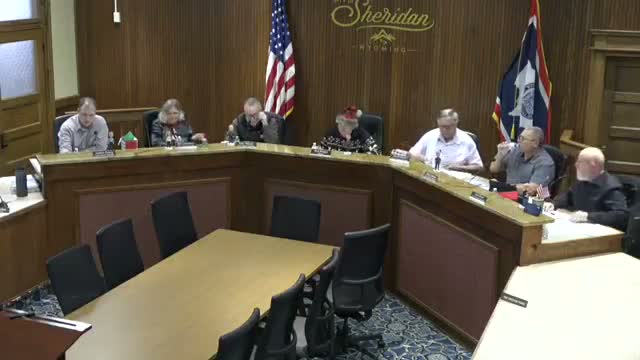
Sheridan city staff recommended the purchase of two 2026 side‑loader refuse trucks at a total cost of about $931,424 to replace aging units and preserve fleet standardization.
Heather Kumpinski, the city's fleet administrative coordinator, said staff solicited Sourcewell cooperative quotes and recommended buying a 2026 Mac Heil single‑arm side loader for $450,864 and a 2026 Mac Labrie dual‑arm side loader for $480,560.20. She told the council the quotes include extended warranties and optional upgrades and that both current trucks would be declared surplus if the purchases proceed.
"The request for quotes utilizing the Sourcewell cooperative purchasing process were obtained and include a 20% discount on the single arm," Kumpinski said, also noting differences in body and chassis pricing compared with prior purchases.
Utilities Director Dan Roberts described industrywide price shocks and urged council to accept a strategy of lengthening replacement cycles to protect the solid waste fund. "We're talking 20 to 30% in some cases," Roberts said of recent inflation in truck and body costs, and later, "by extending the hours, ... for the next 12 years is a $100,000 less per year" in annual cost to the solid waste fund.
Staff told the council the sanitation capital outlay budget had $409,654.95 unspent at the time of reporting, leaving about $33,207.95 short for the single‑arm purchase; the recycling capital outlay fund had a larger shortfall of roughly $78,000 for the dual‑arm unit. Kumpinski said staff intends to amend the budget (budget revision #1) to use solid waste cash balances to cover the shortfalls.
Several council members pressed staff on procurement choices and competitive bidding. Council member Grama asked whether specifications specifically favored Mac equipment and noted that naming a make can reduce competition; Kumpinski replied that shop and operations staff settled specifications based on reliability, parts availability and operational compatibility. "By being able to standardize your fleet a little better ... the shop can have [parts] in inventory and be able to replace them faster," she said.
Council members also asked about utilization and the effect of delayed delivery: staff estimated order‑to‑delivery timelines of about 10 months and explained that current vehicles will accumulate additional hours in that period.
The council did not take a formal vote during the study session; staff recommended moving forward with the purchases and bringing the budget amendment later in the evening as part of the FY26 revision process.
What happens next: staff will present a budget revision to address the cash‑balance transfers and, if approved, will execute cooperative purchase orders with the vendor and schedule delivery (approximately 10 months after order).
Heather Kumpinski, the city's fleet administrative coordinator, said staff solicited Sourcewell cooperative quotes and recommended buying a 2026 Mac Heil single‑arm side loader for $450,864 and a 2026 Mac Labrie dual‑arm side loader for $480,560.20. She told the council the quotes include extended warranties and optional upgrades and that both current trucks would be declared surplus if the purchases proceed.
"The request for quotes utilizing the Sourcewell cooperative purchasing process were obtained and include a 20% discount on the single arm," Kumpinski said, also noting differences in body and chassis pricing compared with prior purchases.
Utilities Director Dan Roberts described industrywide price shocks and urged council to accept a strategy of lengthening replacement cycles to protect the solid waste fund. "We're talking 20 to 30% in some cases," Roberts said of recent inflation in truck and body costs, and later, "by extending the hours, ... for the next 12 years is a $100,000 less per year" in annual cost to the solid waste fund.
Staff told the council the sanitation capital outlay budget had $409,654.95 unspent at the time of reporting, leaving about $33,207.95 short for the single‑arm purchase; the recycling capital outlay fund had a larger shortfall of roughly $78,000 for the dual‑arm unit. Kumpinski said staff intends to amend the budget (budget revision #1) to use solid waste cash balances to cover the shortfalls.
Several council members pressed staff on procurement choices and competitive bidding. Council member Grama asked whether specifications specifically favored Mac equipment and noted that naming a make can reduce competition; Kumpinski replied that shop and operations staff settled specifications based on reliability, parts availability and operational compatibility. "By being able to standardize your fleet a little better ... the shop can have [parts] in inventory and be able to replace them faster," she said.
Council members also asked about utilization and the effect of delayed delivery: staff estimated order‑to‑delivery timelines of about 10 months and explained that current vehicles will accumulate additional hours in that period.
The council did not take a formal vote during the study session; staff recommended moving forward with the purchases and bringing the budget amendment later in the evening as part of the FY26 revision process.
What happens next: staff will present a budget revision to address the cash‑balance transfers and, if approved, will execute cooperative purchase orders with the vendor and schedule delivery (approximately 10 months after order).
View the Full Meeting & All Its Details
This article offers just a summary. Unlock complete video, transcripts, and insights as a Founder Member.
✓
Watch full, unedited meeting videos
✓
Search every word spoken in unlimited transcripts
✓
AI summaries & real-time alerts (all government levels)
✓
Permanent access to expanding government content
30-day money-back guarantee
