Caltrans asks for $225 million to replace heavy fleet; subcommittee orders overdue report within 30 days
March 19, 2026 | California State Senate, Senate, Legislative, California
This article was created by AI summarizing key points discussed. AI makes mistakes, so for full details and context, please refer to the video of the full meeting. Please report any errors so we can fix them. Report an error »
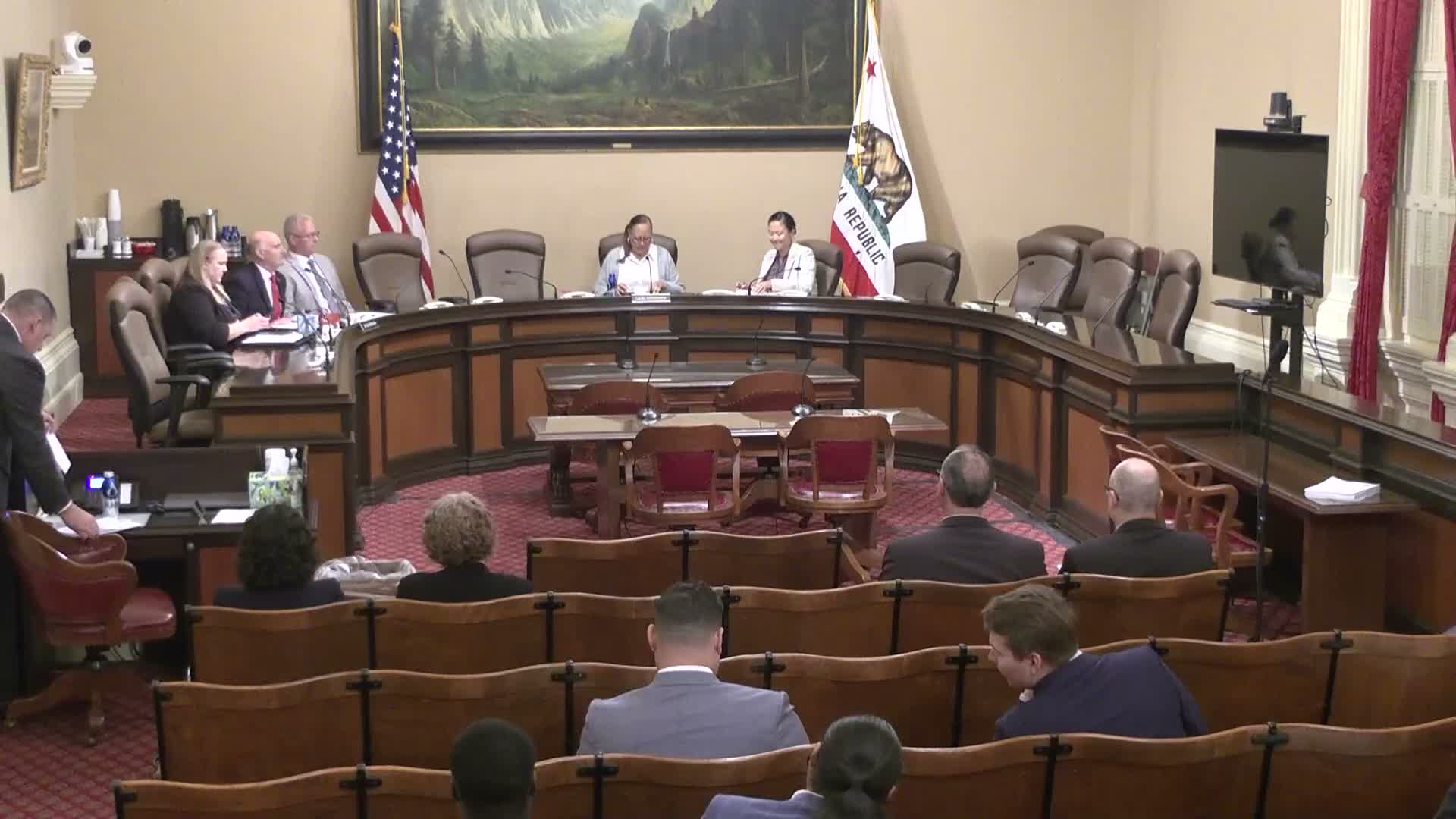
Caltrans told the Senate Budget Subcommittee No. 5 that it needs a one‑time budget augmentation of $225,000,000 — $6.9 million for personnel services and $218.1 million for operating expenses — to continue replacing aging medium‑ and heavy‑duty fleet equipment and install zero‑emission vehicle charging infrastructure.
‘‘This request represents the fifth year of Caltrans’ recent multi‑year fleet replacement endeavor,’’ Stephen Keck, Caltrans’ deputy director for finance, told the subcommittee. He said the department expects the funding to support replacement of about 1,100 vehicles, including a portion of heavier equipment such as loaders, graders and snow removal apparatus, and to expand ZEV charging projects at maintenance yards statewide.
The request follows prior limited‑term appropriations that Caltrans says have replaced nearly 6,000 vehicles to date; Keck said the department has roughly 12,250 pieces of vehicles and equipment and will provide a detailed replacement schedule.
Why the committee paused: the subcommittee’s chair pressed Caltrans over a late report required under Government Code 14108 — intended to document the department’s zero‑emission vehicle efforts, procurement timelines and cost comparisons between ZEVs and traditional vehicles. Keck acknowledged the report is overdue and said Caltrans expects to publish it in May. The chair set a 30‑day deadline for the report, saying members need the data — vehicle ages, mileages, replacement cycles and disposition of retired vehicles — before they can responsibly evaluate the request.
Senator Sciardo challenged the program’s priorities and costs, arguing that replacing vehicles at two‑to‑three times the cost of comparable conventional equipment diverts resources from urgent road repairs. ‘‘I would rather us change our goals to meeting some of the efforts to address environmental concerns,’’ Sciardo said, pressing for more spending on pavement and infrastructure rather than accelerated fleet turnover.
Caltrans officials responded that the budget request accounts for higher upfront ZEV costs and that maintenance savings for battery‑electric vehicles are starting to appear, though long‑term data remain limited. On manufacturing and labor standards, Caltrans said it uses standard Department of General Services boilerplate contract language and will provide the terms and conditions for committee review.
What happens next: the subcommittee conditioned further consideration of the $225 million request on receiving the Government Code 14108 report within the 30‑day window. Caltrans committed to provide the report and supplemental schedule information on fleet inventory and replacement timing.
Authorities: Government Code 14108 requires Caltrans to report on its zero‑emission vehicle purchases and related analysis; that report is central to the subcommittee’s oversight.
Ending: The item concluded with the chair emphasizing the committee’s role in oversight and the expectation that the report will enable an informed recommendation on the Caltrans request.
‘‘This request represents the fifth year of Caltrans’ recent multi‑year fleet replacement endeavor,’’ Stephen Keck, Caltrans’ deputy director for finance, told the subcommittee. He said the department expects the funding to support replacement of about 1,100 vehicles, including a portion of heavier equipment such as loaders, graders and snow removal apparatus, and to expand ZEV charging projects at maintenance yards statewide.
The request follows prior limited‑term appropriations that Caltrans says have replaced nearly 6,000 vehicles to date; Keck said the department has roughly 12,250 pieces of vehicles and equipment and will provide a detailed replacement schedule.
Why the committee paused: the subcommittee’s chair pressed Caltrans over a late report required under Government Code 14108 — intended to document the department’s zero‑emission vehicle efforts, procurement timelines and cost comparisons between ZEVs and traditional vehicles. Keck acknowledged the report is overdue and said Caltrans expects to publish it in May. The chair set a 30‑day deadline for the report, saying members need the data — vehicle ages, mileages, replacement cycles and disposition of retired vehicles — before they can responsibly evaluate the request.
Senator Sciardo challenged the program’s priorities and costs, arguing that replacing vehicles at two‑to‑three times the cost of comparable conventional equipment diverts resources from urgent road repairs. ‘‘I would rather us change our goals to meeting some of the efforts to address environmental concerns,’’ Sciardo said, pressing for more spending on pavement and infrastructure rather than accelerated fleet turnover.
Caltrans officials responded that the budget request accounts for higher upfront ZEV costs and that maintenance savings for battery‑electric vehicles are starting to appear, though long‑term data remain limited. On manufacturing and labor standards, Caltrans said it uses standard Department of General Services boilerplate contract language and will provide the terms and conditions for committee review.
What happens next: the subcommittee conditioned further consideration of the $225 million request on receiving the Government Code 14108 report within the 30‑day window. Caltrans committed to provide the report and supplemental schedule information on fleet inventory and replacement timing.
Authorities: Government Code 14108 requires Caltrans to report on its zero‑emission vehicle purchases and related analysis; that report is central to the subcommittee’s oversight.
Ending: The item concluded with the chair emphasizing the committee’s role in oversight and the expectation that the report will enable an informed recommendation on the Caltrans request.
View the Full Meeting & All Its Details
This article offers just a summary. Unlock complete video, transcripts, and insights as a Founder Member.
✓
Watch full, unedited meeting videos
✓
Search every word spoken in unlimited transcripts
✓
AI summaries & real-time alerts (all government levels)
✓
Permanent access to expanding government content
30-day money-back guarantee
