Caltrans proposes swapping $50M federal allocation for $30M state funding for high‑road training; author and members question the cut and delay
March 19, 2026 | California State Senate, Senate, Legislative, California
This article was created by AI summarizing key points discussed. AI makes mistakes, so for full details and context, please refer to the video of the full meeting. Please report any errors so we can fix them. Report an error »
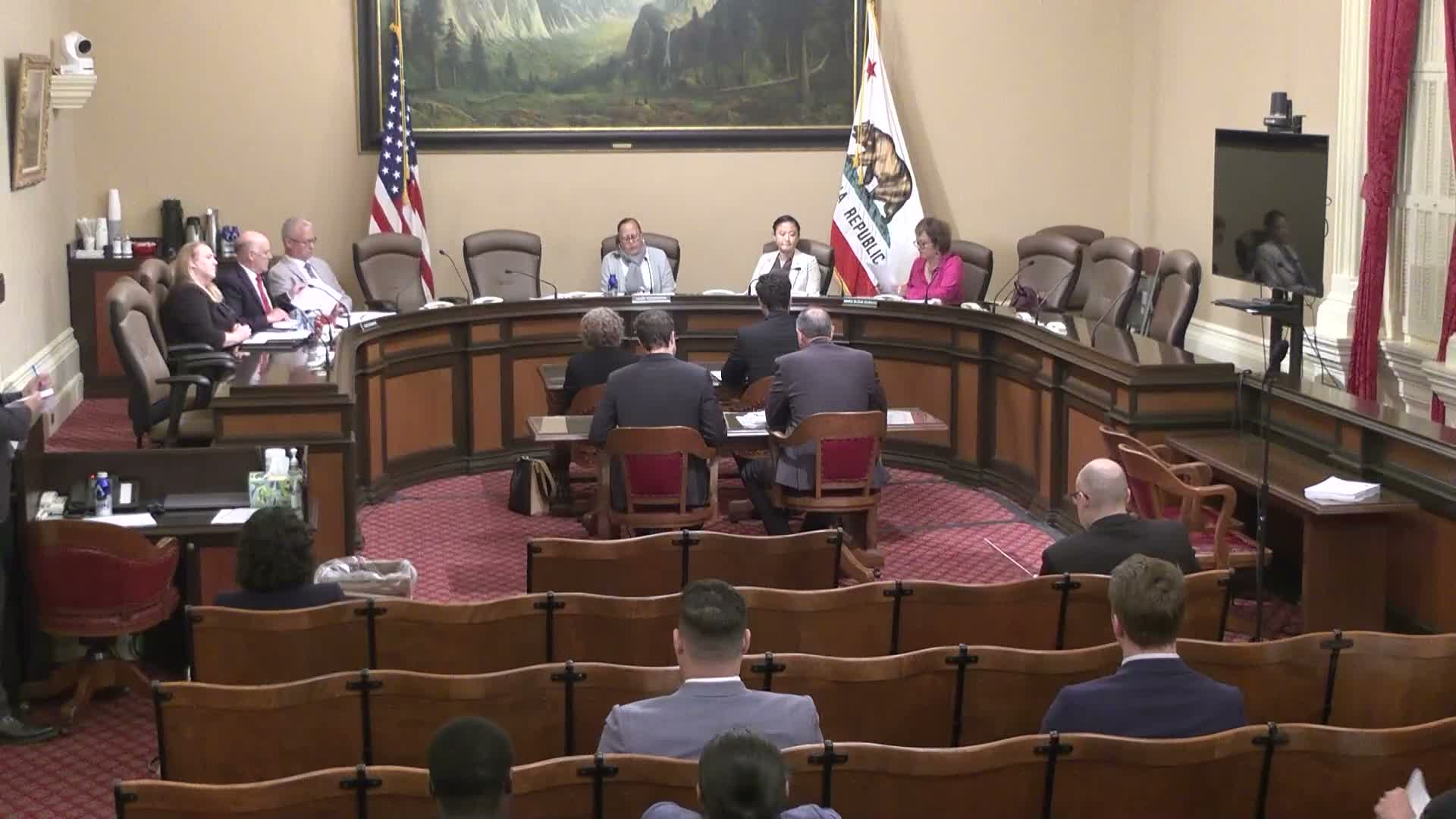
Caltrans told the Senate subcommittee that federal restrictions prevented the department from using $50 million in federal formula funds that SB150 (2023) had reserved for the High Road Construction Careers program, and proposed instead redirecting $30 million in state highway account funds to the California Workforce Development Board for the program.
‘‘Due to federal eligibility requirements, we were unable to receive the necessary federal authorization to use those federal funds as the state law intended,’’ Caltrans budget officer Keith Duncan said, explaining the administration’s trailer bill language would amend Government Code 14017 to allow the state to substitute $30 million in state funds for the previously designated federal dollars.
Senator DeRazo, the author of SB150, told the committee the bill (signed in July 2023) required Caltrans to transfer a minimum of $50 million of federal funds to support the High Road program and that the transfer had not occurred. ‘‘Three years of administrative inaction appeared to have squandered that urgency,’’ DeRazo said, criticizing the administration’s change and calling the reduction to $30 million a partial remedy that does not fix underlying interagency coordination failures.
A Workforce Development Board representative told the subcommittee that earlier partnerships (notably SP100, 2020–2023) connected roughly 700 participants to apprenticeship opportunities and another ~500 to construction employment, and that the program’s intent is to connect trainees to local apprenticeship halls and signatory contractors so training benefits remain local.
Department of Finance said it landed on $30 million after weighing other transportation priorities and Caltrans’ needs. Finance official Benjamin Pollack explained that while the state did receive $50 million in federal formula funds, federal authorization restrictions left the administration unable to spend those funds for the training program; redirecting $30 million in state funds is the administration’s proposed compromise.
Lawmakers pressed for more detail on a timeline, the list of projects and workforce centers that will receive the funds, and whether the state will track whether the trainees remain in California construction careers after the program. Caltrans said an interagency agreement has been signed by the Workforce Development Board and will be signed by Caltrans imminently; the plan is to begin allocating state funds as early as May and spread the transfer over two to three years.
What was not resolved: members asked where the unspent $20 million (the difference between $50 million federal and the $30 million state substitution) would go; Finance testified that the federal funds will be used on projects that meet federal eligibility requirements and that the state will provide details on those projects to the committee.
Ending: Committee members asked Caltrans and Finance to provide a clear rollout plan, the projects that will receive the funds, and mechanisms to prioritize disadvantaged communities and measure whether the program produces California‑based employment outcomes.
Authorities: SB150 (2023) as referenced in testimony; proposed amendment to Government Code section 14017 was discussed during the hearing.
‘‘Due to federal eligibility requirements, we were unable to receive the necessary federal authorization to use those federal funds as the state law intended,’’ Caltrans budget officer Keith Duncan said, explaining the administration’s trailer bill language would amend Government Code 14017 to allow the state to substitute $30 million in state funds for the previously designated federal dollars.
Senator DeRazo, the author of SB150, told the committee the bill (signed in July 2023) required Caltrans to transfer a minimum of $50 million of federal funds to support the High Road program and that the transfer had not occurred. ‘‘Three years of administrative inaction appeared to have squandered that urgency,’’ DeRazo said, criticizing the administration’s change and calling the reduction to $30 million a partial remedy that does not fix underlying interagency coordination failures.
A Workforce Development Board representative told the subcommittee that earlier partnerships (notably SP100, 2020–2023) connected roughly 700 participants to apprenticeship opportunities and another ~500 to construction employment, and that the program’s intent is to connect trainees to local apprenticeship halls and signatory contractors so training benefits remain local.
Department of Finance said it landed on $30 million after weighing other transportation priorities and Caltrans’ needs. Finance official Benjamin Pollack explained that while the state did receive $50 million in federal formula funds, federal authorization restrictions left the administration unable to spend those funds for the training program; redirecting $30 million in state funds is the administration’s proposed compromise.
Lawmakers pressed for more detail on a timeline, the list of projects and workforce centers that will receive the funds, and whether the state will track whether the trainees remain in California construction careers after the program. Caltrans said an interagency agreement has been signed by the Workforce Development Board and will be signed by Caltrans imminently; the plan is to begin allocating state funds as early as May and spread the transfer over two to three years.
What was not resolved: members asked where the unspent $20 million (the difference between $50 million federal and the $30 million state substitution) would go; Finance testified that the federal funds will be used on projects that meet federal eligibility requirements and that the state will provide details on those projects to the committee.
Ending: Committee members asked Caltrans and Finance to provide a clear rollout plan, the projects that will receive the funds, and mechanisms to prioritize disadvantaged communities and measure whether the program produces California‑based employment outcomes.
Authorities: SB150 (2023) as referenced in testimony; proposed amendment to Government Code section 14017 was discussed during the hearing.
View the Full Meeting & All Its Details
This article offers just a summary. Unlock complete video, transcripts, and insights as a Founder Member.
✓
Watch full, unedited meeting videos
✓
Search every word spoken in unlimited transcripts
✓
AI summaries & real-time alerts (all government levels)
✓
Permanent access to expanding government content
30-day money-back guarantee
