Senate panel hears sharp debate over proposed sustainable aviation fuel tax credit
March 19, 2026 | California State Senate, Senate, Legislative, California
This article was created by AI summarizing key points discussed. AI makes mistakes, so for full details and context, please refer to the video of the full meeting. Please report any errors so we can fix them. Report an error »
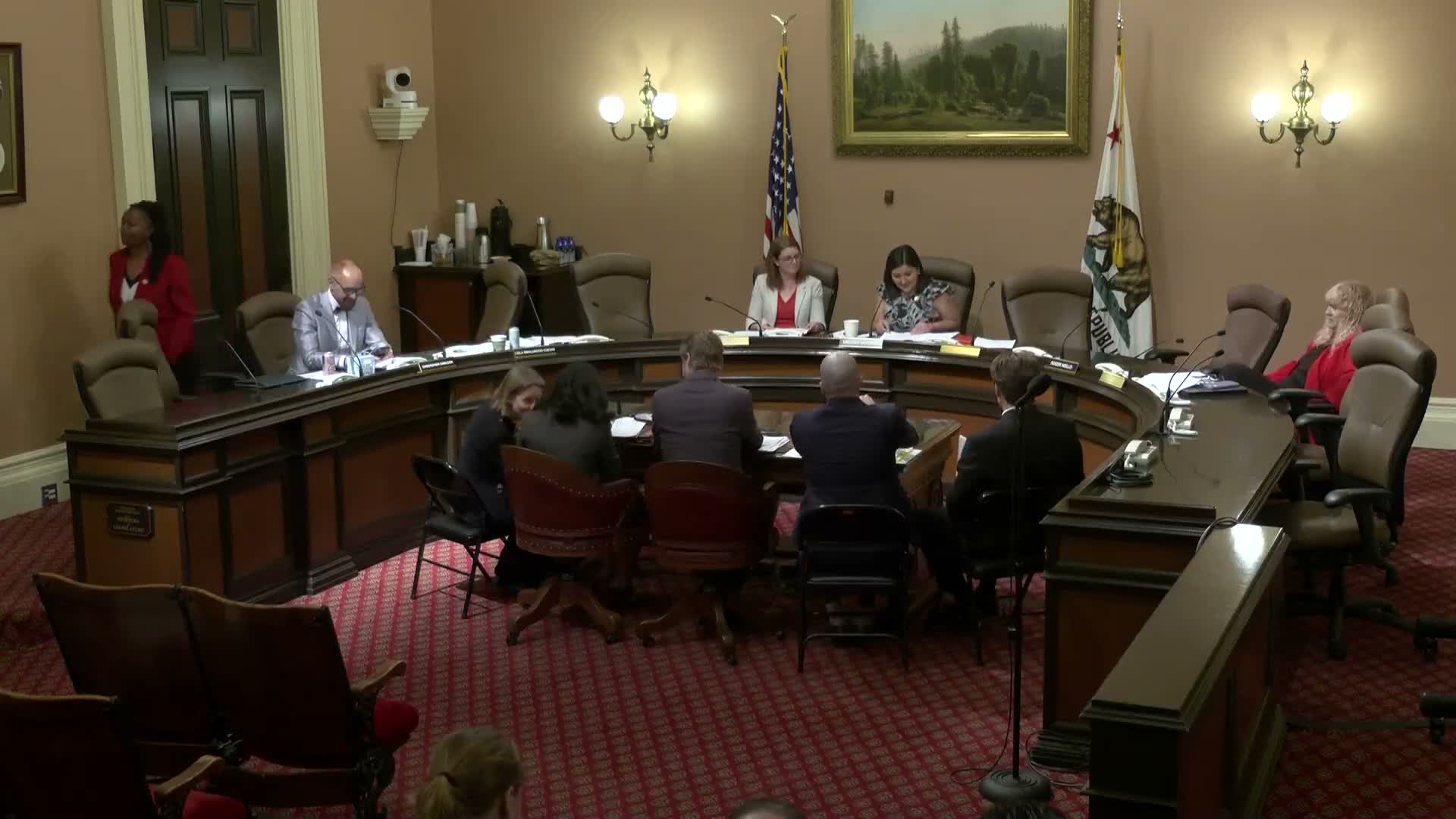
The Senate Budget Subcommittee No. 4 on Friday took up the governor's proposal to provide a $1–$2 per gallon tax credit against the state diesel excise tax for sustainable aviation fuel sold into California through 2036. The Department of Finance said the credit would be tied to carbon intensity as determined by the California Air Resources Board and is intended to expand SAF production in the state.
Why it matters: The Legislative Analyst's Office urged rejection, saying the credit is an expensive and uncertain way to decarbonize aviation and could reduce diesel excise revenues that fund highway maintenance and local streets. LAO analyst Helen Kirschstein told the committee that annual revenue losses could range widely and, in a downside scenario, could be substantially larger than administration estimates.
Department of Finance analyst Andrew March said the administration estimated the policy might reduce diesel excise tax revenue by roughly $165 million annually under central assumptions but acknowledged uncertainty. "We have not seen SAF flood into other states with tax credits in a way that caused that worst‑case outcome," March said. He added the proposal could be paired with reporting requirements or caps if the Legislature prefers more control.
CARB verification and environmental questions: Matthew Botel of the California Air Resources Board said eligibility would require LCFS (Low Carbon Fuel Standard) pathway certification, which includes life‑cycle analysis of feedstocks, transport and use. "SAF is the primary strategy to decarbonize aviation today," he said, noting both greenhouse‑gas and air‑quality benefits near airports.
Political and fiscal tradeoffs: Committee members pressed whether the credit mainly helps in‑state refineries and whether it amounts to a de facto general tax benefit that shifts funds away from voter‑protected transportation programs. LAO warned that every dollar of the credit is a dollar not available for Caltrans’ state highway maintenance, local streets and trade corridor programs and said the proposal deviates from the spirit of voter‑approved restrictions on transportation revenues.
Public comment showed deep divisions. Labor and refinery employees, along with some airlines and aerospace firms, urged support, emphasizing jobs created by refinery conversions to renewable fuels. Environmental groups and infrastructure advocates warned of weak emissions gains and harms to road funding. Ada Welder of Earthjustice said, "Expert analysis shows the emission reductions from these fuels are meager at best," and urged rejection.
What comes next: The proposal remained under consideration. LAO and other witnesses suggested alternative approaches — such as targeted grants, different tax‑credit structures with clawbacks, or reporting and caps — to limit fiscal risk while supporting domestic SAF supply.
The subcommittee took no vote and left the item open for further deliberation.
Why it matters: The Legislative Analyst's Office urged rejection, saying the credit is an expensive and uncertain way to decarbonize aviation and could reduce diesel excise revenues that fund highway maintenance and local streets. LAO analyst Helen Kirschstein told the committee that annual revenue losses could range widely and, in a downside scenario, could be substantially larger than administration estimates.
Department of Finance analyst Andrew March said the administration estimated the policy might reduce diesel excise tax revenue by roughly $165 million annually under central assumptions but acknowledged uncertainty. "We have not seen SAF flood into other states with tax credits in a way that caused that worst‑case outcome," March said. He added the proposal could be paired with reporting requirements or caps if the Legislature prefers more control.
CARB verification and environmental questions: Matthew Botel of the California Air Resources Board said eligibility would require LCFS (Low Carbon Fuel Standard) pathway certification, which includes life‑cycle analysis of feedstocks, transport and use. "SAF is the primary strategy to decarbonize aviation today," he said, noting both greenhouse‑gas and air‑quality benefits near airports.
Political and fiscal tradeoffs: Committee members pressed whether the credit mainly helps in‑state refineries and whether it amounts to a de facto general tax benefit that shifts funds away from voter‑protected transportation programs. LAO warned that every dollar of the credit is a dollar not available for Caltrans’ state highway maintenance, local streets and trade corridor programs and said the proposal deviates from the spirit of voter‑approved restrictions on transportation revenues.
Public comment showed deep divisions. Labor and refinery employees, along with some airlines and aerospace firms, urged support, emphasizing jobs created by refinery conversions to renewable fuels. Environmental groups and infrastructure advocates warned of weak emissions gains and harms to road funding. Ada Welder of Earthjustice said, "Expert analysis shows the emission reductions from these fuels are meager at best," and urged rejection.
What comes next: The proposal remained under consideration. LAO and other witnesses suggested alternative approaches — such as targeted grants, different tax‑credit structures with clawbacks, or reporting and caps — to limit fiscal risk while supporting domestic SAF supply.
The subcommittee took no vote and left the item open for further deliberation.
Don't Miss a Word: See the Full Meeting!
Go beyond summaries. Unlock every video, transcript, and key insight with a Founder Membership.
✓
Get instant access to full meeting videos
✓
Search and clip any phrase from complete transcripts
✓
Receive AI-powered summaries & custom alerts
✓
Enjoy lifetime, unrestricted access to government data
30-day money-back guarantee
