CalEPA seeks $5.1 million, multiagency team to tackle rising landfill 'SET' emergencies
March 19, 2026 | California State Senate, Senate, Legislative, California
This article was created by AI summarizing key points discussed. AI makes mistakes, so for full details and context, please refer to the video of the full meeting. Please report any errors so we can fix them. Report an error »
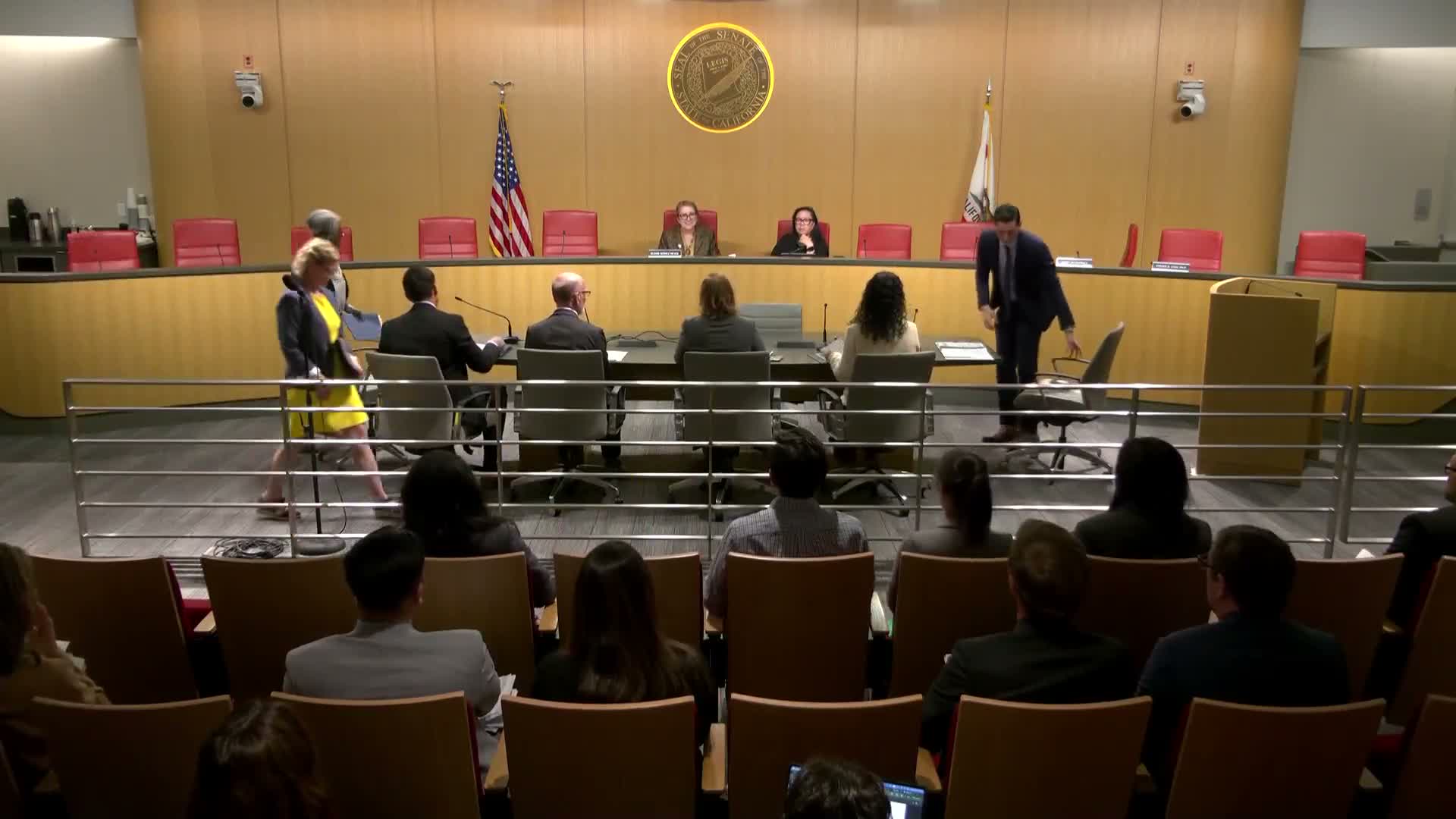
The California Environmental Protection Agency told the Senate Budget Subcommittee No. 2 that it is asking for $5.1 million and 12 positions across CalEPA, CalRecycle, the Department of Toxic Substances Control (DTSC) and the State Water Resources Control Board to respond to and help prevent subsurface elevated-temperature (SET) events at landfills.
Secretary Garcia, presenting the agency overview, said California is seeing new and intensifying waste‑management challenges and advocated a coordinated strategy to strengthen landfill response and enforcement, protect communities and reduce state financial risk. ‘‘We are acutely focused on strengthening our ability to respond,’’ Secretary Garcia said in testimony to the committee.
Why it matters: agency officials described two currently active SET events, including the widely reported situation at Chiquita Canyon, and said more rapid detection, centralized data and dedicated staff are necessary to protect public health and local environments. Deputy Secretary Brandy Hunt told the committee the package would fund 12 positions and a $1,000,000 CalRecycle grant program to support local response tools and accelerate detection and mitigation.
What the proposal would do: Hunt said the funds would buy scientific and technical capacity (air and leachate monitoring, engineering review), build centralized data systems, and provide local grants so jurisdictions can act more quickly. CalEPA urged the committee to fund staff and infrastructure to coordinate the multiple enforcement authorities and technical roles that must converge during SET events.
Evidence and enforcement: DTSC chief counsel Alana Matthews and Deputy Director Mark DeBees told the panel that operators should have monitoring equipment and that existing administrative and enforcement authorities can be used now; the agencies want to strengthen those tools and centralize data so trends can be detected earlier. ‘‘We have the ability to respond currently,’’ DeBees said, but added agencies are still building datasets and technical capacity to predict and avoid future events.
Local impacts and public testimony: advocates and local groups pressed the committee for funding. Californians Against Waste said the Chiquita Canyon situation has ‘‘decimated’’ nearby communities and urged immediate action; StopWaste and others asked for ongoing investments to support recovery programs that also reduce landfill inputs.
Next step: committee members held the BCP open for negotiation and asked agencies for follow-up technical details and cost justification; the panel did not take a vote at the hearing.
Sources: Oral testimony to Senate Budget Subcommittee No. 2 and public witnesses, as recorded in the hearing transcript.
Secretary Garcia, presenting the agency overview, said California is seeing new and intensifying waste‑management challenges and advocated a coordinated strategy to strengthen landfill response and enforcement, protect communities and reduce state financial risk. ‘‘We are acutely focused on strengthening our ability to respond,’’ Secretary Garcia said in testimony to the committee.
Why it matters: agency officials described two currently active SET events, including the widely reported situation at Chiquita Canyon, and said more rapid detection, centralized data and dedicated staff are necessary to protect public health and local environments. Deputy Secretary Brandy Hunt told the committee the package would fund 12 positions and a $1,000,000 CalRecycle grant program to support local response tools and accelerate detection and mitigation.
What the proposal would do: Hunt said the funds would buy scientific and technical capacity (air and leachate monitoring, engineering review), build centralized data systems, and provide local grants so jurisdictions can act more quickly. CalEPA urged the committee to fund staff and infrastructure to coordinate the multiple enforcement authorities and technical roles that must converge during SET events.
Evidence and enforcement: DTSC chief counsel Alana Matthews and Deputy Director Mark DeBees told the panel that operators should have monitoring equipment and that existing administrative and enforcement authorities can be used now; the agencies want to strengthen those tools and centralize data so trends can be detected earlier. ‘‘We have the ability to respond currently,’’ DeBees said, but added agencies are still building datasets and technical capacity to predict and avoid future events.
Local impacts and public testimony: advocates and local groups pressed the committee for funding. Californians Against Waste said the Chiquita Canyon situation has ‘‘decimated’’ nearby communities and urged immediate action; StopWaste and others asked for ongoing investments to support recovery programs that also reduce landfill inputs.
Next step: committee members held the BCP open for negotiation and asked agencies for follow-up technical details and cost justification; the panel did not take a vote at the hearing.
Sources: Oral testimony to Senate Budget Subcommittee No. 2 and public witnesses, as recorded in the hearing transcript.
Don't Miss a Word: See the Full Meeting!
Go beyond summaries. Unlock every video, transcript, and key insight with a Founder Membership.
✓
Get instant access to full meeting videos
✓
Search and clip any phrase from complete transcripts
✓
Receive AI-powered summaries & custom alerts
✓
Enjoy lifetime, unrestricted access to government data
30-day money-back guarantee
