DTSC highlights permit backlog progress, Exide cleanup wins and PFAS, battery recycling priorities
March 19, 2026 | California State Senate, Senate, Legislative, California
This article was created by AI summarizing key points discussed. AI makes mistakes, so for full details and context, please refer to the video of the full meeting. Please report any errors so we can fix them. Report an error »
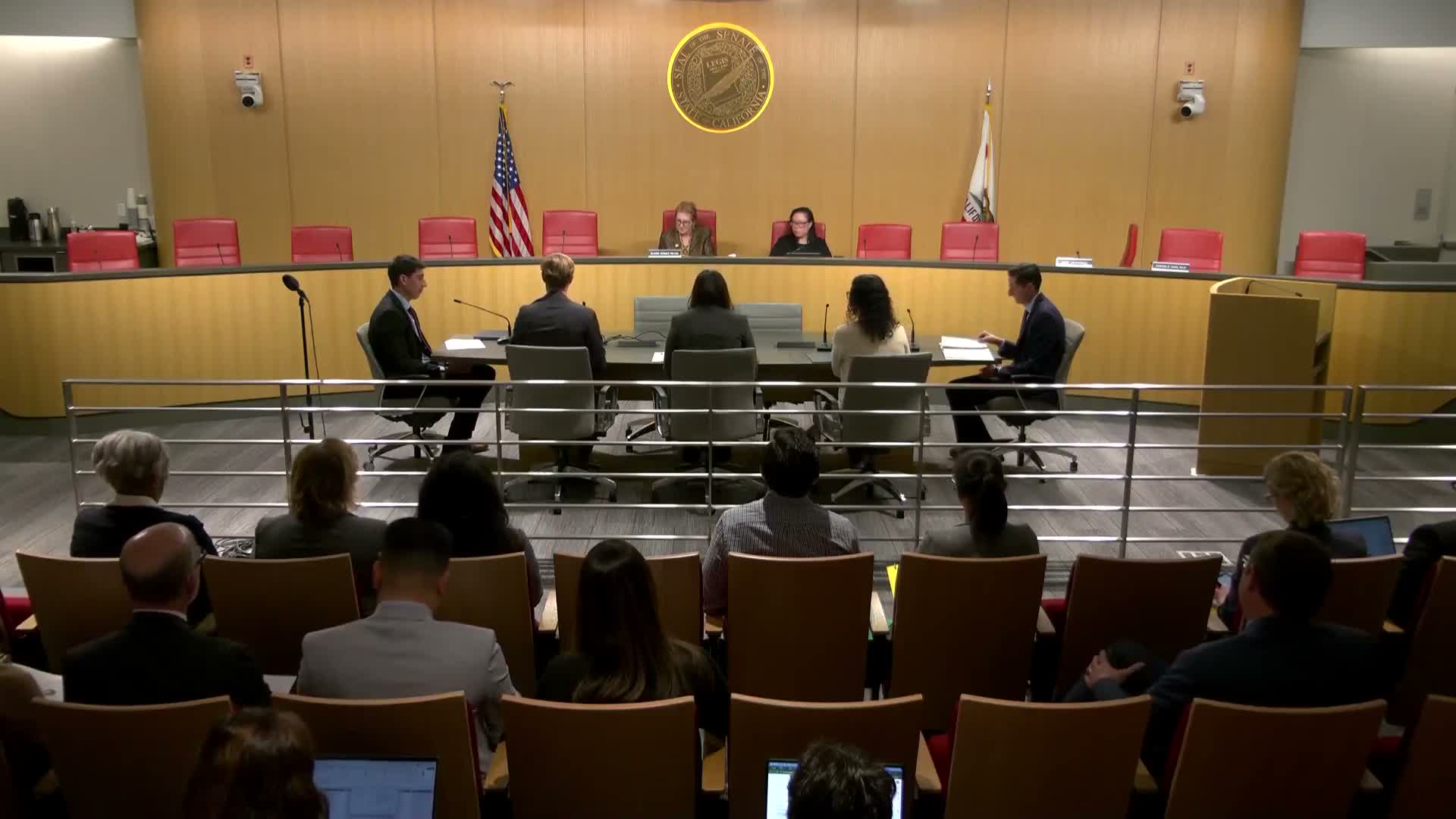
Department of Toxic Substances Control leadership and the Board of Environmental Safety briefed the subcommittee on recent reforms, enforcement and emerging priorities.
DTSC Director Butler told the committee that permit backlog reductions are a major accomplishment: out of 103 permits previously delayed, the department has eight remaining continued permits and has publicly noticed draft decisions for the majority. Director Butler said DTSC will not sacrifice community protections for speed and emphasized stronger enforcement, cost‑recovery work to hold responsible parties accountable, and continued community engagement during site cleanups.
On Exide remediation, the department said it has remediated more than 6,000 residential homes and completed 100% of parkway cleanups near the former battery recycling facility; the department said it uses third‑party monitors and local workforce training to maintain quality control. Butler said additional proposed funding in the Governor's request would allow DTSC to extend remediation to additional residential properties and impacted communities.
DTSC also described PFAS as a top‑four priority and said it is developing a holistic approach to past, present and future sources of PFAS contamination, including investment in environmental chemistry laboratory capabilities. Director Butler noted growing demand for recycling infrastructure for solar panels and lithium batteries and asked for resources to establish a statewide planning division to modernize hazardous waste management for emerging waste streams.
Board Chair Andrew Raikstra described the board's role, membership, and priorities — including adjudication of permit appeals and oversight of hazardous waste management planning — and said the board remains engaged with disadvantaged communities on cumulative impacts rule‑making and performance metrics.
Committee members congratulated DTSC on progress while pressing the department on capacity for emerging waste streams and the timeline for the proposed planning division. DTSC said the planning division would be phased over two years (eight positions year one, 13 positions year two) and that some implementation already occurs through staff redeployment and prior SB 158 positions.
Next step: the committee held DTSC BCPs open and asked for further timeline and resource details.
DTSC Director Butler told the committee that permit backlog reductions are a major accomplishment: out of 103 permits previously delayed, the department has eight remaining continued permits and has publicly noticed draft decisions for the majority. Director Butler said DTSC will not sacrifice community protections for speed and emphasized stronger enforcement, cost‑recovery work to hold responsible parties accountable, and continued community engagement during site cleanups.
On Exide remediation, the department said it has remediated more than 6,000 residential homes and completed 100% of parkway cleanups near the former battery recycling facility; the department said it uses third‑party monitors and local workforce training to maintain quality control. Butler said additional proposed funding in the Governor's request would allow DTSC to extend remediation to additional residential properties and impacted communities.
DTSC also described PFAS as a top‑four priority and said it is developing a holistic approach to past, present and future sources of PFAS contamination, including investment in environmental chemistry laboratory capabilities. Director Butler noted growing demand for recycling infrastructure for solar panels and lithium batteries and asked for resources to establish a statewide planning division to modernize hazardous waste management for emerging waste streams.
Board Chair Andrew Raikstra described the board's role, membership, and priorities — including adjudication of permit appeals and oversight of hazardous waste management planning — and said the board remains engaged with disadvantaged communities on cumulative impacts rule‑making and performance metrics.
Committee members congratulated DTSC on progress while pressing the department on capacity for emerging waste streams and the timeline for the proposed planning division. DTSC said the planning division would be phased over two years (eight positions year one, 13 positions year two) and that some implementation already occurs through staff redeployment and prior SB 158 positions.
Next step: the committee held DTSC BCPs open and asked for further timeline and resource details.
Don't Miss a Word: See the Full Meeting!
Go beyond summaries. Unlock every video, transcript, and key insight with a Founder Membership.
✓
Get instant access to full meeting videos
✓
Search and clip any phrase from complete transcripts
✓
Receive AI-powered summaries & custom alerts
✓
Enjoy lifetime, unrestricted access to government data
30-day money-back guarantee
