Chancellor asks Legislature to boost community college enrollment funding, expand data and prior‑learning investments
March 19, 2026 | California State Senate, Senate, Legislative, California
This article was created by AI summarizing key points discussed. AI makes mistakes, so for full details and context, please refer to the video of the full meeting. Please report any errors so we can fix them. Report an error »
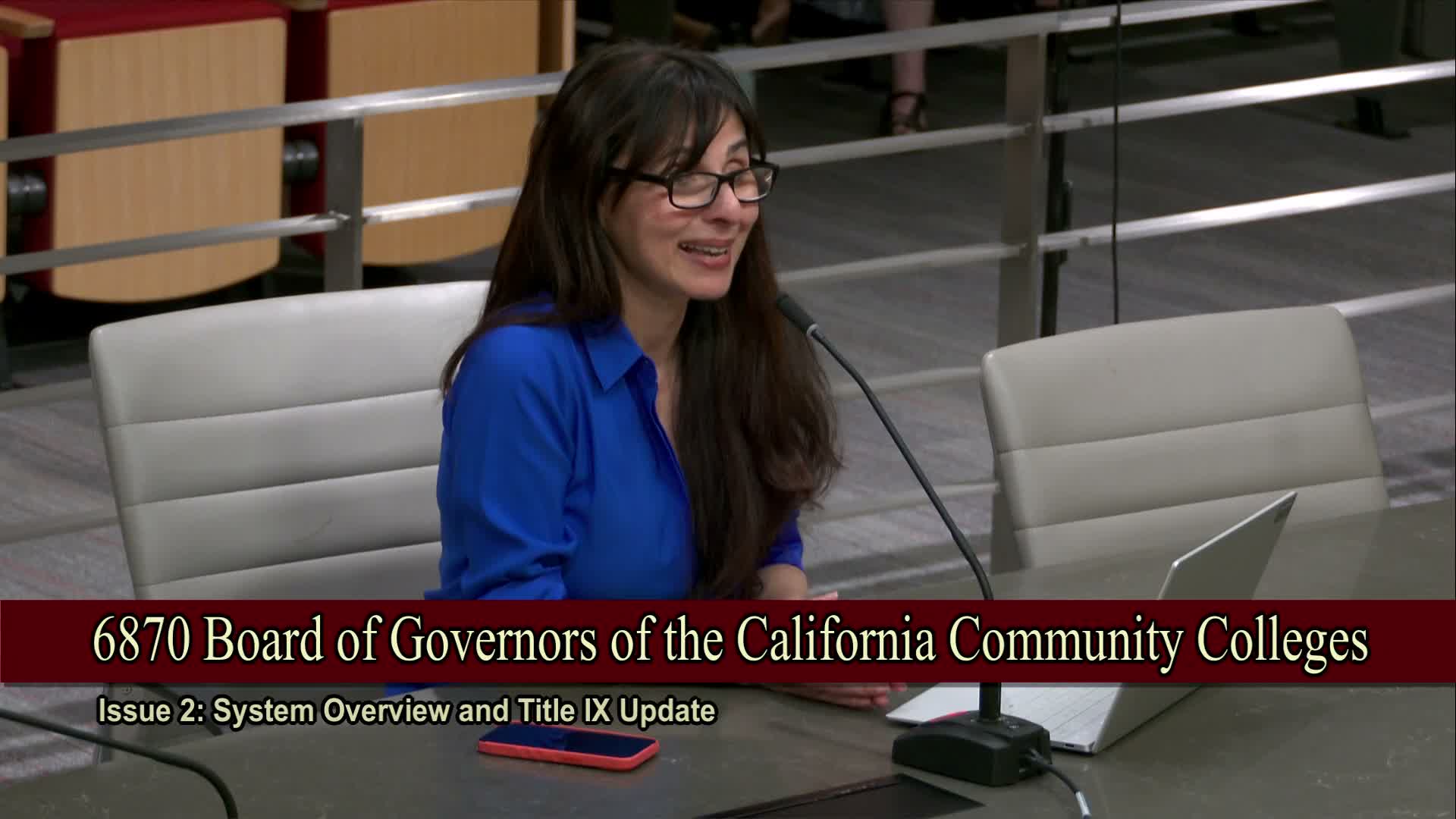
Chancellor Christian told the Senate Budget Subcommittee No. 1 on Education that California's community colleges have rebounded from pandemic lows and are now projecting continued year‑over‑year enrollment growth, asking the Legislature to fund a 3% enrollment growth rate rather than the Governor's proposed 1.5% step. She said the system now enrolls more than 2.2 million students and urged policymakers to remove a 10% growth cap and consider using a best‑performing year in the three‑year average to better resource districts that are recovering rapidly.
Christian described a package of priorities the chancellor's office wants the Legislature to support: a statewide common cloud data platform to enable real‑time analytics (the administration's January proposal includes $36 million one‑time and $5 million ongoing), expanded credit‑for‑prior‑learning investments (the January budget included $35 million one‑time and $2 million ongoing), an AI literacy pilot ($10 million one‑time), targeted rebuild funding for Los Angeles area colleges, and $14.2 million ongoing to expand staffing and services at veterans resource centers. She framed these as investments to keep access and course capacity from being rationed when districts enroll students without commensurate state funding.
In subsequent questioning, members and system officials pressed for details. Executive Vice Chancellor Chris Ferguson said roughly 54 of 72 districts are growing year‑over‑year and that funding the ‘‘greater of’’ current‑year or the three‑year rolling average would benefit many recovering colleges by providing resources sooner. The Department of Finance and Legislative Analyst's Office recommended prioritizing cost‑of‑living adjustments and apportionment increases within available Proposition 98 resources and cautioned about the timing and fiscal trade‑offs of different growth‑funding schedules.
The chancellor's office described operational checks to protect against fraudulent enrollments in the new real‑time dashboard: the system has made identity verification mandatory, has a DMV identity‑verification agreement in place, and is deploying AI tools and registrar/faculty review at the college level. The office said the final reported enrollment numbers are ‘‘clean’’ and that an audit of the process is underway.
The hearing did not produce a decision; subcommittee members asked staff for follow‑up data and signaled they would weigh the trade‑offs between immediate growth funding and longer‑term fiscal constraints.
Christian described a package of priorities the chancellor's office wants the Legislature to support: a statewide common cloud data platform to enable real‑time analytics (the administration's January proposal includes $36 million one‑time and $5 million ongoing), expanded credit‑for‑prior‑learning investments (the January budget included $35 million one‑time and $2 million ongoing), an AI literacy pilot ($10 million one‑time), targeted rebuild funding for Los Angeles area colleges, and $14.2 million ongoing to expand staffing and services at veterans resource centers. She framed these as investments to keep access and course capacity from being rationed when districts enroll students without commensurate state funding.
In subsequent questioning, members and system officials pressed for details. Executive Vice Chancellor Chris Ferguson said roughly 54 of 72 districts are growing year‑over‑year and that funding the ‘‘greater of’’ current‑year or the three‑year rolling average would benefit many recovering colleges by providing resources sooner. The Department of Finance and Legislative Analyst's Office recommended prioritizing cost‑of‑living adjustments and apportionment increases within available Proposition 98 resources and cautioned about the timing and fiscal trade‑offs of different growth‑funding schedules.
The chancellor's office described operational checks to protect against fraudulent enrollments in the new real‑time dashboard: the system has made identity verification mandatory, has a DMV identity‑verification agreement in place, and is deploying AI tools and registrar/faculty review at the college level. The office said the final reported enrollment numbers are ‘‘clean’’ and that an audit of the process is underway.
The hearing did not produce a decision; subcommittee members asked staff for follow‑up data and signaled they would weigh the trade‑offs between immediate growth funding and longer‑term fiscal constraints.
View the Full Meeting & All Its Details
This article offers just a summary. Unlock complete video, transcripts, and insights as a Founder Member.
✓
Watch full, unedited meeting videos
✓
Search every word spoken in unlimited transcripts
✓
AI summaries & real-time alerts (all government levels)
✓
Permanent access to expanding government content
30-day money-back guarantee
