Senate health panel presses Access over $122 million in delayed TIP payments and 'ghost' provider networks
March 19, 2026 | 2026 Legislature Arizona, Arizona
This article was created by AI summarizing key points discussed. AI makes mistakes, so for full details and context, please refer to the video of the full meeting. Please report any errors so we can fix them. Report an error »
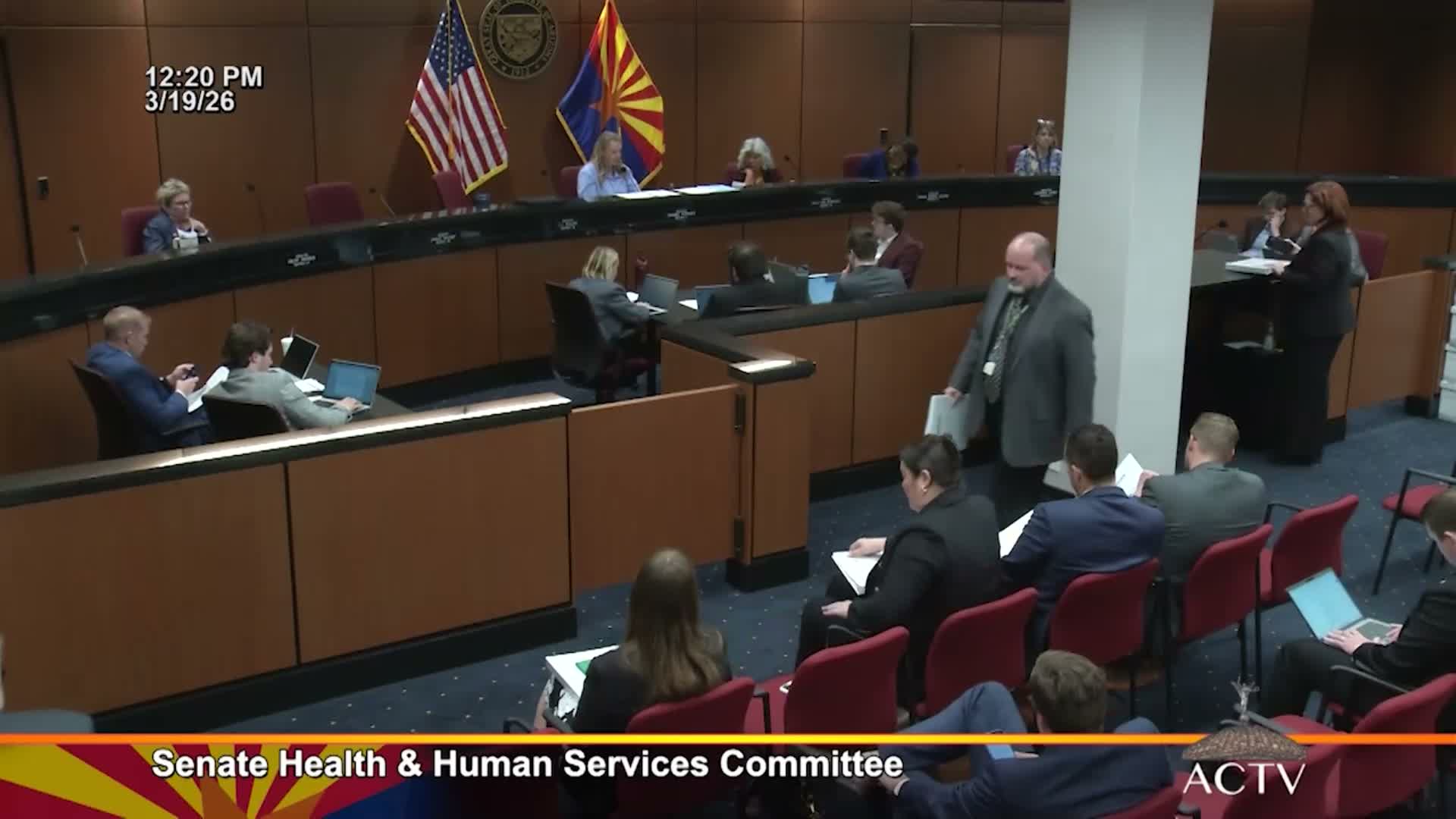
PHOENIX — The Arizona Senate Committee on Health and Human Services on Wednesday pressed leaders of Access, the state Medicaid agency, over delayed Targeted Investment Program payments, missing work‑group records and findings from a federal inspector that significant portions of provider directories may be inaccurate.
The committee's chair said the hearing — the fifth in a series examining Access — revealed a pattern of decisions made without public comment and gaps in recordkeeping. "We want to know where the $122,000,000 in TIP funds are, and when providers will be paid," the chair said, requesting a formal 30‑day plan and unredacted documents submitted to CMS about TIP 2.
Interim director Roberta Harrison told the committee she joined Access in November and stepped into the interim role last month. She said staff had used prior authorization and prepayment reviews to interrupt fraud tied to so‑called sober‑living schemes and described immediate operational improvements: "We've tripled the speed of prior authorizations, cut down unnecessary documentation requirements, built dashboards that finally let us track our timeliness information in real time," she said, adding that claims processing had been reduced to under 30 days.
But Harrison acknowledged gaps in records and institutional knowledge for earlier decisions, including the Covered Behavioral Health Services Guide. She said much of the work on that guide occurred before her tenure and that participants in the work group had signed nondisclosure agreements tied to fraud, leaving her without access to meeting minutes. Harrison said Access would follow up with a list of agency participants and review statements that may conflict with the American Rescue Plan Act (ARPA) attestation requirements.
Committee members also raised procurement and contractor concerns. The chair read language from a Constellation proposal indicating the company told Access it would achieve a greater return on investment by denying more claims; Harrison said that language appeared in Constellation's proposal but was not part of the contract scope and that denying claims is not an agency incentive. "That was part of the proposal that was shared from Constellation Health. That was not solicited from the department and it is not part of the scope of work in the contract," Harrison said.
The committee pressed Access about the Targeted Investment Program, a waiver‑approved initiative intended to fund integrated behavioral‑health services. Alyssa Bridal, assistant deputy director for clinical and managed care operations, said Access oversees TIP through two internal teams and that payments require both programmatic and financial documentation from participating providers. She said 134 providers participate across roughly 1,069 sites, and that validating and allocating payments across those sites contributes to delays.
Jeff Teigen, assistant director for business and finance, clarified payment timing for the second wave of TIP: the agency paid waiver‑year 2023 funds to managed‑care organizations in July 2025, with providers receiving funds in August 2025 after MCO distribution. Teigen said year‑2 and year‑3 payments had not yet been paid because calculations require validated provider documentation, analysis and allocation among many sites.
The chair directed Access to submit within 30 days a plan to get delayed year‑2 and year‑3 TIP payments (approximately $122,000,000) to owed providers and produce all documents they have provided to CMS related to TIP 2, including files not published on the agency website.
The committee also examined network adequacy and "ghost" provider networks. Deputy director Marcus Johnson described Access's use of time‑and‑distance standards and appointment‑availability reviews to assess networks, and said Access works with managed‑care organizations to address missing or inactive providers. Citing a Federal Office of Inspector General report, the chair said investigators found 28% of behavioral‑health providers in Santa Cruz County were inactive or unable to see patients; Access staff said they would follow up and work with plans to strengthen networks.
Committee members asked how often Access receives network advocacy and compliance reports from MCOs and whether the agency verifies provider lists against billing records; Access said the agency receives annual network reports from plans and that multiple internal units (including OIG and finance) assist in verification, but specific dates and whether corrective action plans had been issued required follow‑up.
The committee asked for unredacted network adequacy compliance reports from the past 12 months. Access staff said they did not currently view the situation as an "emergency" based on the information on hand but pledged to review specific service types and escalate where necessary.
The chair acknowledged steps Access has taken but criticized longstanding failures and the harm to Native American communities and behavioral‑health providers. The committee said it will request monthly detailed reports on corrective actions and may hold further hearings. The panel adjourned without taking a formal vote.
The committee's chair said the hearing — the fifth in a series examining Access — revealed a pattern of decisions made without public comment and gaps in recordkeeping. "We want to know where the $122,000,000 in TIP funds are, and when providers will be paid," the chair said, requesting a formal 30‑day plan and unredacted documents submitted to CMS about TIP 2.
Interim director Roberta Harrison told the committee she joined Access in November and stepped into the interim role last month. She said staff had used prior authorization and prepayment reviews to interrupt fraud tied to so‑called sober‑living schemes and described immediate operational improvements: "We've tripled the speed of prior authorizations, cut down unnecessary documentation requirements, built dashboards that finally let us track our timeliness information in real time," she said, adding that claims processing had been reduced to under 30 days.
But Harrison acknowledged gaps in records and institutional knowledge for earlier decisions, including the Covered Behavioral Health Services Guide. She said much of the work on that guide occurred before her tenure and that participants in the work group had signed nondisclosure agreements tied to fraud, leaving her without access to meeting minutes. Harrison said Access would follow up with a list of agency participants and review statements that may conflict with the American Rescue Plan Act (ARPA) attestation requirements.
Committee members also raised procurement and contractor concerns. The chair read language from a Constellation proposal indicating the company told Access it would achieve a greater return on investment by denying more claims; Harrison said that language appeared in Constellation's proposal but was not part of the contract scope and that denying claims is not an agency incentive. "That was part of the proposal that was shared from Constellation Health. That was not solicited from the department and it is not part of the scope of work in the contract," Harrison said.
The committee pressed Access about the Targeted Investment Program, a waiver‑approved initiative intended to fund integrated behavioral‑health services. Alyssa Bridal, assistant deputy director for clinical and managed care operations, said Access oversees TIP through two internal teams and that payments require both programmatic and financial documentation from participating providers. She said 134 providers participate across roughly 1,069 sites, and that validating and allocating payments across those sites contributes to delays.
Jeff Teigen, assistant director for business and finance, clarified payment timing for the second wave of TIP: the agency paid waiver‑year 2023 funds to managed‑care organizations in July 2025, with providers receiving funds in August 2025 after MCO distribution. Teigen said year‑2 and year‑3 payments had not yet been paid because calculations require validated provider documentation, analysis and allocation among many sites.
The chair directed Access to submit within 30 days a plan to get delayed year‑2 and year‑3 TIP payments (approximately $122,000,000) to owed providers and produce all documents they have provided to CMS related to TIP 2, including files not published on the agency website.
The committee also examined network adequacy and "ghost" provider networks. Deputy director Marcus Johnson described Access's use of time‑and‑distance standards and appointment‑availability reviews to assess networks, and said Access works with managed‑care organizations to address missing or inactive providers. Citing a Federal Office of Inspector General report, the chair said investigators found 28% of behavioral‑health providers in Santa Cruz County were inactive or unable to see patients; Access staff said they would follow up and work with plans to strengthen networks.
Committee members asked how often Access receives network advocacy and compliance reports from MCOs and whether the agency verifies provider lists against billing records; Access said the agency receives annual network reports from plans and that multiple internal units (including OIG and finance) assist in verification, but specific dates and whether corrective action plans had been issued required follow‑up.
The committee asked for unredacted network adequacy compliance reports from the past 12 months. Access staff said they did not currently view the situation as an "emergency" based on the information on hand but pledged to review specific service types and escalate where necessary.
The chair acknowledged steps Access has taken but criticized longstanding failures and the harm to Native American communities and behavioral‑health providers. The committee said it will request monthly detailed reports on corrective actions and may hold further hearings. The panel adjourned without taking a formal vote.
Don't Miss a Word: See the Full Meeting!
Go beyond summaries. Unlock every video, transcript, and key insight with a Founder Membership.
✓
Get instant access to full meeting videos
✓
Search and clip any phrase from complete transcripts
✓
Receive AI-powered summaries & custom alerts
✓
Enjoy lifetime, unrestricted access to government data
30-day money-back guarantee
