Supervisors authorize staff to develop 6‑month EMS pilot tied to EMS billing revenue
March 17, 2026 | Prince George County, Virginia
This article was created by AI summarizing key points discussed. AI makes mistakes, so for full details and context, please refer to the video of the full meeting. Please report any errors so we can fix them. Report an error »
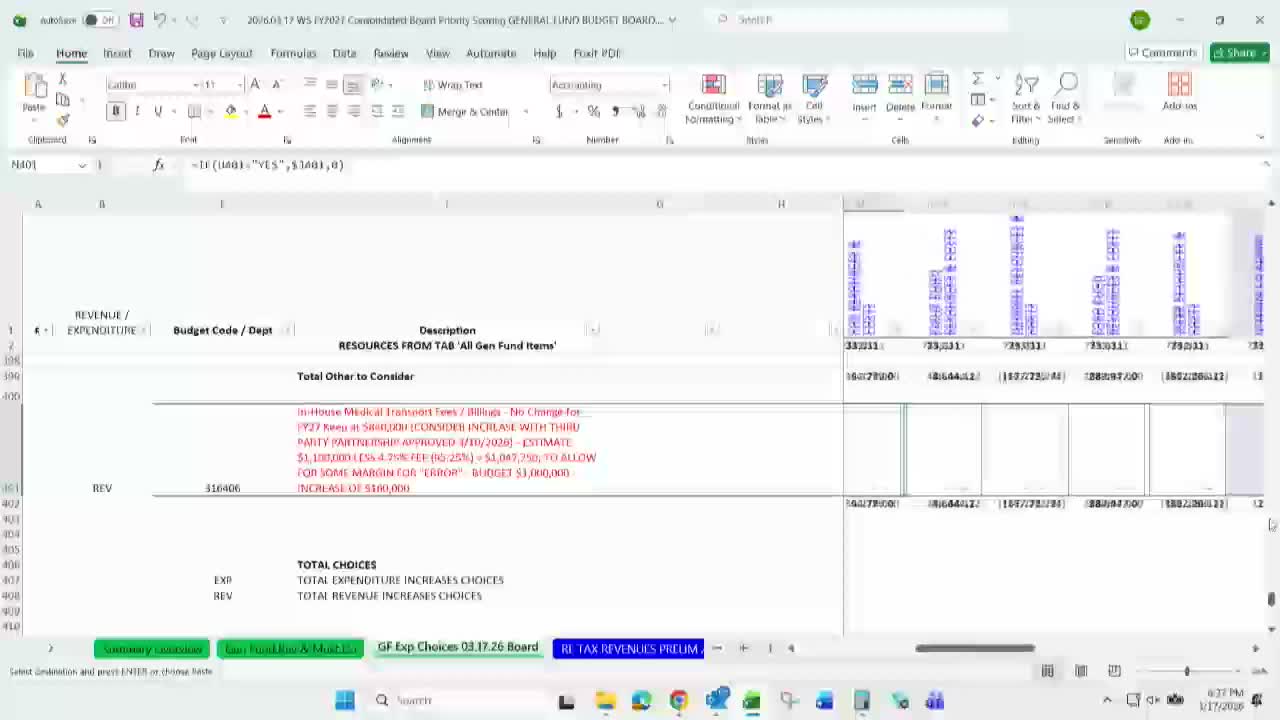
Prince George County supervisors directed staff to return with a formal plan for a 6‑month EMS pilot after hearing a staff presentation that cited a third‑party estimate of roughly $1.05–$1.1 million in annual EMS billing revenue.
The pilot would establish a fifth medic using part‑time EMS‑only staff (two medics 12 hours/day, five days/week as one option discussed) to reduce out‑of‑service time for fire apparatus, expand training opportunities and potentially lower mutual‑aid reliance. Mr. Pew outlined a proposal to run the pilot as a one‑time general fund expense (his estimate: $200,000) with the hope that EMS billing collections would offset recurring costs.
Board members expressed mixed views about booking billing revenue before the county’s billed accounts are brought current. “We are backlogged in billing,” staff said; other commissioners urged setting an aspirational revenue goal and building amendments later if collections fall short. The board asked staff to return with more detailed metrics for evaluating success (examples discussed: response‑time reduction, reduced mutual aid calls, completed probation packets and training hours for new recruits) and to analyze funding scenarios (one‑time general fund appropriation, grant offsets, or recognition of some conservative EMS billing revenue in FY27).
Why it matters: The pilot could change the county’s operational mix for EMS and fire coverage and — if revenues materialize as estimated — shift some pilot costs from the general fund to EMS billing receipts. Supervisors emphasized measured implementation and asked staff to ensure any pilot design accounts for ACA look‑back rules, overtime/benefit thresholds for part‑time hires, and precepting and training capacity.
Representative quote: “That 1.1 number is already a conservative number...we've got a conservative estimate on a conservative estimate,” a commissioner said in debate over whether to recognize $160,000 of the projected EMS billing revenue in the FY27 budget.
Next steps: Staff will prepare a staffing and budget plan, identify measurable success metrics and report back at a future meeting (board discussion suggested 3 months, with budget timing to allow potential inclusion or amendment).
The pilot would establish a fifth medic using part‑time EMS‑only staff (two medics 12 hours/day, five days/week as one option discussed) to reduce out‑of‑service time for fire apparatus, expand training opportunities and potentially lower mutual‑aid reliance. Mr. Pew outlined a proposal to run the pilot as a one‑time general fund expense (his estimate: $200,000) with the hope that EMS billing collections would offset recurring costs.
Board members expressed mixed views about booking billing revenue before the county’s billed accounts are brought current. “We are backlogged in billing,” staff said; other commissioners urged setting an aspirational revenue goal and building amendments later if collections fall short. The board asked staff to return with more detailed metrics for evaluating success (examples discussed: response‑time reduction, reduced mutual aid calls, completed probation packets and training hours for new recruits) and to analyze funding scenarios (one‑time general fund appropriation, grant offsets, or recognition of some conservative EMS billing revenue in FY27).
Why it matters: The pilot could change the county’s operational mix for EMS and fire coverage and — if revenues materialize as estimated — shift some pilot costs from the general fund to EMS billing receipts. Supervisors emphasized measured implementation and asked staff to ensure any pilot design accounts for ACA look‑back rules, overtime/benefit thresholds for part‑time hires, and precepting and training capacity.
Representative quote: “That 1.1 number is already a conservative number...we've got a conservative estimate on a conservative estimate,” a commissioner said in debate over whether to recognize $160,000 of the projected EMS billing revenue in the FY27 budget.
Next steps: Staff will prepare a staffing and budget plan, identify measurable success metrics and report back at a future meeting (board discussion suggested 3 months, with budget timing to allow potential inclusion or amendment).
View the Full Meeting & All Its Details
This article offers just a summary. Unlock complete video, transcripts, and insights as a Founder Member.
✓
Watch full, unedited meeting videos
✓
Search every word spoken in unlimited transcripts
✓
AI summaries & real-time alerts (all government levels)
✓
Permanent access to expanding government content
30-day money-back guarantee
