State emergency officials warn bill limiting 'nonessential' designations could chill time‑sensitive protective orders
March 12, 2026 | 2026 Legislature TN, Tennessee
This article was created by AI summarizing key points discussed. AI makes mistakes, so for full details and context, please refer to the video of the full meeting. Please report any errors so we can fix them. Report an error »
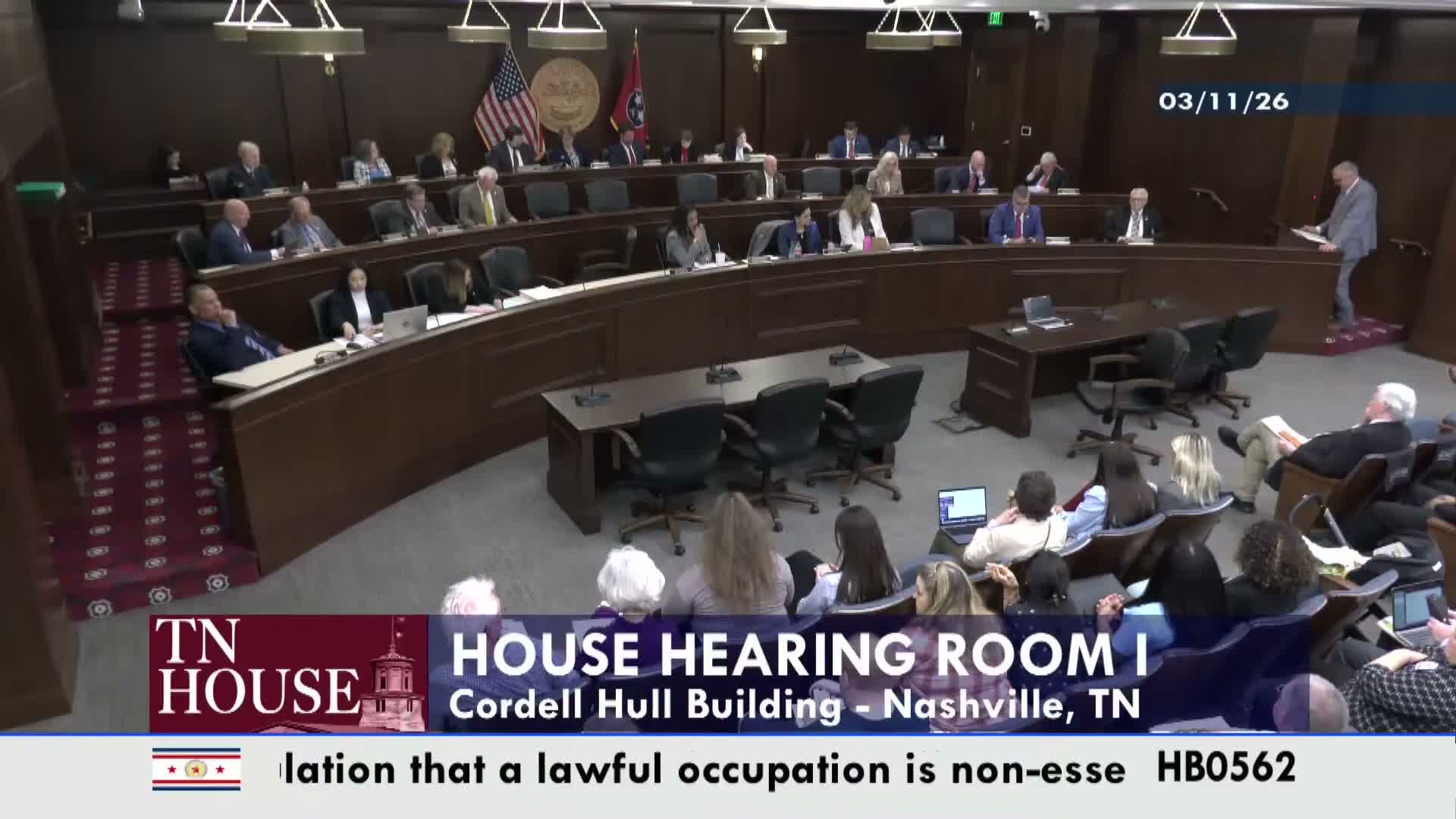
Representative Fritz and others sponsored HB5 62, a bill that would restrict how officials declare certain occupations "nonessential" and provides a private right of action and ouster remedy for officials who issue emergency orders that are deemed to violate the bill. Patrick Sheehan, director of the Tennessee Emergency Management Agency, testified he supports the sponsor’s intent but warned the statutory language could unintentionally jeopardize emergency protective orders such as shelter‑in‑place, curfew and evacuation orders.
Sheehan said emergency orders often include exemptions for professions that must remain to support response efforts—sometimes private contractors such as debris removal or utility staff—and that opening a private right of action or an ouster remedy could make mayors hesitant to issue time‑sensitive orders. "In emergency situations, seconds matter," Sheehan told the committee, arguing that delay could place lives and property at risk.
Members debated the constitutional and civil‑liberties dimensions of declaring people nonessential and cited pandemic‑era experiences that led to economic hardship for some workers. Representative Fritz read constitutional concerns about government overreach and emphasized protecting the right to earn a living; other members urged careful drafting to avoid chilling necessary emergency responses.
After discussion and public testimony, the committee voted to send HB5 62 to Calendar and Rules on a narrow margin (10 ayes, 9 nos). Committee staff and the sponsor were asked to consider clarifying exemptions and the scope of private enforcement before further floor consideration.
Sheehan said emergency orders often include exemptions for professions that must remain to support response efforts—sometimes private contractors such as debris removal or utility staff—and that opening a private right of action or an ouster remedy could make mayors hesitant to issue time‑sensitive orders. "In emergency situations, seconds matter," Sheehan told the committee, arguing that delay could place lives and property at risk.
Members debated the constitutional and civil‑liberties dimensions of declaring people nonessential and cited pandemic‑era experiences that led to economic hardship for some workers. Representative Fritz read constitutional concerns about government overreach and emphasized protecting the right to earn a living; other members urged careful drafting to avoid chilling necessary emergency responses.
After discussion and public testimony, the committee voted to send HB5 62 to Calendar and Rules on a narrow margin (10 ayes, 9 nos). Committee staff and the sponsor were asked to consider clarifying exemptions and the scope of private enforcement before further floor consideration.
Don't Miss a Word: See the Full Meeting!
Go beyond summaries. Unlock every video, transcript, and key insight with a Founder Membership.
✓
Get instant access to full meeting videos
✓
Search and clip any phrase from complete transcripts
✓
Receive AI-powered summaries & custom alerts
✓
Enjoy lifetime, unrestricted access to government data
30-day money-back guarantee
