Finance director: Hudson ended 2025 with $3.3M excess carryover; council earmarks half for infrastructure
January 17, 2026 | Hudson City Council, Hudson, Summit County, Ohio
This article was created by AI summarizing key points discussed. AI makes mistakes, so for full details and context, please refer to the video of the full meeting. Please report any errors so we can fix them. Report an error »
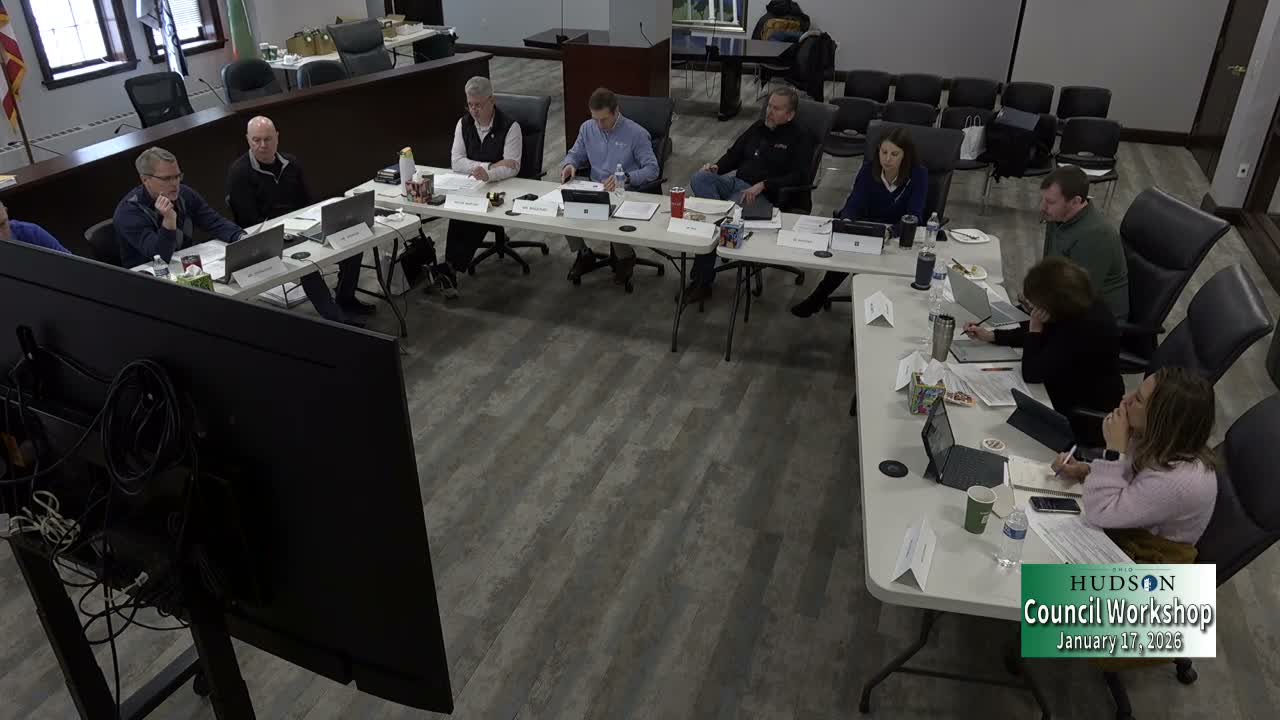
The city’s finance director told the council the 2025 fiscal year closed in better condition than feared after the loss of a large employer and other revenue shocks. Jeff reported income-tax revenue was essentially flat year-over-year (a roughly $19,000 decline, or about 0.1%), and the general fund finished at about $18.5 million versus an amended forecast near $15.2 million—leaving roughly $3.3 million of excess carryover.
Council referenced a 2024 ordinance that directs at least 50% of any excess carryover to infrastructure projects. Jeff and staff said that qualifies a broad set of categories (roads, stormwater, sidewalks/trails, utilities and fiber) and noted the city could also consider strategic uses such as shoring up long-term fire-fund needs. Staff recommended pausing large commitments until after May income-tax filings (mid-summer) so the council can see first-half performance before deciding which capital items to pull forward.
Council asked staff to return to a dedicated workshop in summer 2026 with a prioritized list of eligible infrastructure projects (including stormwater options identified by ongoing studies) and an updated five-year forecast. No expenditure decision was made at the retreat; council members expressed interest in preserving the 40% carryover policy while applying excess dollars to near-term capital priorities where possible.
Council referenced a 2024 ordinance that directs at least 50% of any excess carryover to infrastructure projects. Jeff and staff said that qualifies a broad set of categories (roads, stormwater, sidewalks/trails, utilities and fiber) and noted the city could also consider strategic uses such as shoring up long-term fire-fund needs. Staff recommended pausing large commitments until after May income-tax filings (mid-summer) so the council can see first-half performance before deciding which capital items to pull forward.
Council asked staff to return to a dedicated workshop in summer 2026 with a prioritized list of eligible infrastructure projects (including stormwater options identified by ongoing studies) and an updated five-year forecast. No expenditure decision was made at the retreat; council members expressed interest in preserving the 40% carryover policy while applying excess dollars to near-term capital priorities where possible.
Don't Miss a Word: See the Full Meeting!
Go beyond summaries. Unlock every video, transcript, and key insight with a Founder Membership.
✓
Get instant access to full meeting videos
✓
Search and clip any phrase from complete transcripts
✓
Receive AI-powered summaries & custom alerts
✓
Enjoy lifetime, unrestricted access to government data
30-day money-back guarantee
