Biometrica pitches ‘privacy‑first’ sensor and law‑enforcement database to Senate committee
March 18, 2026 | 2026 Legislature Arizona, Arizona
This article was created by AI summarizing key points discussed. AI makes mistakes, so for full details and context, please refer to the video of the full meeting. Please report any errors so we can fix them. Report an error »
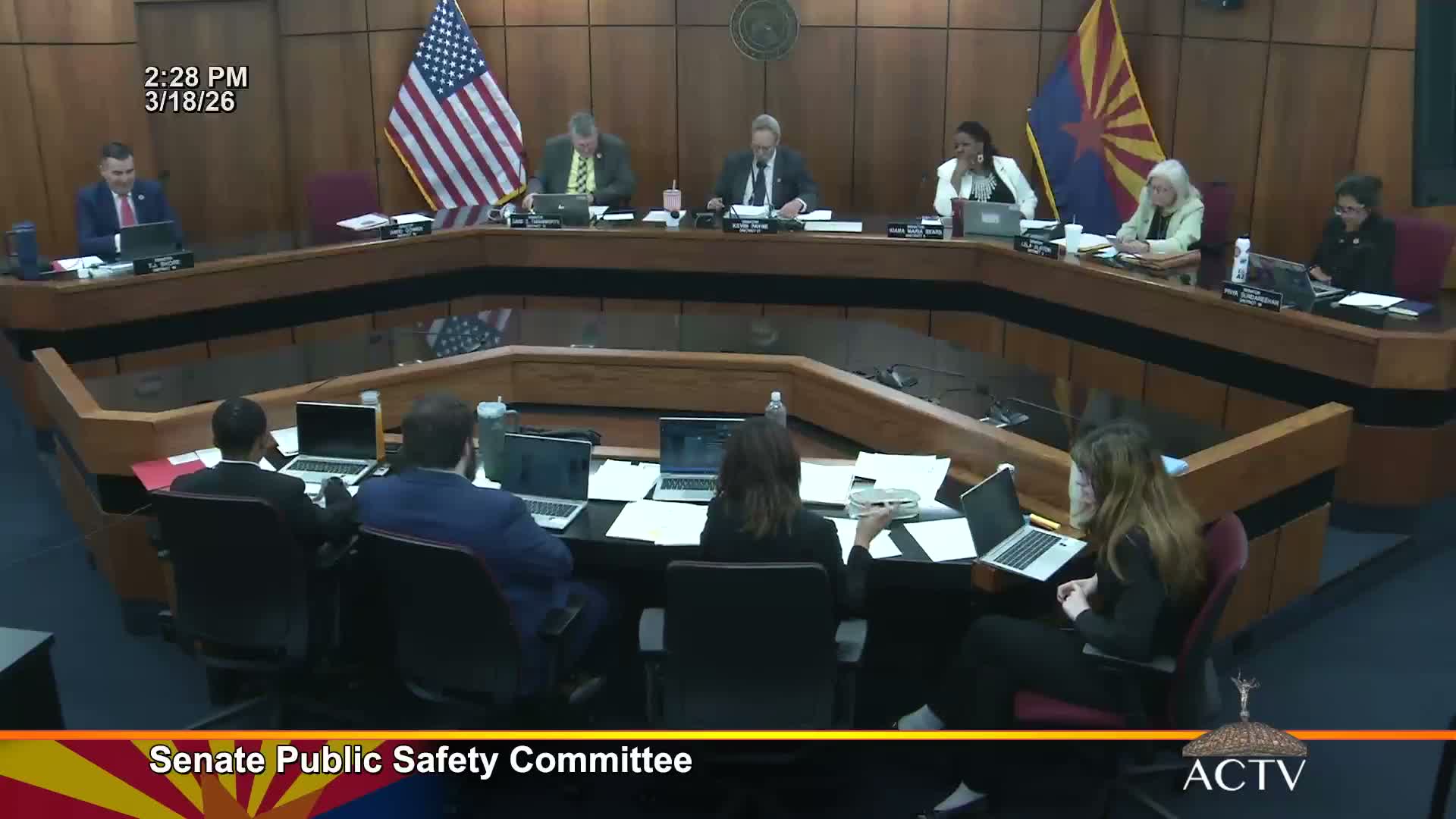
Representatives from Biometrica — CEO Wiley Wade, Chief Privacy Officer Ka Wade and retired Homeland Security Investigations agent Austin Berrio — demonstrated a sensor system they call 'Umbra' and described deployments in multiple U.S. states and abroad to identify missing people and notify law-enforcement partners in under 60 seconds.
Company presenters said each sensor captures a single neck‑up image (no continuous video or audio), sends that image to a cloud database built and maintained by Biometrica (they described it as a law‑enforcement‑sourced database and stated it contains roughly 54 million records), and only retains images briefly during automated analysis. They said unmatched images are deleted immediately and that matched alerts are human‑verified by a facial analyst before notification. Biometrica said the database contains records sourced from law‑enforcement data only (arrests, convictions, warrants, probation records and missing‑person entries) and excludes social‑media and commercial data.
Presenters framed the system as privacy‑preserving ("anonymity by default") and said it can operate in low‑bandwidth or remote environments; they cited use cases including school safety and locating missing Native American people. A company representative described a Phoenix elementary‑school assault that, the company said, involved an individual already in their database. Committee members asked questions but did not take action; no state contract or procurement was discussed on the record.
The presentation raised privacy and policy issues that the committee did not resolve during the hearing: Biometrica described internal safeguards but offered few independent privacy reviews or written agreements on how law‑enforcement data is sourced and governed. The company repeatedly stated that its sensors do not record or store video and that a third‑party algorithm (a "black box" per the presentation) performs biometric matching before human verification.
The committee did not vote on procurement; the company offered to meet with senators and staff to show systems and discuss policies.
Company presenters said each sensor captures a single neck‑up image (no continuous video or audio), sends that image to a cloud database built and maintained by Biometrica (they described it as a law‑enforcement‑sourced database and stated it contains roughly 54 million records), and only retains images briefly during automated analysis. They said unmatched images are deleted immediately and that matched alerts are human‑verified by a facial analyst before notification. Biometrica said the database contains records sourced from law‑enforcement data only (arrests, convictions, warrants, probation records and missing‑person entries) and excludes social‑media and commercial data.
Presenters framed the system as privacy‑preserving ("anonymity by default") and said it can operate in low‑bandwidth or remote environments; they cited use cases including school safety and locating missing Native American people. A company representative described a Phoenix elementary‑school assault that, the company said, involved an individual already in their database. Committee members asked questions but did not take action; no state contract or procurement was discussed on the record.
The presentation raised privacy and policy issues that the committee did not resolve during the hearing: Biometrica described internal safeguards but offered few independent privacy reviews or written agreements on how law‑enforcement data is sourced and governed. The company repeatedly stated that its sensors do not record or store video and that a third‑party algorithm (a "black box" per the presentation) performs biometric matching before human verification.
The committee did not vote on procurement; the company offered to meet with senators and staff to show systems and discuss policies.
View the Full Meeting & All Its Details
This article offers just a summary. Unlock complete video, transcripts, and insights as a Founder Member.
✓
Watch full, unedited meeting videos
✓
Search every word spoken in unlimited transcripts
✓
AI summaries & real-time alerts (all government levels)
✓
Permanent access to expanding government content
30-day money-back guarantee
