Committee approves referral to ballot for broad election reforms including citizen-only voting and ID requirement; critics say it will disenfranchise vulnerable
March 18, 2026 | 2026 Legislature Arizona, Arizona
This article was created by AI summarizing key points discussed. AI makes mistakes, so for full details and context, please refer to the video of the full meeting. Please report any errors so we can fix them. Report an error »
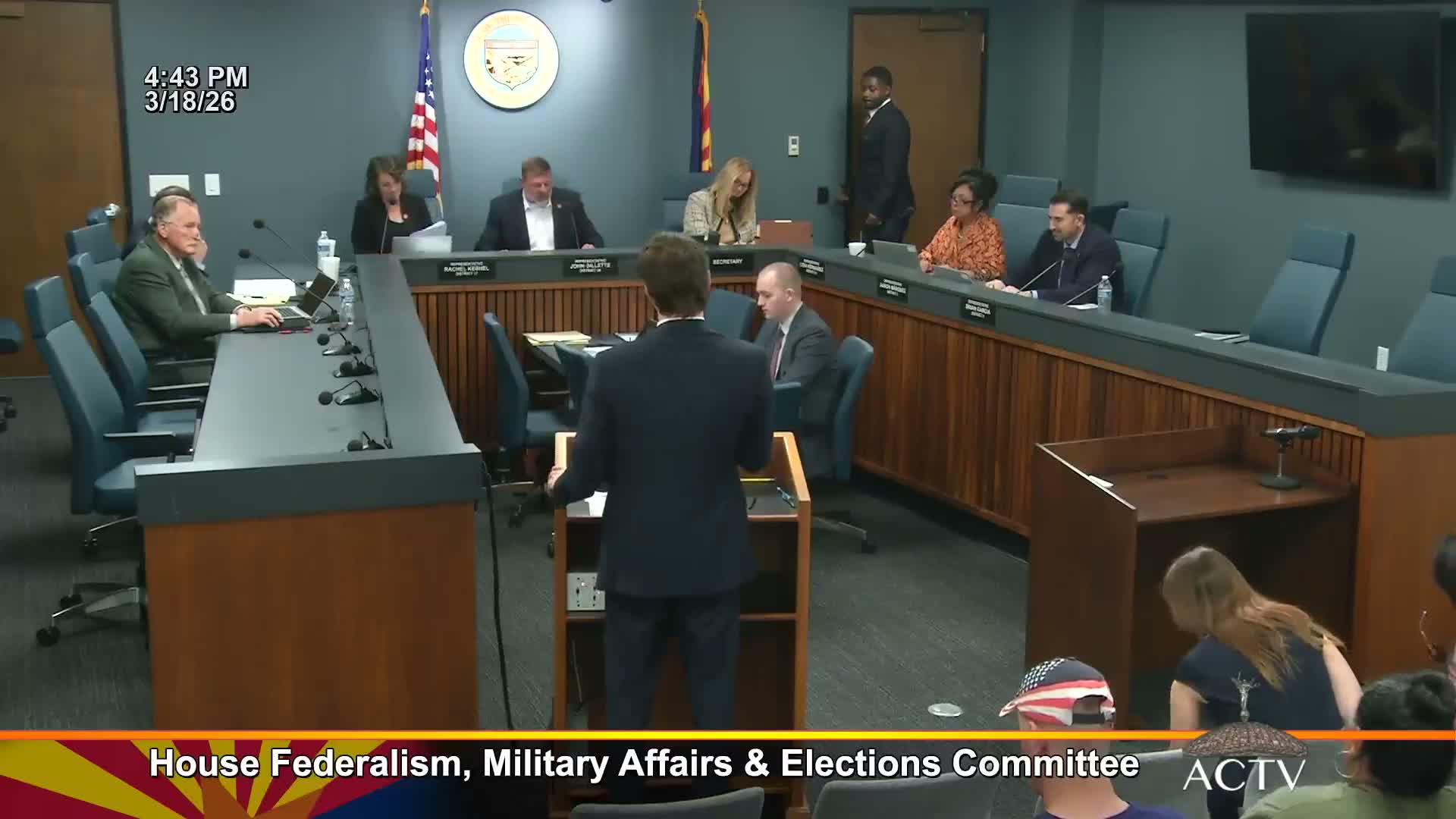
Senate Concurrent Resolution 1,001 would refer to voters a constitutional amendment that, if approved, would require only U.S. citizens be eligible to register and vote in Arizona, require a valid government-issued proof of identity to vote by any means, add rules restricting some early voting procedures and permit on-site tabulation at voting locations; it also includes a ban on foreign nationals contributing for the purpose of influencing Arizona elections.
The committee heard lengthy, often emotional testimony both for and against the referral. Opponents — including Common Cause Arizona and Living United for Change in Arizona — said the referral is vague in places and would have a disparate effect on Native American, rural, low-income and minority voters by raising ID and procedural hurdles and inviting litigation. "When you make it harder to vote, you restrict it," said Samuel Wandler, who testified in opposition.
Supporters, including Nathan Duell of Heritage Action and sponsor Representative Collinan, framed the referral as restoring confidence in elections and protecting them from foreign money and ineligible registrants. The sponsor said the measure would let voters decide whether they want government-issued ID and restrictions on early-vote processing, arguing the people deserve that choice.
Committee debate ranged from constitutional technicalities and potential fiscal costs of on-site tabulation to concerns about possible effects on UOCAVA (military and overseas) voters and rural precincts. County representatives warned the on-site tabulation requirement and other operational provisions could impose substantial costs and implementation hurdles; the Association of Counties recommended a delayed effective date if the measure goes to the ballot and is approved by voters.
After discussion and testimony, the committee recorded 4 ayes, 2 nays and 1 absent and gave the amended referral a due-pass recommendation to place the measure before voters.
Next steps: If placed on the ballot and approved by voters, the changes would become constitutional provisions; counties and the Legislature would then have to draft implementing statutory language and appropriate funding.
The committee heard lengthy, often emotional testimony both for and against the referral. Opponents — including Common Cause Arizona and Living United for Change in Arizona — said the referral is vague in places and would have a disparate effect on Native American, rural, low-income and minority voters by raising ID and procedural hurdles and inviting litigation. "When you make it harder to vote, you restrict it," said Samuel Wandler, who testified in opposition.
Supporters, including Nathan Duell of Heritage Action and sponsor Representative Collinan, framed the referral as restoring confidence in elections and protecting them from foreign money and ineligible registrants. The sponsor said the measure would let voters decide whether they want government-issued ID and restrictions on early-vote processing, arguing the people deserve that choice.
Committee debate ranged from constitutional technicalities and potential fiscal costs of on-site tabulation to concerns about possible effects on UOCAVA (military and overseas) voters and rural precincts. County representatives warned the on-site tabulation requirement and other operational provisions could impose substantial costs and implementation hurdles; the Association of Counties recommended a delayed effective date if the measure goes to the ballot and is approved by voters.
After discussion and testimony, the committee recorded 4 ayes, 2 nays and 1 absent and gave the amended referral a due-pass recommendation to place the measure before voters.
Next steps: If placed on the ballot and approved by voters, the changes would become constitutional provisions; counties and the Legislature would then have to draft implementing statutory language and appropriate funding.
View the Full Meeting & All Its Details
This article offers just a summary. Unlock complete video, transcripts, and insights as a Founder Member.
✓
Watch full, unedited meeting videos
✓
Search every word spoken in unlimited transcripts
✓
AI summaries & real-time alerts (all government levels)
✓
Permanent access to expanding government content
30-day money-back guarantee
