Committee advances 'Cade's Law' to broaden manslaughter liability for adults who intentionally encourage minors to die by suicide
March 18, 2026 | 2026 Legislature Arizona, Arizona
This article was created by AI summarizing key points discussed. AI makes mistakes, so for full details and context, please refer to the video of the full meeting. Please report any errors so we can fix them. Report an error »
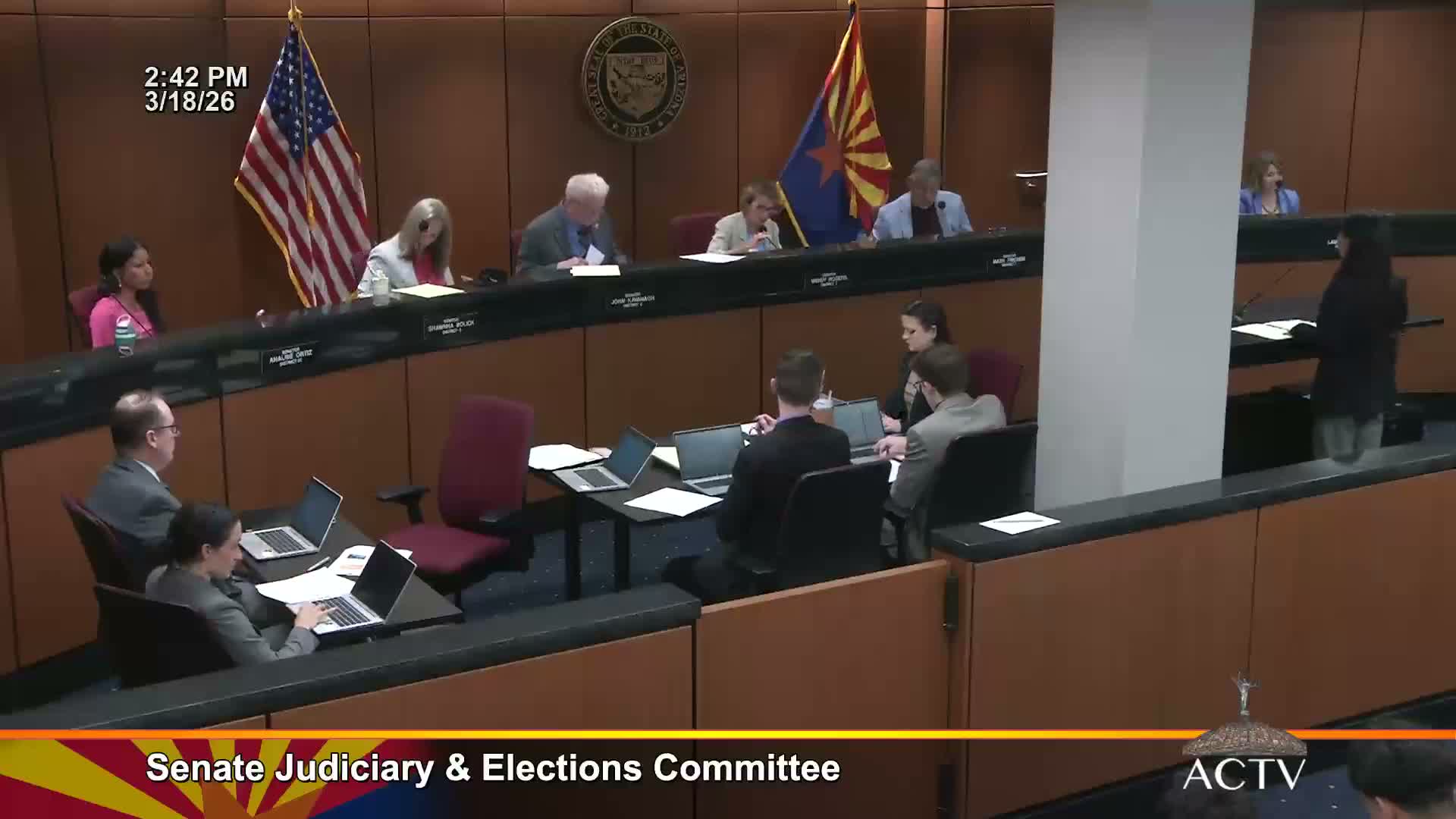
House Bill 2665, referred to in testimony as "Cade's Law," received a due‑pass recommendation from the Senate Judiciary & Elections Committee after sponsors and multiple family members described the bill as a response to online encouragement that led to teen suicides.
Committee staff explained the bill would apply manslaughter classifications to an adult (18+) who intentionally provides advice or encouragement through "directed communication" (including social media posts, texts or online messaging) knowing the minor intends to die by suicide. Representative Pamela Carter, the sponsor, said she has worked on the issue for more than a year and described meeting families whose children took their lives after targeted online interactions.
Family testimony — including Leanne Hall, Megan Keller and Brian Cooper — focused on personal loss and the role of social media. Keller told the committee her son posted three explicit videos before he died and urged members to "give someone the chance we didn't get with Cade." Leanne Hall and others described long engagement with suicide‑prevention legislation and asked the committee to hold adults accountable where the evidence shows targeted encouragement.
Committee members asked implementation questions and sought clarification on coverage and retroactivity. Supporters framed the bill as an update to earlier laws (including references to prior acts that addressed physical means), while sponsors emphasized it targets adults who knowingly use online channels to encourage minors to die by suicide.
After testimony and limited discussion the committee gave HB 2665 a due‑pass recommendation. Sponsors said they will continue working with stakeholders to refine technical language and scope before floor consideration.
Committee staff explained the bill would apply manslaughter classifications to an adult (18+) who intentionally provides advice or encouragement through "directed communication" (including social media posts, texts or online messaging) knowing the minor intends to die by suicide. Representative Pamela Carter, the sponsor, said she has worked on the issue for more than a year and described meeting families whose children took their lives after targeted online interactions.
Family testimony — including Leanne Hall, Megan Keller and Brian Cooper — focused on personal loss and the role of social media. Keller told the committee her son posted three explicit videos before he died and urged members to "give someone the chance we didn't get with Cade." Leanne Hall and others described long engagement with suicide‑prevention legislation and asked the committee to hold adults accountable where the evidence shows targeted encouragement.
Committee members asked implementation questions and sought clarification on coverage and retroactivity. Supporters framed the bill as an update to earlier laws (including references to prior acts that addressed physical means), while sponsors emphasized it targets adults who knowingly use online channels to encourage minors to die by suicide.
After testimony and limited discussion the committee gave HB 2665 a due‑pass recommendation. Sponsors said they will continue working with stakeholders to refine technical language and scope before floor consideration.
View the Full Meeting & All Its Details
This article offers just a summary. Unlock complete video, transcripts, and insights as a Founder Member.
✓
Watch full, unedited meeting videos
✓
Search every word spoken in unlimited transcripts
✓
AI summaries & real-time alerts (all government levels)
✓
Permanent access to expanding government content
30-day money-back guarantee
