Senate committee advances election‑referral after intense debate over mail‑ballot ID, on‑site tabulation and tribal voter impacts
March 18, 2026 | 2026 Legislature Arizona, Arizona
This article was created by AI summarizing key points discussed. AI makes mistakes, so for full details and context, please refer to the video of the full meeting. Please report any errors so we can fix them. Report an error »
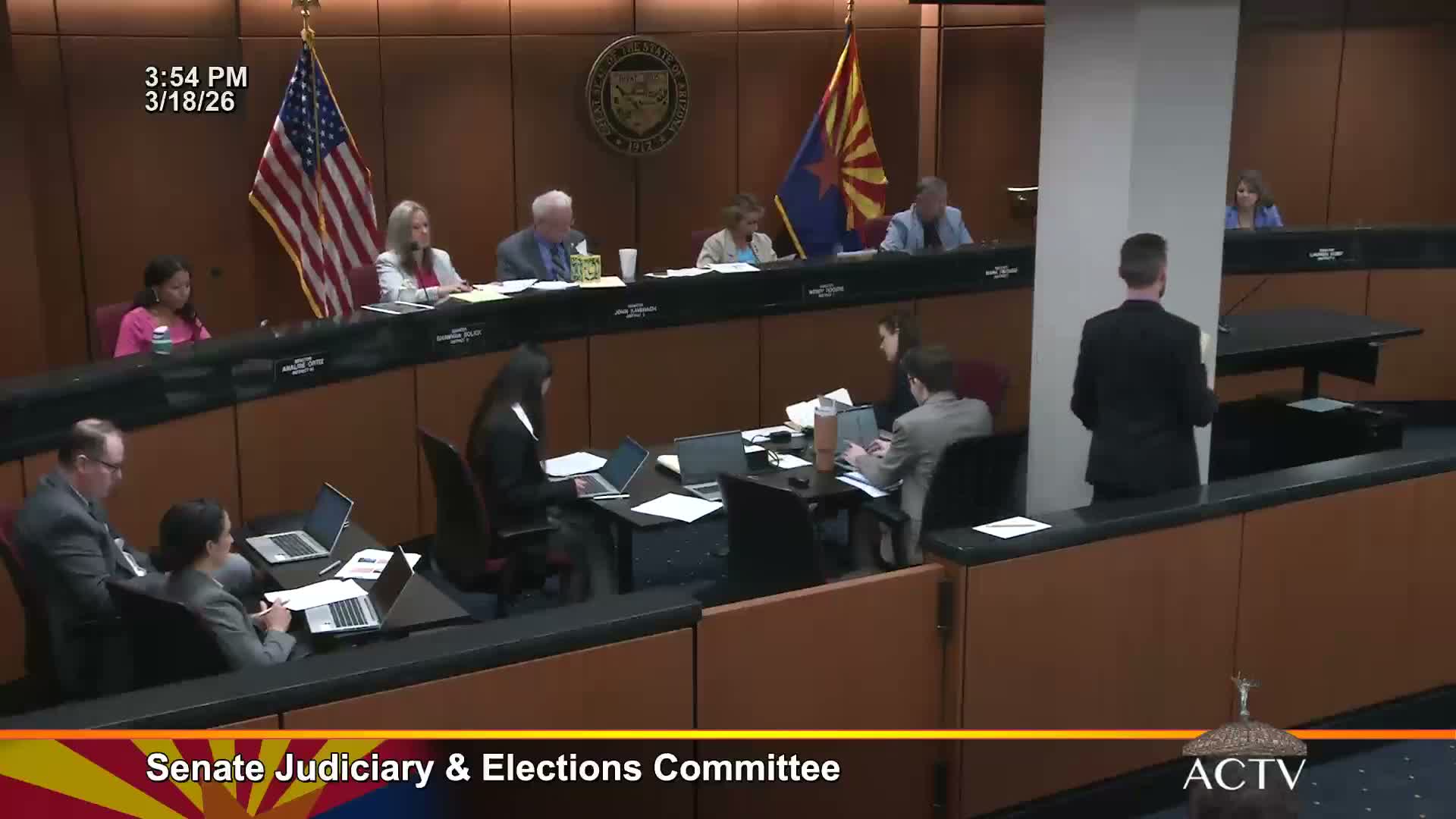
The Senate Judiciary & Elections Committee voted to give HCR 2‑001 (the Fast Elections Act) a due‑pass recommendation as amended after a lengthy hearing that featured partisan arguments, detailed implementation concerns, and multiple public testifiers.
The measure as presented would put several provisions before voters — including prohibiting foreign nationals from contributing to ballot measures, requiring a form of government‑issued identification in order to cast a mail ballot (implementation left to subsequent legislation), and requiring that ballots be tabulated at polling locations. An amendment the committee adopted removed a proposed early‑voting deadline but kept the on‑site tabulation and ID provisions and stated that the legislature would craft implementation specifics if voters approve the referral.
Supporters argued the referral would increase public confidence in election integrity, speed results through on‑site tabulation, and block foreign influence in ballot measures. "This bill will finally fix the law to give the people of Arizona the common‑sense measure they've been asking for," sponsor Representative Collin said.
Opponents — from county recorders, voting‑rights organizations and many local voters — warned the referral remains ambiguous on how mail‑ballot ID would work, would impose substantial costs on small and central‑count counties, and risks disenfranchising tribal and low‑income voters who lack ready access to state IDs. Jen Morrison of the Association of Counties told the committee that 10 counties currently use central counting and would need new equipment, procurement time and training; she urged a delayed effective date if the measure goes to voters.
The committee heard dozens of testifiers on both sides, including groups citing polling and anecdotal concerns about foreign funding of initiatives. After months of stakeholder meetings, the committee adopted an amendment and voted to refer the measure to voters; members explained votes with concerns ranging from implementation logistics to election security and access.
The referral is expected to appear on a future ballot if the legislature's process continues; implementation questions raised in the hearing indicate additional drafting work will likely follow.
The measure as presented would put several provisions before voters — including prohibiting foreign nationals from contributing to ballot measures, requiring a form of government‑issued identification in order to cast a mail ballot (implementation left to subsequent legislation), and requiring that ballots be tabulated at polling locations. An amendment the committee adopted removed a proposed early‑voting deadline but kept the on‑site tabulation and ID provisions and stated that the legislature would craft implementation specifics if voters approve the referral.
Supporters argued the referral would increase public confidence in election integrity, speed results through on‑site tabulation, and block foreign influence in ballot measures. "This bill will finally fix the law to give the people of Arizona the common‑sense measure they've been asking for," sponsor Representative Collin said.
Opponents — from county recorders, voting‑rights organizations and many local voters — warned the referral remains ambiguous on how mail‑ballot ID would work, would impose substantial costs on small and central‑count counties, and risks disenfranchising tribal and low‑income voters who lack ready access to state IDs. Jen Morrison of the Association of Counties told the committee that 10 counties currently use central counting and would need new equipment, procurement time and training; she urged a delayed effective date if the measure goes to voters.
The committee heard dozens of testifiers on both sides, including groups citing polling and anecdotal concerns about foreign funding of initiatives. After months of stakeholder meetings, the committee adopted an amendment and voted to refer the measure to voters; members explained votes with concerns ranging from implementation logistics to election security and access.
The referral is expected to appear on a future ballot if the legislature's process continues; implementation questions raised in the hearing indicate additional drafting work will likely follow.
View the Full Meeting & All Its Details
This article offers just a summary. Unlock complete video, transcripts, and insights as a Founder Member.
✓
Watch full, unedited meeting videos
✓
Search every word spoken in unlimited transcripts
✓
AI summaries & real-time alerts (all government levels)
✓
Permanent access to expanding government content
30-day money-back guarantee
