Committee advances package of public‑safety and victim‑service bills after daylong hearing
March 18, 2026 | 2026 Legislature Arizona, Arizona
This article was created by AI summarizing key points discussed. AI makes mistakes, so for full details and context, please refer to the video of the full meeting. Please report any errors so we can fix them. Report an error »
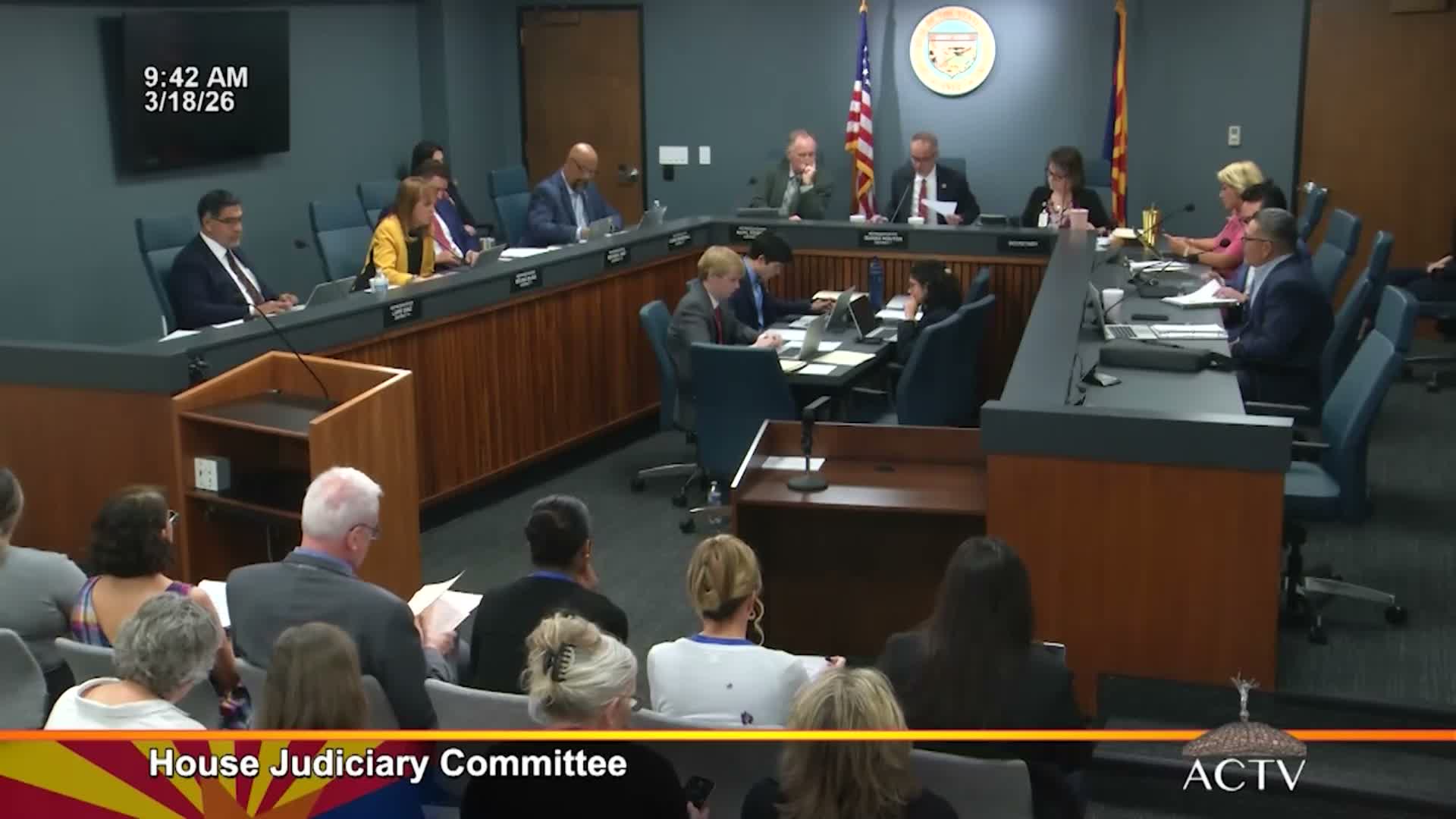
A legislative committee on March 17 considered 14 bills covering criminal penalties, victim services, probation rules and administrative clarifications. After public testimony and debate the committee returned multiple measures with due‑pass recommendations and adopted a number of amendments.
Among the bills the committee advanced: SB 10 94, a measure to create a civil cause of action and an extended limitations period for irreversible gender‑reassignment surgery performed on minors; SB 16 35, which would criminalize narrowly targeted warnings about imminent arrests; SB 16 73, an appropriation to expand a crime‑victim notification fund; SB 10 92, which would limit early termination of probation for people convicted of dangerous crimes against children; and SB 15 40, which creates a felony for tampering with motor‑fuel dispensers tied to organized theft.
The hearing mixed technical presentations from sponsors and agency representatives with emotional public testimony. For example, a victims’‑rights attorney urged support for the notification fund, saying current notice systems are “wildly different” across counties and that a single fund would bring consistency. Law‑enforcement witnesses described automated notification systems as a public‑safety tool that has delivered “hundreds of thousands” of notifications statewide.
On SB 10 94, the sponsor argued that medical societies and some European countries have recently restricted certain procedures for minors and that the bill would let later‑life victims seek compensation. Opponents, including the ACLU and multiple witnesses, said the bill duplicates statutory prohibitions and creates a discriminatory liability regime for transgender patients. The committee returned SB 10 94 with a due‑pass recommendation (vote recorded in committee as 6 yes, 3 no).
SB 16 35 drew constitutional objections from the ACLU, which said the bill risks criminalizing speech and advocacy such as “know‑your‑rights” trainings; the sponsor said the text had been narrowed to address general alerts and targets only specific, imminent warnings that would enable an individual to evade arrest. The committee returned SB 16 35 with a due‑pass recommendation (6 ayes, 3 nays).
Votes at a glance:
- SB 10 94 (civil cause of action for irreversible gender‑reassignment surgery on minors): Returned with a due‑pass recommendation (6 yes, 3 no). Sponsor: Senator Kavanaugh (present in hearing). Key testimony: ACLU (opposed), several private witnesses (both for and against).
- SB 16 35 (unlawful targeted arrest alerts): Returned with a due‑pass recommendation (6 ayes, 3 nays). Key testimony: ACLU (opposed), civil‑liberties advocates concerned about First Amendment implications.
- SB 16 73 (crime victim notification fund; appropriation amended): Amendment adopted; returned with due‑pass recommendation (9–0).
- SB 10 92 (limits on probation termination for dangerous crimes against children): Returned with a due‑pass recommendation (recorded as 6 ayes, 2 nays, 1 present).
- SB 12 39 (remove statute of limitations for failure to register as a sex offender): Returned with due‑pass recommendation (5 ayes, 4 nays).
- SB 11 39 (GPS monitoring for certain registered offenders): Amendment adopted; the bill failed to receive a do‑pass recommendation after debate.
- SB 15 02 (increased penalties for unlawful flight): Returned with due‑pass recommendation (roll calls recorded).
- SB 12 48 (juvenile detention education clarification): Returned with due‑pass recommendation (9–0).
- SB 12 40 (exclude certain probationers from incentive calculations): Returned with due‑pass recommendation (roll calls recorded).
- SB 16 69 (evidence in disability hearings): Returned with due‑pass recommendation (6–3).
- SB 15 40 (motor fuel theft; tampering with fuel dispensers): Amendment adopted; returned with due‑pass recommendation (6 ayes, 2 nays, 1 absent).
- SB 16 16 (prohibiting feeding pigeons except in specified circumstances): Strike‑everything amendment adopted; returned with due‑pass recommendation after debate.
- SB 13 26 (expand recoverable expenses for victims): Returned with due‑pass recommendation.
- SB 15 12 (position of trust for vulnerable‑adult theft): Returned with due‑pass recommendation (6 ayes, 3 nays).
What happens next: Bills given due‑pass recommendations move on in the legislative process for further consideration by the full chamber and, where applicable, for inclusion in budget deliberations. Several measures that drew constitutional concerns—particularly SB 16 35—may face further legal scrutiny as they proceed.
— Reporting from the committee hearing; public testimony and roll‑call votes recorded in committee minutes.
Among the bills the committee advanced: SB 10 94, a measure to create a civil cause of action and an extended limitations period for irreversible gender‑reassignment surgery performed on minors; SB 16 35, which would criminalize narrowly targeted warnings about imminent arrests; SB 16 73, an appropriation to expand a crime‑victim notification fund; SB 10 92, which would limit early termination of probation for people convicted of dangerous crimes against children; and SB 15 40, which creates a felony for tampering with motor‑fuel dispensers tied to organized theft.
The hearing mixed technical presentations from sponsors and agency representatives with emotional public testimony. For example, a victims’‑rights attorney urged support for the notification fund, saying current notice systems are “wildly different” across counties and that a single fund would bring consistency. Law‑enforcement witnesses described automated notification systems as a public‑safety tool that has delivered “hundreds of thousands” of notifications statewide.
On SB 10 94, the sponsor argued that medical societies and some European countries have recently restricted certain procedures for minors and that the bill would let later‑life victims seek compensation. Opponents, including the ACLU and multiple witnesses, said the bill duplicates statutory prohibitions and creates a discriminatory liability regime for transgender patients. The committee returned SB 10 94 with a due‑pass recommendation (vote recorded in committee as 6 yes, 3 no).
SB 16 35 drew constitutional objections from the ACLU, which said the bill risks criminalizing speech and advocacy such as “know‑your‑rights” trainings; the sponsor said the text had been narrowed to address general alerts and targets only specific, imminent warnings that would enable an individual to evade arrest. The committee returned SB 16 35 with a due‑pass recommendation (6 ayes, 3 nays).
Votes at a glance:
- SB 10 94 (civil cause of action for irreversible gender‑reassignment surgery on minors): Returned with a due‑pass recommendation (6 yes, 3 no). Sponsor: Senator Kavanaugh (present in hearing). Key testimony: ACLU (opposed), several private witnesses (both for and against).
- SB 16 35 (unlawful targeted arrest alerts): Returned with a due‑pass recommendation (6 ayes, 3 nays). Key testimony: ACLU (opposed), civil‑liberties advocates concerned about First Amendment implications.
- SB 16 73 (crime victim notification fund; appropriation amended): Amendment adopted; returned with due‑pass recommendation (9–0).
- SB 10 92 (limits on probation termination for dangerous crimes against children): Returned with a due‑pass recommendation (recorded as 6 ayes, 2 nays, 1 present).
- SB 12 39 (remove statute of limitations for failure to register as a sex offender): Returned with due‑pass recommendation (5 ayes, 4 nays).
- SB 11 39 (GPS monitoring for certain registered offenders): Amendment adopted; the bill failed to receive a do‑pass recommendation after debate.
- SB 15 02 (increased penalties for unlawful flight): Returned with due‑pass recommendation (roll calls recorded).
- SB 12 48 (juvenile detention education clarification): Returned with due‑pass recommendation (9–0).
- SB 12 40 (exclude certain probationers from incentive calculations): Returned with due‑pass recommendation (roll calls recorded).
- SB 16 69 (evidence in disability hearings): Returned with due‑pass recommendation (6–3).
- SB 15 40 (motor fuel theft; tampering with fuel dispensers): Amendment adopted; returned with due‑pass recommendation (6 ayes, 2 nays, 1 absent).
- SB 16 16 (prohibiting feeding pigeons except in specified circumstances): Strike‑everything amendment adopted; returned with due‑pass recommendation after debate.
- SB 13 26 (expand recoverable expenses for victims): Returned with due‑pass recommendation.
- SB 15 12 (position of trust for vulnerable‑adult theft): Returned with due‑pass recommendation (6 ayes, 3 nays).
What happens next: Bills given due‑pass recommendations move on in the legislative process for further consideration by the full chamber and, where applicable, for inclusion in budget deliberations. Several measures that drew constitutional concerns—particularly SB 16 35—may face further legal scrutiny as they proceed.
— Reporting from the committee hearing; public testimony and roll‑call votes recorded in committee minutes.
View the Full Meeting & All Its Details
This article offers just a summary. Unlock complete video, transcripts, and insights as a Founder Member.
✓
Watch full, unedited meeting videos
✓
Search every word spoken in unlimited transcripts
✓
AI summaries & real-time alerts (all government levels)
✓
Permanent access to expanding government content
30-day money-back guarantee
